
By Feras Dalatey , Suleiman Al-Khalidi, Orhan Qereman and Jonathan Spicer
Feb 13 (Reuters) - A U.S.-backed ceasefire agreement in northeastern Syria leaves thorny questions unresolved, as Kurds seek to retain some authority despite a much weakened hand following the rapid advance of central government forces.
The progress of the deal tests the ability of Syria's new leaders to stabilise a nation fractured by 14 years of war, following several bouts of violence pitting it against minority groups who
are suspicious of the Islamist-led government.
The struggle for Syria's northeast has brought the biggest shift in control since former leader Bashar al-Assad was ousted in December 2024. After months of deadlock, Damascus seized swathes of territory from the Kurdish-led Syrian Democratic Forces (SDF) before agreeing to the plan that foresees its remaining enclave being integrated into the state.
Preliminary steps have gone smoothly since the January 29 agreement: small contingents of government forces have deployed into two Kurdish-run cities, fighters have withdrawn from frontlines, and Damascus on Friday announced the appointment of a regional governor nominated by the Kurds.
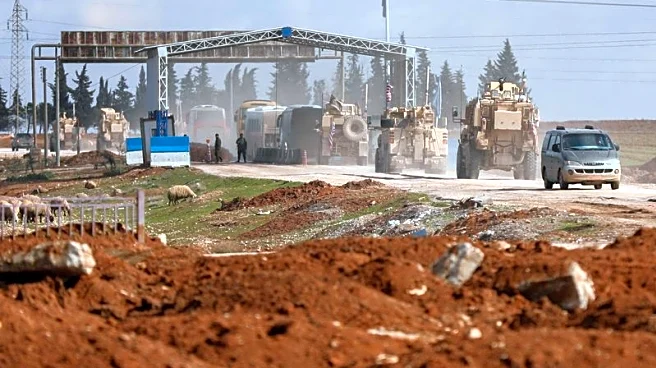
But a dozen government and Kurdish officials said core issues had yet to be tackled, including precisely how SDF fighters will be integrated, the fate of SDF heavy weapons, and arrangements for a border crossing to Iraq that has been an SDF lifeline.
For now, the SDF has a firm grip over areas it still holds. But the question of how much authority the SDF would retain had yet to be answered, said Noah Bonsey of International Crisis Group, a think tank.
He said further progress in implementing the deal currently looked like the most likely scenario, "but the risk ... of missteps, and thus ultimately the risk of renewed escalation is still high."
WASHINGTON PLEASED WITH PROGRESS, URGES FLEXIBILITY
President Ahmed al-Sharaa has now brought almost all of Syria back under central control.
A Western official, speaking on condition of anonymity, said Washington, which withdrew some forces from Syria this week, is pleased with progress toward integration and has urged Sharaa to be as flexible as possible with SDF requests.
The U.S. advice is: avoid taking a hard line as a sign of goodwill, since a degree of autonomy for Kurds is desirable as long as it does not threaten the core need for central authority in Damascus, the official said.
Asked for comment, the U.S. State Department referred to a statement by Syria envoy Tom Barrack in which he said the agreement paved the way for lasting peace for all Syrians. Syria's information ministry and the SDF did not immediately respond to requests for comment.
The agreement, a copy of which was seen by Reuters, foresees the defence ministry establishing a division for the northeast, integrating SDF forces into three brigades.
It stipulates that 15 government security vehicles would deploy into each of the SDF-held cities of Qamishli and Hasakah, and that "integration of SDF security forces" would begin.
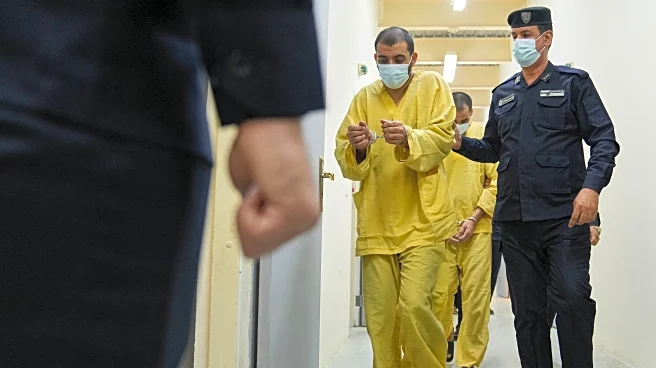
Deployments this month were largely incident-free, in stark contrast to the government's attempt to enter Druze-majority Sweida last July, which led to deadly violence. The U.S., meanwhile, has moved thousands of Islamic State prisoners formerly guarded by the SDF to Iraq.
But there are also signs of friction on the ground.
The SDF accuses the government of besieging Kobani, a Kurdish-run town cut off from the main SDF enclave, while Arabs living in SDF areas are resentful of its continued control, notably in ethnically mixed Hasakah city, according to two Syrian security officials.
SDF commander Mazloum Abdi has said the three brigades comprising SDF fighters will be based in Qamishli, Hasakah and Derik, near the Iraqi border. But officials on both sides said that while there was a tentative understanding on a location near Qamishli, the other two had yet to be agreed.
The SDF wants one stationed on Mount Abdelaziz near Hasakah city, overlooking its southern approaches and an extensive network of tunnels, Syrian military sources said. Damascus objects to this.
KURDISH OFFICIAL SEES SECURITY IN KURDISH HANDS
Arab-majority areas fell quickly to the government advance, including Deir al-Zor province and its oil fields. But the deal requires the SDF to hand over two other fields near Qamishli - Rmeilan and Sweidiya - and Qamishli airport. This has yet to happen.
A regional intelligence officer described SDF concessions so far as symbolic.
Abdulkarim Omar, a senior Kurdish official, told Reuters that government security forces would withdraw after coordinating and finalising "integration mechanisms".
Asayish (Kurdish security forces) will be part of the interior ministry, and they are the ones who will protect this region from within," he said, adding that "lengthy discussions" were needed on the agreement's implementation.
Turkey has also indicated lingering doubts. It views the Kurdish YPG militia, the SDF's backbone, as an extension of the Kurdistan Workers' Party (PKK), which staged a decades-long insurgency in Turkey before entering a peace process.
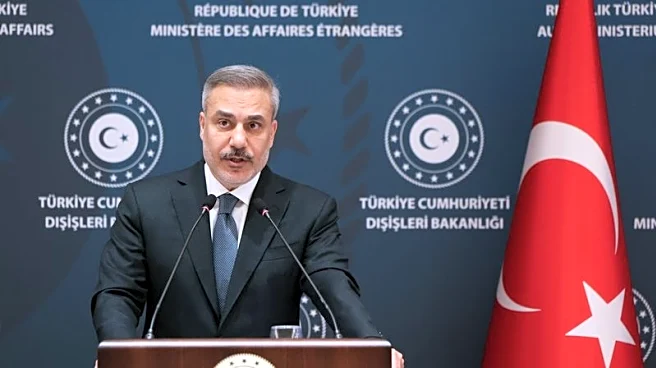
Foreign Minister Hakan Fidan said the YPG's withdrawal created a "healthier" security map, but Turkey's security concerns would only be fully addressed when YPG severs links to the PKK and undergoes a "historic transformation".
(Additional reporting by Ece Toksabay in Ankara and Tom Perry in Beirut; Writing by Feras Dalatey and Tom Perry; Editing by Aidan Lewis)