




By Chibuike Oguh
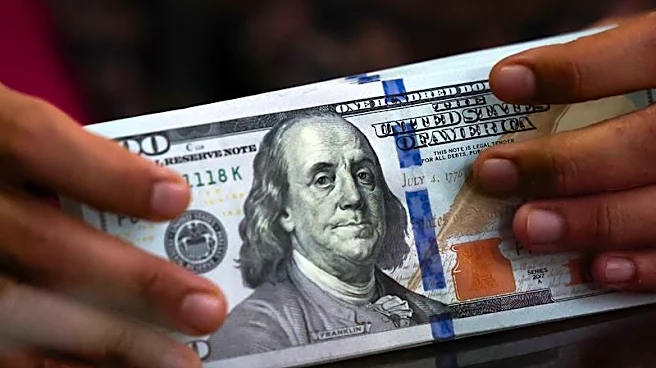
NEW YORK, Aug 19 (Reuters) - The dollar weakened against major currencies on Wednesday after the U.S. Treasury Department announced it plans to double liquidity support buyback operations for longer-dated bonds.
The euro rose 0.87% against the dollar to $1.1676, hitting its highest level in more than 2-1/2 months.
Sterling was 0.68% higher against the dollar at $1.3625, rising to its highest since May 11.
The announcement suggests an expansionary monetary policy and the availability
of more dollars in the market, which is causing the U.S. currency to depreciate, said Juan Perez, director of trading at Monex USA.
"It makes sense for the dollar to depreciate since this is on top of other themes that have been negative for the dollar including a Federal Reserve that is not going to be communicative and no progress on the Middle East tensions," Perez said.
Long-term Treasury bond yields fell following the announcement, with the 30-year bond yield dropping almost 10 basis points to 5.1942%. The yield on benchmark U.S. 10-year notes fell 5.74 basis points to 4.649%.
The U.S. Treasury said the change will be effective between September 9 and November 4.
"Treasury would have to issue more treasury bills to finance the removal of duration from the market," said Deutsche Bank analyst George Saravelos in an investor note.
"To the extent that this eases financial conditions, it would arguably necessitate an offsetting tightening from the Federal Reserve. If Chair Warsh does not recognize the buyback as a factor driving an easing of financial conditions, we would take it as an additional dollar negative driver."
The dollar weakened 1.42% to 0.802 against the Swiss franc, hitting its lowest since mid-June.
FED MINUTES IN VIEW
Markets are also eyeing minutes from the Fed's last policy meeting to better understand officials' thinking on interest rates. The Fed minutes are set to be released at 2 p.m. ET (1800 GMT) on Wednesday.
Data released during recent weeks pointed to a softer U.S. economy, including unexpected job losses in July and mild inflation readings, leading investors to scale back rate-hike bets.
"There's this belief that there's not going to be much hawkishness in there or much detail about hiking for the remainder of the year. That hurts the dollar as well," Perez said.
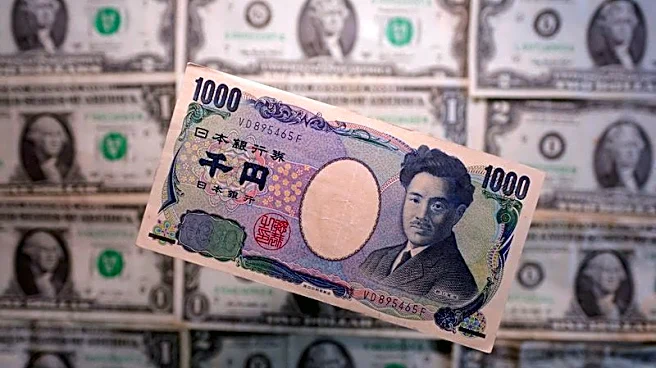
The Japanese yen strengthened 0.77% to 158.36 per dollar, pulling away from the closely watched 160 level after giving back much of its intervention gains.
The dollar index, which measures the U.S. currency against six major peers, was down 0.72% at 98.93, dropping to its lowest since late May.
(Reporting by Chibuike Oguh in New York; Editing by Nia Williams)