






By Michael S. Derby
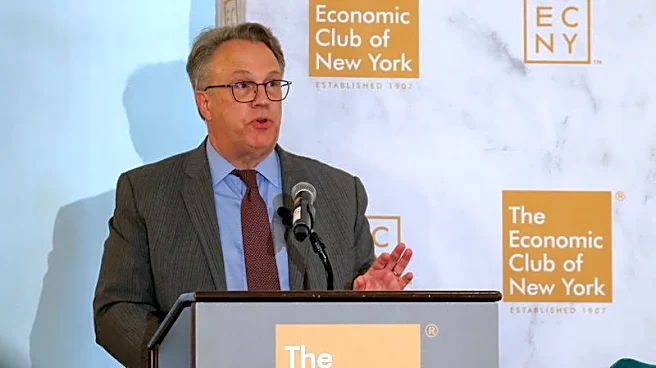
Sept 2 (Reuters) - Federal Reserve Bank of New York President John Williams said on Wednesday rising long-term bond yields aren’t driven by inflation fears but are instead a reflection of a solid economy, in comments that also said he was still collecting information to drive his next monetary policy decision.
In terms of the increase in real-world borrowing costs, “what's driving it…is really a strong U.S. economy and a strong economic outlook fueled by big investments in AI and data
centers and technology in general, so I see this as more of a reflection of the strength of the economy,” Williams said on CNBC.
Williams downplayed the idea that worries over inflation are driving a surge in borrowing costs. Market moves have rattled investors and even prompted action by the Treasury Department aimed at helping limit the increase.
Williams indicated that higher borrowing costs, which in theory should create restraint on economic activity, don’t definitely drive the monetary policy choices of a central bank that must take responsibility for getting too-high levels of inflation back to the 2% target.
“It's our job” to get price stability, Williams said, and “nobody else can do that for us.” On the situation with rising yields, he said “it's not really about financial conditions affecting the economy, it's more about the economy affecting financial conditions.”
Investors widely expect the Federal Reserve to raise what is now a 3.5% to 3.75% federal funds target rate range at its September 15 to 16 Federal Open Market Committee meeting. Many central bankers have signaled alarm at the persistence of inflation over the 2% target and have either called for or signaled openness to raising rates to counter price pressures.
In a speech on Friday, Fed Chairman Kevin Warsh indicated a willingness to act if the price pressure environment called for it.
In the CNBC interview, Williams framed the upcoming rate decision as a complicated one.
“There’s no clear science” that says monetary policy is currently in the right position to accomplish the Fed’s objectives and lower inflation to target in the next year or so, Williams said.
When it comes to getting price pressures down, “I would say that the data recently have been encouraging towards that, but again we can't just look at a month or two” and be confident inflation is headed in the right direction.
Williams said trade tariffs and the Middle East war are the main reasons why inflation is currently above 2%, but expectations over the future of inflation remain in check.
When it comes to the choice he’ll be making at the September FOMC meeting, it will “depend on the data and depend on some of the risks to achieve our goals,” Williams said. “My view is that we just have to keep watching” the data going into the meeting.
Williams also said in the interview that Treasury efforts to manage borrowing costs are effectively taken as a given at the central bank. “It doesn't complicate my job or our job making monetary policy” and what the Treasury is doing doesn’t “fundamentally” change the central bank’s work to achieve its objectives.
(Reporting by Michael S. Derby, Editing by Louise Heavens and Andrea Ricci )