
By Aftab Ahmed, Munsif Vengattil and Aditya Kalra
NEW DELHI, Nov 14 (Reuters) - Indian Prime Minister Narendra Modi's office summoned the telecommunications secretary on Saturday to explain how officials
ordered the takedown of more than 100 websites based on fake court orders, two government officials said.
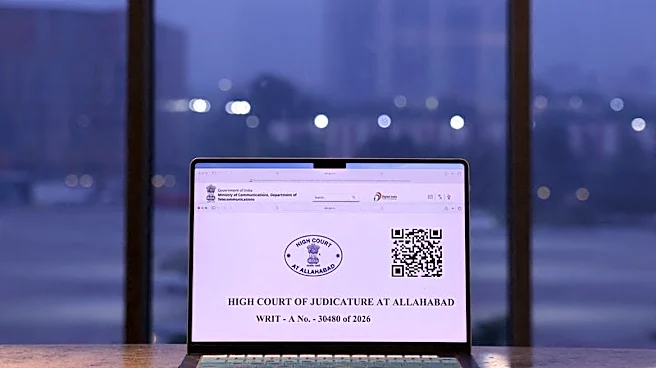
The intervention from Modi's office signals intensifying scrutiny after Reuters reported on Wednesday that telecom officials directed internet providers to block 129 illegal betting websites based on fake High Court orders which were emailed to officials by people posing as lawyers.
While online betting is illegal in India, the case has raised concerns that a lack of safeguards in India's content-takedown system could allow falsified court documents to be used to block legitimate websites.
The findings have triggered a criminal investigation by state police into potential forgery and cheating by unidentified people.
Modi's office summoned Telecom Secretary Amit Agrawal to appear and explain the lapse, cutting short Agrawal's trip to another state, said the two government officials with knowledge of the matter.
Agrawal is the most senior bureaucrat in the telecommunications ministry, which oversees everyone from big telecom operators to internet providers.
"The action taken by the Department of Telecommunications against betting accounts was carried out through the relevant field officers," one of the officials said.
Agrawal, his ministry and Modi's office did not respond to requests for comment.
Court precedents generated using AI have caused concerns among judges the world over. India's Supreme Court in July set aside a tribunal's orders that relied on non-existent judgments, and a US judge recently disqualified lawyers over use of fabricated legal citations.
On Friday, Reuters reported that the telecoms ministry had initiated an internal investigation into the alleged fraud, while police have sought ministry records as part of a criminal investigation.
The two state court orders flagged as fake by Reuters, based on comments from police and the court registry, contained fabricated court logos and seals, as well as a fake QR code.
They were available publicly on the Department of Telecommunications' website for months, along with correspondence that showed government officials ordering internet providers to remove the websites.
On Saturday, one of the fake court orders was still accessible on the government's website, while one had been removed.
Amid growing concerns over fake orders, India's Supreme Court justices last year said such fabrication "bearing forged signatures of Judges strikes at the very foundation of public trust" and "such grave criminal acts cannot be treated as ordinary or routine offences".
(Reporting by Aftab Ahmed, Munsif Vengattil and Aditya Kalra; Editing by Stephen Coates and William Mallard)