






By Valerie Volcovici, Georgina McCartney and Ernest Scheyder
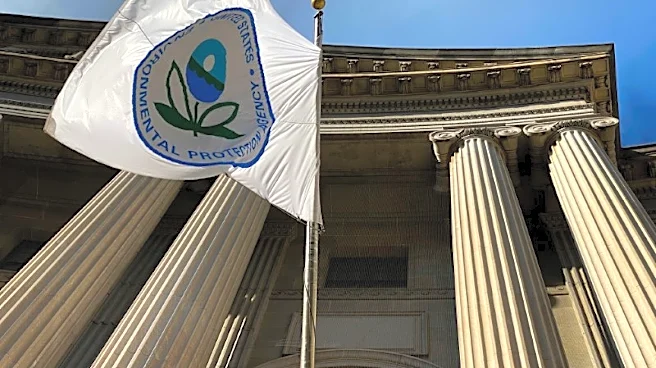
WASHINGTON/HOUSTON, Sept 14 (Reuters) - The U.S. Environmental Protection Agency on Monday announced rules to repeal former President Joe Biden's limits on carbon emissions from coal- and gas-fired power plants and to prevent future climate-focused regulations of those facilities.
The agency also proposed rescinding all remaining greenhouse gas emissions requirements for power plants to prevent future climate regulations targeting the power sector,
saying the EPA does not have authority under the Clean Air Act to regulate the sector's GHG emissions.
The moves are part of President Donald Trump's efforts to unwind U.S. climate policy that his administration says has hindered energy production.
The announcement was made on the sidelines of a gathering of G20 energy ministers this week in Houston, where the global officials will discuss energy security, expanding baseload power and "regulatory efficiency."
EPA Administrator Lee Zeldin said new moves to prevent future regulation of greenhouse gas emissions from the power sector will enable the U.S. to build new generating infrastructure needed to meet skyrocketing electricity demand.
"Americans have been demanding more common sense at federal agencies under President Trump's leadership," he said at a press conference in Houston. "That means cutting red tape so we can build new power-generating infrastructure."
The electricity sector is responsible for nearly a quarter of U.S. greenhouse gas pollution and is the second biggest emitting U.S. sector after transportation.
U.S. power sector emissions rose by 4% last year, according to the Energy Information Administration.
COST VS SAVINGS
Last June, Trump's administration issued its proposal to repeal rules written under Biden to curb emissions of carbon dioxide, mercury and other air pollutants from power plants.
Biden's carbon emission rules for power plants would have reduced greenhouse gas emissions by 1 billion metric tons by 2047, part of his administration's fight against climate change.
The rule would have required coal-fired power plants and new natural gas-fired generators to install equipment in the coming decade to capture emissions before they reach the atmosphere. That requirement made zero-emissions alternatives like solar and wind more attractive.
Zeldin said the proposal will save the industry $370 million in direct compliance costs.
But environmental and public health advocates said removing the regulations will lead to billions in public health and environmental damages.
"Denying the existence of a quarter of the country’s climate pollution is utterly reckless. It will lead to more lost lives and suffering from intense heatwaves, drastic storms and destructive wildfires, just like those we’ve seen this summer," said Maggie Coulter, an attorney at the Center for Biological Diversity’s Climate Law Institute, on Monday.
Biden's EPA estimated that its rule would deliver $370 billion in net benefits.
"EPA has treated this harm as essentially zero in recent analyses, including ignoring its prior estimates based on uncertainty," said Dena Adler, senior attorney at the Institute for Policy Integrity.
"This is like an insurance agent saying that your home burning down is costless because you don't know the exact dollar value of the damages."
Under Secretary of Energy Kyle Haustveit told reporters that the new rules would lift up coal-fired electricity, which had been declining steadily in the U.S. due to the availability of cheaper natural gas and renewable energy.
"President Trump ended the war on beautiful, clean coal," he said. "Coal is reliable, affordable, secure."
The Edison Electric Institute, which represents the country's largest investor-owned utilities, said it welcomed the repeal of the carbon capture and storage-based standards but said it planned to work with the agency to ensure there is regulatory certainty for the sector.
While the EPA proposed halting future federal carbon rules for power plants, utilities still face emissions reduction rules in different states.
(Reporting by Valerie Volcovici; Editing by Andrea Ricci and David Gregorio)