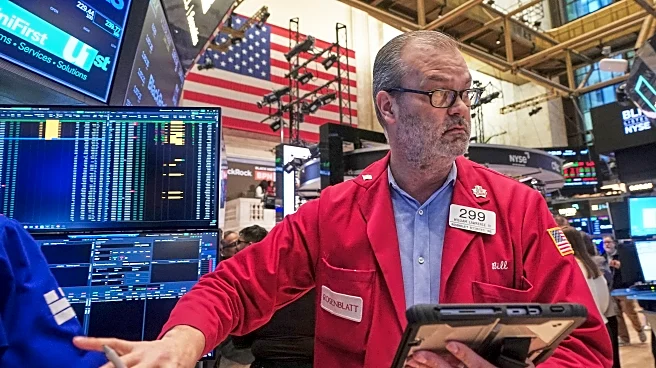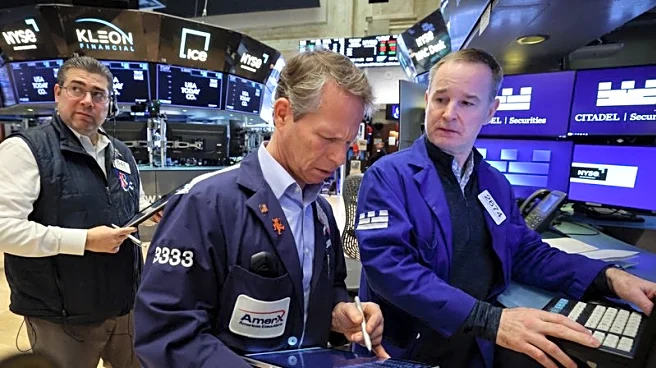

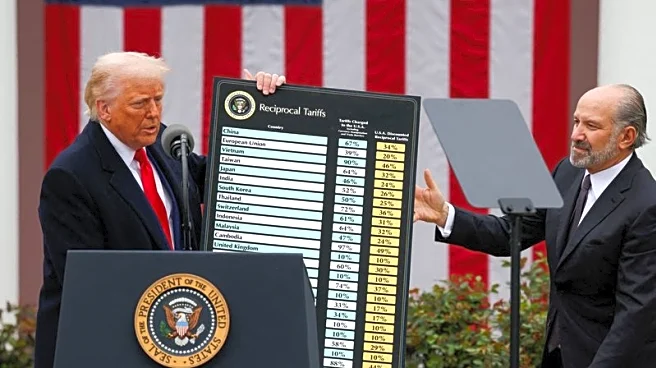

NEW YORK, Feb 20 (Reuters) - Stock markets in the United States and Europe jumped on Friday after the Supreme Court struck down U.S. President Donald Trump's tariffs, a key pillar of the adminstration's economic platform.
MARKET REACTION:
STOCKS: The S&P 500 rose and was last up 0.3%. European auto shares and U.S.-listed shares of stock markets from South Korea to India rallied.
BONDS: The yields on benchmark U.S. Treasuries rose, with that on 10-year notes up 2 basis points to 4.096%
FOREX: The dollar
index weakened slightly and was last down 0.2% at 97.67.
COMMENTS:
ROB BURDETT, HEAD OF MULTI MANAGER, NEDGROUP INVESTMENTS, LONDON:
“This ruling has major implications for the limits of US presidential power and the division of power between the legislative branch and the executive branch, but also as a macro catalyst across equities, bonds, currencies and global trade flows. The Supreme Court’s decision on Trump’s tariffs is a major macro event with multi‑asset ramifications.
“For equities, the ruling against the tariffs is widely expected to lift US and global equities. Relief from trade uncertainty may act as a tailwind for cyclicals and import‑dependent sectors such as IT hardware (including semiconductors, although they will most likely be included in sectoral tariffs) retail and industrials.
“In terms of bonds, Treasury yields could rise (more so at the longer end) due to expectations of stronger trade activity and a potential widening of the fiscal deficit (if the historic refunds must be paid).
“The US dollar may soften if tariff refunds increase the deficit and reduce the policy‑tightening impulse from higher import prices. Elsewhere, lower input costs ease pressure on margins, especially for retailers and manufacturers.”
GENNADIY GOLDBERG, HEAD OF US RATES STRATEGY, TD SECURITIES, NEW YORK:
“The big question for everyone is what exactly happens to refunds and whether this means the government has to refund the tariff revenue and how quickly that happens. And the key source of uncertainty is what the administration does in response.
"They have repeatedly promised that they will impose other tariffs with other statutes that will equilibrate the tariff rates. So I do think that will help limit the market's response, because what matters for the fixed income market is forward collections of tariffs, even if there is a one-time refund that has to occur because of the decision.”
MARK HACKETT, CHIEF MARKET STRATEGIST, NATIONWIDE, PHILADELPHIA:
“The immediate algo-driven reaction will be in globally oriented companies that have the greatest tariff exposure, such as global markets, industrials, consumer staples, technology, and health care. Caution is warranted, however, as we have learned since the pandemic, as the initial, emotional reaction is often exaggerated and prone to whipsaws. The expectation of most investors is that the administration has an alternative strategy for tariffs.”
CHRISTOPHER HODGE, CHIEF US ECONOMIST, NATIXIS, NEW YORK:
"Despite this blow to his presidential powers, Trump still has plenty of tariffing tools in his arsenal, but we think, given the focus on affordability, he will be hesitant to use them. So while we cannot discount the possibility of renewed threats and continued drama in the trade realm, we think that we have seen the peak of effective tariff rates."
TODD SCHOENBERGER, CHIEF INVESTMENT OFFICER, CROSSCHECK MANAGEMENT, WASHINGTON DC:
"The markets are responding because it's a piece of uncertainty that is now certain. Markets are responding with a greater risk appetite for equities because we finally got something resolved and we've been in this back and forth pattern so far in 2026 and the main ingredient is uncertainty, so finally we have something that we can at least is done, let's move forward."
"I think this was the absolute expected outcome and Wall Street knew that was going to be the case the because there were hints that were being played out. The only question now becomes a rebate issue so that could have a negative impact on the economy."
JEFF LESCHEN, MANAGING DIRECTOR, BRAMSHILL INVESTMENTS, NAPLES, FLORIDA:
“I think the Trump administration has contingency plans in place. Investors need to be a little more focused and take some time to digest the news. There’s a lot of information we don’t know at this point. I don’t think the ruling derails the trajectory of how things have been going. I don’t expect there will be major revisions to the S&P targets for the year.”
SCOTT LINCICOME, VICE PRESIDENT OF GENERAL ECONOMICS, CATO INSTITUTE, WASHINGTON:
“The court’s decision is welcome news for American importers, the United States economy, and the rule of law, but there’s much more work to be done. Most immediately, the federal government must refund the tens of billions of dollars in customs duties that it illegally collected from American companies pursuant to an “IEEPA tariff authority” it never actually had.
"Even without IEEPA, other U.S. laws and the Trump administration’s repeated promises all but ensure that much higher tariffs will remain the norm, damaging the economy and foreign relations in the process. Implementing new tariff protection will take a little longer than it did in 2025 and, perhaps, will be a little more predictable. Overall, however, the tariff beatings will continue until Congress reclaims some of its constitutional authority over U.S. trade policy and checks the administration’s worst tariff impulses.”
(Reporting by the Global Finance & Markets Breaking News team; compiled by Vidya Ranganathan)