






By Samuel Indyk and Rocky Swift
LONDON, Aug 12 (Reuters) - Global equity markets edged higher and oil prices steadied after talks to end the Iran war hit an impasse and markets turned their attention to U.S. inflation data later in the day.
Traders will focus on the U.S. consumer prices data for signals on the timing of any Federal Reserve rate hike.
Although the data will not capture the most recent rise in oil prices, it could still prove instrumental in setting expectations for the Fed's meeting
next month when money markets show a roughly 50% chance of a hike.
Consumer prices are expected to increase by 0.1% in July after falling 0.4% in June, according to a Reuters poll. Annual CPI inflation is forecast to slow to 3.4% from 3.5% a month earlier.
"We think the market's read on interest rates, inflation and monetary conditions seem to be driving the market at the moment," said Dorian Carrell, head of multi-asset income at Schroders.
"The CPI projection is expected to come in reasonably soft today which would tee up a hold before the midterms, all else being equal," he added.
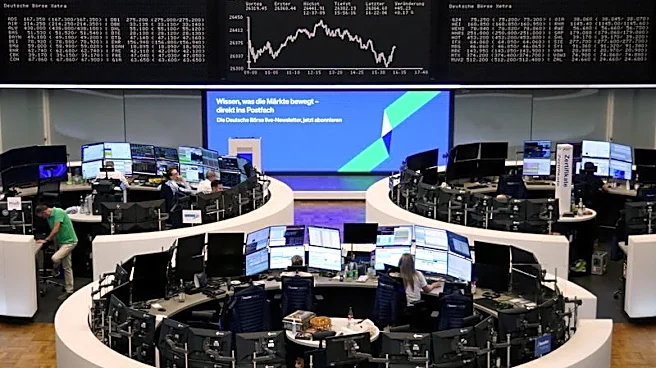
Late in the European morning, the pan-continental STOXX 600 was up about 0.2%. Major stock indexes in Frankfurt, Paris and London were up 0.1% to 0.4%.
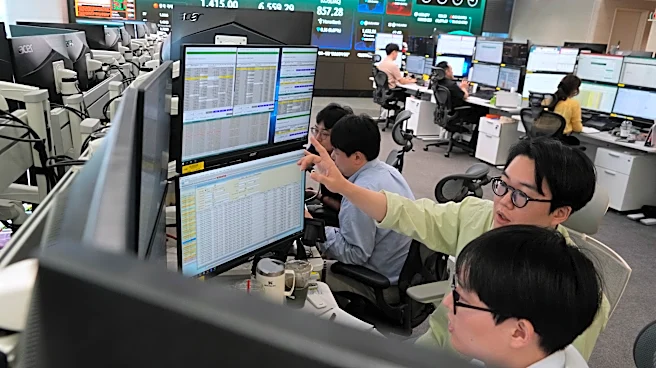
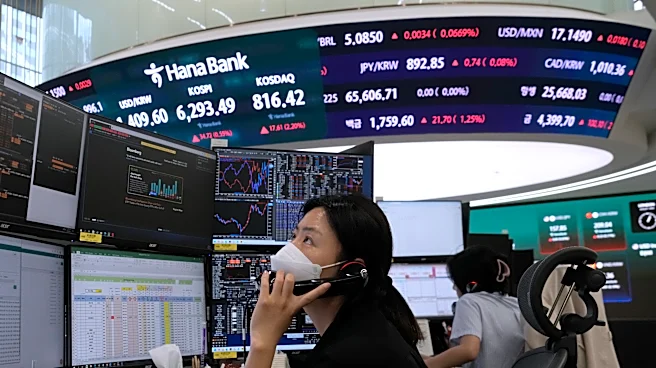
In Asia, stocks rose 0.9%, led by a 3.7% gain in South Korea's Kospi and an almost 1% rise in Japan and Taiwan stocks as chipmakers rose sharply.
U.S. stock futures, the S&P 500 e-minis, were up 0.3%, while Nasdaq futures rose 0.7%, as upbeat results from AI cloud company CoreWeave after the market closed on Tuesday gave the AI trade another boost.
TALKS TO END IRAN WAR CONTINUE
Markets were still following talks to end the war and reopen the Strait of Hormuz to shipping traffic.
The U.S. and Yemen's Iran-aligned Houthis reported separate attacks on shipping on Tuesday, while both Iran and the U.S. have stepped up their rhetoric in recent days.
Iran's most senior security official, Mohsen Rezaei, said on Tuesday that the Strait of Hormuz shipping route will remain closed unless the U.S. accepts Iran's conditions to end the war.
Despite the lack of progress between the two sides, investors are calm.
"Our base case for a long time has been a gradual but messy de-escalation," said Schroders' Carrell.
"We don't expect traffic (through the Strait of Hormuz) to go to its full capacity. We think that puts a floor on the oil price and maintains an energy-driven inflationary driver in markets in the near- to medium-term."
U.S. crude dipped 0.3% to $82.94 a barrel and Brent fell 0.2% to $89.71 per barrel, poised to snap a five-day positive streak. Both benchmarks settled more than $1 higher on Tuesday, marking their highest closes since July 31 and extending gains after jumping about 5% on Monday.
MARKETS ANTICIPATE A BOJ HIKE
Markets are increasingly pricing in an early rate hike in Japan, putting pressure on the nation's shorter-dated bonds. The yield on the 5-year Japanese government bond rose to 2.12%, a record high, while the 2-year yield reached a 31-year peak of 1.645%.
Investors price in an almost 60% chance of a quarter-point hike at the Bank of Japan's September meeting.
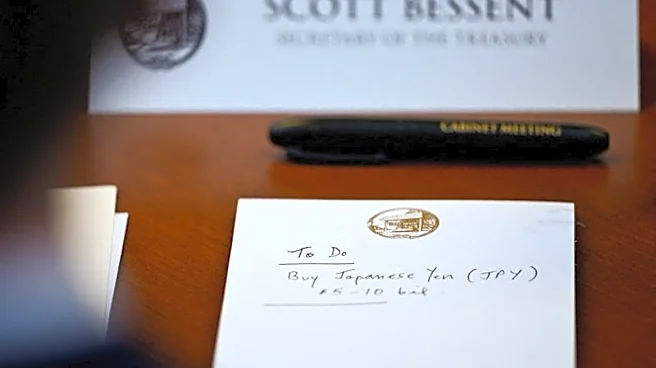
The yen strengthened slightly to 159.12 per dollar, remaining off last week's high of 155.20 after several suspected rounds of intervention.
The dollar index, which measures the currency against a basket of currencies, was little changed at 99.84. The euro and sterling were also struggling for direction before the U.S. inflation data.
Spot gold rose 1% to $4,413 an ounce, while spot silver jumped 2.5% to $66.29 an ounce.
(Reporting by Samuel Indyk in London and Rocky Swift in Tokyo; Editing by Edwina Gibbs, Stephen Coates and Barbara Lewis)