



By Howard Schneider
WASHINGTON, Jan 13 (Reuters) - Federal Reserve officials are hedging about how much rising productivity will help return inflation to the U.S. central bank's 2% target, reiterating this week they need to keep interest rates at current levels until it becomes clearer that price pressures will ease.
Higher productivity, all things equal, can let firms produce goods and services more cheaply, and recent strong productivity gains, along with hope for more to come from artificial intelligence
investments, have prompted some in the Trump administration to argue the Fed should lower rates as a result.
But central bank officials said this week it was too early to build higher productivity into the outlook for rates, with monetary policy likely on hold for now in the face of inflation that is still running above target.
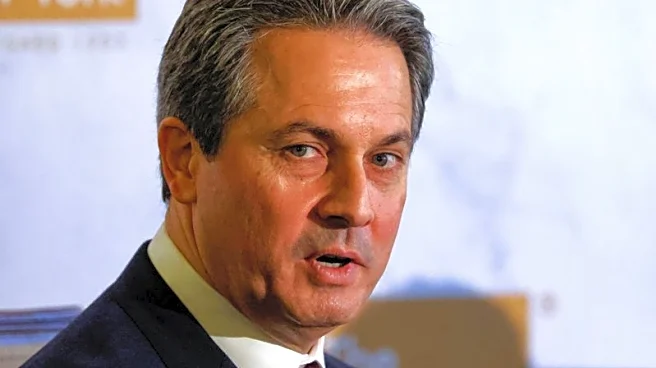
"I am hopeful that we are probably in a higher productivity regime. But I think it's too early to call that, and it's certainly too early to outsource our job of bringing inflation back towards 2%," St. Louis Fed President Alberto Musalem said in a webcast hosted by MNI. "I see little reason for near-term further easing of policy."
The Fed's current 3.50%-3.75% policy rate is roughly neutral, Musalem said, and doesn't need to fall unless it is clear that a currently "resilient" labor market is beginning to fail, or that inflation is falling faster than expected back to the central bank's target.
Underlying consumer inflation in December was 2.6% on a year-over-year basis, the same as in November, the Bureau of Labor Statistics reported on Tuesday, but food prices on a month-to-month basis jumped by the most in more than three years, and housing inflation was also strong.
President Donald Trump, however, said the new data showed there was "very low inflation" and should prompt the Fed to "cut interest rates, MEANINGFULLY."
The Fed is not expected to cut rates at its January 27-28 meeting, with many investors anticipating the central bank may remain on hold for the remainder of Fed Chair Jerome Powell's term as the head of its policymaking body, which ends in May after just three more meetings.
Trump has not named a successor, but tension has mounted between the two men after Powell disclosed in a statement on Sunday that he had been threatened with criminal indictment over testimony he gave to Congress last June.
COMPARISON TO GREENSPAN-ERA FED DEBATE
The policy debate, meanwhile, has continued in the background and begun to focus on productivity numbers that jumped 4.9% on a year-over-year basis in the most recent report, for the third quarter of last year, a number that drove down unit labor costs to nearly 2% on that same basis.
Trump administration officials, including top economic adviser Kevin Hassett, who is a candidate to succeed Powell, have said they are confident that trend will continue and, because it would help moderate inflation, provides a reason the Fed should reduce borrowing costs. Fed Governor Stephen Miran, on leave from his job as head of the White House's Council of Economic Advisers, has echoed that argument.
The U.S. central bank faced what some regard as an analogous moment in the mid-1990s, when then-Fed Chair Alan Greenspan rebuffed arguments by other officials for rate hikes at a moment when inflation pressure seemed to be building, anticipating that productivity would help inflation ease.
In comments on Monday, New York Fed President John Williams, an economist at the central bank's Washington-based Board of Governors in the 1990s, said he appreciated the parallels, but said he felt inflation was helped in that earlier episode not just by productivity, but by other factors, including expanded globalization, that are not currently present.
"I love positive shocks and supply shocks," Williams said at a Council on Foreign Relations event in New York, "but I think there were other factors that were helping keep inflation low" in the 1990s that are not the same today.
"I do not think the parallels are complete," said Williams, who aligned with Musalem in saying he did not see a reason to cut rates in the near term.
(Reporting by Howard Schneider; Editing by Chizu Nomiyama and Paul Simao)