







By Leika Kihara
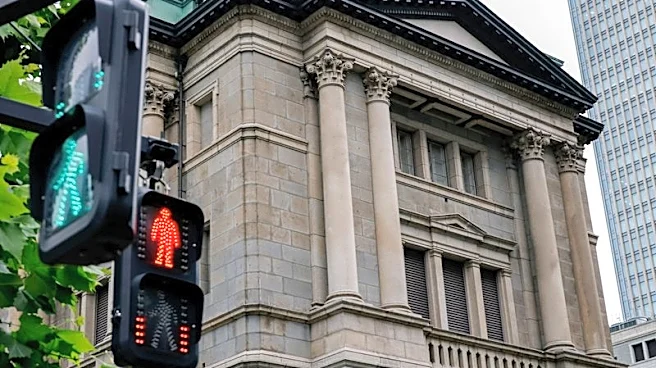
TOKYO, July 24 (Reuters) - The Bank of Japan will likely maintain its warning over the risk of inflation overshooting its 2% target next week, but signal that those risks have not increased significantly from three months ago, three sources familiar with its thinking said.
In a quarterly outlook report due at next week's policy meeting, the BOJ is expected to highlight lingering inflation risks stemming from the Middle East conflict, robust global AI demand and rising import costs from a weak
yen.
At the same time, the central bank believes the likelihood of a worst-case scenario, in which severe supply disruptions trigger a sharp surge in prices and force rapid interest-rate hikes, has diminished from three months ago, said three sources familiar with its thinking.
"There is a risk of underlying consumer inflation deviating upward from our 2% target," the BOJ said in June when it raised interest rates, language sources said is likely to feature again in next week's quarterly outlook report.
The tone marks a notable shift from April's report, when the central bank warned of a "big overshoot in inflation" given the huge uncertainty triggered by the Middle East war that erupted following the U.S.-Israeli strikes on Iran on February 28.
After sounding that alarm in April, the BOJ pushed its policy rate to a 31-year high of 1% in June.
With risks of an immediate, oil-driven inflation shock easing, policymakers are now turning their attention to the extent to which firms continue to pass rising costs on to households, the sources said.
The change in emphasis suggests the BOJ is looking beyond the direct fallout from the Middle East conflict and focusing on broader inflationary forces, including AI-related demand and a weak yen, as it weighs the timing of its next rate hike. Analysts polled by Reuters expect the BOJ to raise rates to 1.25% anytime between October and December.
"If prices rise in line with BOJ forecasts in the summer through autumn, that will lay the groundwork for the next rate hike," said Mari Iwashita, a strategist at Nomura Securities.
At the two-day meeting ending on July 31, the BOJ is likely to keep interest rates steady at 1% and revise up its growth forecast on receding uncertainty over the Middle East war.
Core consumer inflation hit 1.6% in June, staying below the BOJ's 2% target for a fifth straight month, suggesting that firms have yet to aggressively pass rising costs on to households.
But analysts expect core inflation to climb back above 2% later this year, as the recent surge in producer prices filters through to the broader economy.
"Both upside price risks and downside economic risks appear to have subsided compared with three months ago," one of the sources said. "The likelihood of the BOJ's baseline projections materialising has increased," another source said.
The sources spoke on condition of anonymity as they were not authorised to speak publicly.
PHASING OUT THE TIMEFRAME
The BOJ is seen maintaining guidance pledging to keep raising rates with an eye on the economic and price fallout from the Middle East conflict, the sources said.
However, policymakers remain divided over how quickly to move, with hawks arguing the BOJ has room to tighten faster, while others favour a more measured approach.
What could tip the balance is evidence of building price pressures. If higher costs increasingly feed into consumer inflation, the BOJ may be forced to act sooner than markets currently anticipate.
Hawks in the board could also push to bring forward the BOJ's projected timetable in the report for achieving stable 2% inflation, which is currently estimated to occur sometime between October this year and March 2028.
With inflation already near 2%, however, the timeframe may start to lose relevance as a policy communication tool. Investors will be increasingly focused instead on the bank's assessment of inflation risks, financial conditions and the yen's trajectory, some analysts say.
"How the BOJ evaluates current financial conditions, including the ongoing depreciation pressure on the yen, will be important for gauging the timeline to the next hike," said Ayako Fujita, chief economist at JPMorgan Securities Japan.
(Reporting by Leika Kihara; additional reporting by Takahiko WadaEditing by Shri Navaratnam)