









By Stefano Rebaudo and Alun John
MILAN/LONDON, June 11 (Reuters) - The developed market rate-hiking club is getting bigger, as the European Central Bank on Thursday joined counterparts in Australia, Norway and Japan in tightening monetary policy, while more central banks are set to follow in the coming months.
The Strait of Hormuz is still effectively closed, and oil prices remain high, meaning many policymakers feel forced to raise interest rates to prevent an energy-driven surge in inflation.
Here's
where central banks in the Group of 10 developed economies stand, ranked from the highest policy rate to lowest:
1/ AUSTRALIA
The Reserve Bank of Australia has raised interest rates three times this year to 4.35%, the highest in the G10, to head off a global energy shock, fully reversing the amount of cuts it made last year.
Governor Michele Bullock says there are signs that policy tightening is working as intended. Markets see the RBA on hold for the coming months, but are pricing around a 75% chance of one more rate hike by year-end.
2/ NORWAY
Norway's central bank is likely to keep monetary policy on hold on June 18, after raising its policy rate by 25 basis points to 4.25% in early May.
That move came earlier than analysts had expected and ahead of other major central banks, which argued that more data was needed to gauge the impact of the U.S.-Israeli war on Iran.
Norway's annual core inflation rose unexpectedly in May, supporting expectations interest rates could increase further this year.
3/ BRITAIN
The Bank of England also meets on June 18 and is expected to keep its key rate steady at 3.75%, where it has been throughout 2026.
Markets are fully pricing a rate hike by September, but in a sign of policymakers' uncertainty, at its last meeting the BoE scrapped its usual practice of publishing a central forecast for inflation and other key economic indicators.
Instead it produced three scenarios, the most extreme of which could require a "forceful" increase in borrowing costs.
4/ UNITED STATES
Market participants see the Federal Reserve holding rates steady at its June 16 to 17 meeting, as inflation pressures and strong economic data lead investors to scale back earlier expectations of monetary easing.
Traders repriced the outlook after the Iran conflict, first scrapping expectations for rate cuts and then moving to price in a hike in 2026. Markets now imply a 60% chance of a rise by the October meeting.
Economists believe new Chair Kevin Warsh, nominated by President Donald Trump and facing pressure to lower rates, may find it difficult to muster enough support for cuts.
5/ NEW ZEALAND
The Reserve Bank of New Zealand does not meet until early July, when markets see a rate increase from the RBNZ's current 2.25% as likely, with more later in the year.
It is in a tough spot though. Inflation is expected to push well above its 1% to 3% target band while the jobless rate is at a decade high.
6/ CANADA
The Bank of Canada held its policy rate at 2.25% on Wednesday, saying there were few signs that higher energy costs were spilling over into broader inflation.
Recent figures showed inflation remained within the central bank’s 1% to 3% target band, while a drop in core data indicated that underlying demand is still subdued.
Economists expect the central bank to keep rates on hold in 2026.
7/ EURO ZONE
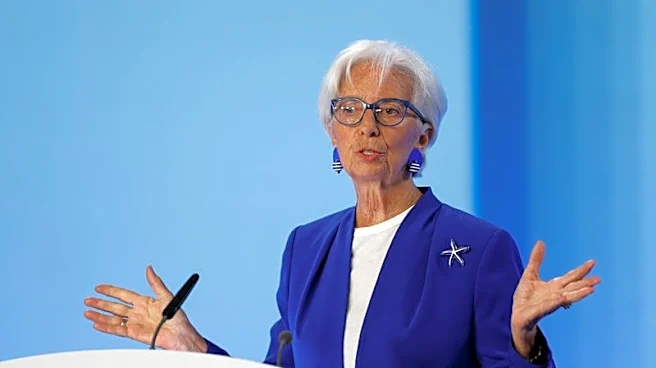
The European Central Bank raised interest rates for the first time in nearly three years on Thursday in the hope of curbing inflation before a surge in energy costs triggered by the Iran war spreads more broadly across the euro zone economy.
The well-telegraphed move took the benchmark deposit rate to 2.25%. The ECB also published new baseline projections for inflation putting it at 3.0% this year, 2.3% in 2027 and 2.0% in 2028.
8/ SWEDEN
The Riksbank meets next week, but markets don't expect a change to its 1.75% key rate until later in the year, with underlying inflation relatively low.
9/ JAPAN
The Bank of Japan is expected to raise its short-term policy rate from 0.75% at its meeting next week, continuing its cautious hiking cycle from negative territory.
However, its efforts to demonstrate its credibility as an inflation fighter are complicated by Governor Kazuo Ueda's two-week hospitalisation.
Japan's wholesale inflation accelerated in May at the fastest pace in three years, partly due to the weakness of the yen. [FRX/]
A rate hike could help with that, though Japanese rates remain low compared to most peers.
10/ SWITZERLAND
At 0%, the Swiss National Bank has the lowest policy rate in the G10, and markets expect it to maintain that at its meeting next week and for the rest of the year, given inflation is subdued and the strong franc is already doing much of the tightening.
Officials remain wary of returning to negative rates and the SNB is likely to rely more on currency intervention to contain the franc's strength.
(Reporting by Alun John in London and Stefano Rebaudo in Milan; Editing by Amanda Cooper and Emelia Sithole-Matarise)