
By Leika Kihara and Takaya Yamaguchi
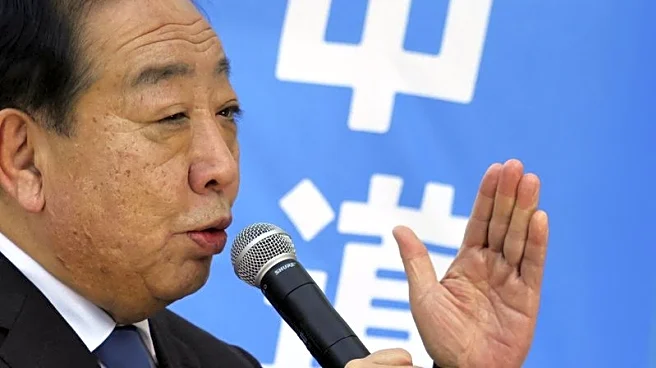
TOKYO, Jan 26 (Reuters) - Any Japanese intervention to prop up the yen will have limited effect in sustainably halting the currency's slide, former Finance Minister
Yoshihiko Noda, who co-heads Japan's newly created largest opposition party, told Reuters.
Instead, Japan must combat yen declines by showing its resolve to get its fiscal house in order and protect the central bank's efforts to raise interest rates from political interference, said Noda, who was finance minister when Group of Seven nations including Japan conducted a rare, concerted yen intervention in 2011.
"Even if Japan were to conduct currency intervention, it won't be that effective unless Tokyo has the understanding of other countries," which would be hard to get, he said.
"I've done it myself but back then, it was concerted intervention" to reverse a yen spike after Japan was hit by a massive earthquake and tsunami in March 2011, Noda said in an interview on Sunday. "The situation is very different now."
Currency markets are on edge over the chance of official yen buying after the currency's spike on Friday caused by so-called rate checks by the New York Federal Reserve, and a pledge by Prime Minister Sanae Takaichi to act against speculative moves.
Some analysts say the rate checks, seen as authorities' signal of their readiness to step into the market, suggest Washington approves of an intervention to prop up the yen.
But Japan typically seeks indirect consent not just from the U.S., but other G7 advanced economies when it intervenes.
NEW POLITICAL PARTY
Takaichi called a snap general election on February 8 to seek a mandate to gear up her expansionary fiscal policy.
Noda's main opposition Constitutional Democratic Party of Japan joined Komeito to form a new political party earlier this month, in an attempt to present a united front against Takaichi's ruling camp which they see as too right-leaning.
He is now co-head of the new party, Centrist Reform Alliance (CRA), which is the largest opposition party and seen as the only viable competitor to Takaichi's ruling coalition.
Japanese government bonds and the yen have been sold off in recent weeks on concern Takaichi's expansionary fiscal policy and the slow pace of interest rate hikes by the Bank of Japan could lead to additional debt issuance and too-high inflation.
Noda said excessive yen falls must be put to a halt as they hurt households by pushing up import costs. But this can only be done by easing market concern over Japan's finances, he added.
"Japan needs to be in crisis-management mode" with markets ringing a "drumbeat of alarm bells" over its dire fiscal state through a selloff in bonds and yen, he said.
Japan must send a stronger message to markets it has a plan to get its fiscal house in order and focus more on fighting inflation including by shedding its reliance on loose monetary policy, Noda said.
For example, the government and BOJ should tweak a current joint agreement focused on beating deflation to one clarifying the role each would play in taming inflation, Noda said.
"Japan needs an environment where the BOJ can make timely and appropriate decisions toward normalising monetary policy," Noda said. "Politicians must avoid making comments threatening the BOJ's independence."
An advocate of loose fiscal and monetary policy, Takaichi has signalled her preference for low rates and in the past said the government holds jurisdiction over monetary policy goals.
But she toned down her criticism of the BOJ's rate hikes and nodded to its decision to raise rates in December after the yen's renewed declines.
Japan has a history of using verbal and direct intervention to combat sharp rises in the yen that hurt its export-reliant economy. Since 2022, Tokyo's forays into the market have shifted towards addressing excessive yen declines that push up import costs and broader inflation.
(Reporting by Leika Kihara and Takaya Yamaguchi; Editing by Jamie Freed)