
FRANKFURT, April 16 (Reuters) - European Central Bank policymakers were wary of raising interest rates prematurely when they met last month amid growing fears of a new energy-driven surge in euro zone
inflation, accounts of the gathering showed on Thursday.
The ECB kept its key interest rate at 2% at the March 18-19 meeting and policymakers are inclined to do so again this month, judging they don't have enough evidence to conclude that the Iran war would durably raise inflation in the bloc.
The central bank's baseline projections, published at the time of the March meeting, assumed the hit from the Iran war would be short-lived. But they were accompanied by adverse and severe scenarios that incorporate a sharper increase in energy prices, greater uncertainty and international spillover.
"Incoming data could then be monitored to assess which scenario seemed to be crystallising, thereby facilitating swift policy action if necessary," the ECB said in its account of the meeting.
"At the same time, it was important not to act prematurely on the basis of adverse or severe scenarios, unless incoming data suggested that they were becoming increasingly likely."
ING's global head of macro Carsten Brzeski said the accounts showed the ECB had turned "hawkish" - minded to raise rates - but "in no hurry to react".
APRIL MAY BE TOO EARLY
Policymakers hoped they would have more information about the duration and extent of the war at their following April 29-30 meeting but acknowledged it may still be too early to draw conclusions about the implications for inflation.
They said they would monitor inflation expectations, selling prices, companies' profits, labour market data, underlying inflation figures and supply chain disruptions among key factors.
"All of this would help to assess whether developments were moving in line with the baseline outlook or one of the scenarios, even though it might still be difficult to judge whether there was a threat to the price stability objective," the ECB said.
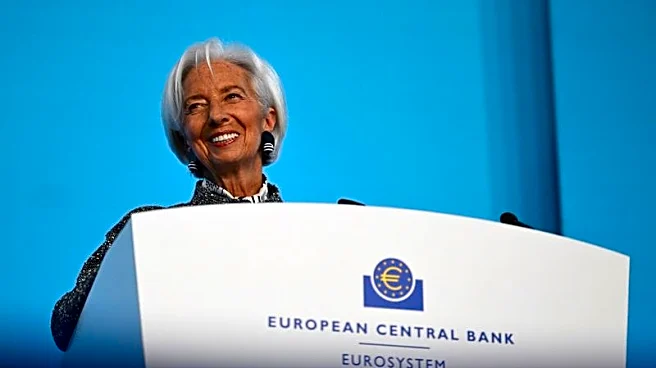
ECB President Christine Lagarde has since said the central bank would respond in a forceful or persistent way if inflation looked set to sit well above its 2% target for an extended period, but even a more modest overshoot could call for a "measured" rate move.
(Reporting by Francesco CanepaEditing by Peter Graff)