
By Emma Farge and Alexander Cornwell
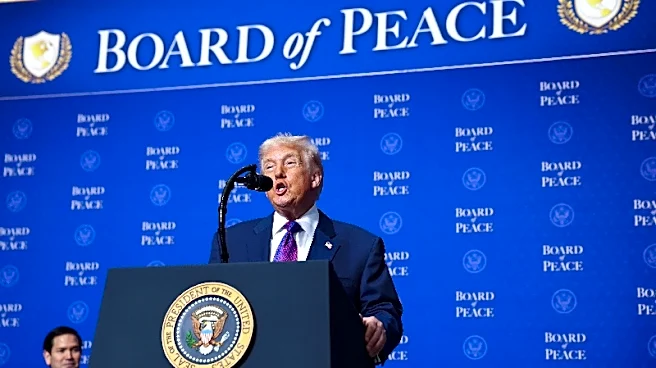
GENEVA/TEL AVIV, May 19 (Reuters) - The gap between funding pledges and disbursement for Donald Trump's Gaza rebuilding plan must be closed urgently, the U.S. president's
"Board of Peace" has said in a report, identifying a potential cash crunch in a plan estimated to cost $70 billion.
Trump set up the Board of Peace to oversee his ambitious plan to end Israel's war in Gaza and rebuild the shattered territory. Trump has said it would also tackle other conflicts.
The U.N. Security Council has recognised the board, though many major powers have not joined Washington's main Middle Eastern allies and some middling and smaller states in signing up.
Reuters reported in April that the board had only received a small fraction of the $17 billion pledged by members for Gaza, preventing the president from moving ahead with his plan.
The board denied that report, saying in a statement it was an "execution-focused organisation that calls capital as needed" and that there "are no funding constraints." The money is meant to pay for reconstruction and fund the activities of a new U.S.-backed transitional Gaza government.
APPEAL FOR QUICKER DISBURSEMENT
In a May 15 report to the United Nations Security Council, viewed by Reuters on Tuesday, the board said that "the gap between commitment and disbursement must be closed with urgency".
It added: "Funds committed but not yet disbursed represent the difference between a framework that exists on paper and one that delivers on the ground for the people of Gaza."
The board called on countries that signed up for Trump's board and others to make contributions without delay, and urged "those Member States that have made pledges to accelerate disbursement processes."
The report did not say how much money it had received or how big the gap was, though it said that the amount pledged remained $17 billion. The Board of Peace did not immediately respond to a request for comment.
The United States, Saudi Arabia, the United Arab Emirates and Qatar are among states to have pledged funds to the board. Others include Morocco, Uzbekistan and Kuwait.
Gaza's reconstruction after more than two and a half years of Israeli bombardment is expected to cost more than $70 billion. It is a key element of Trump's plan for Gaza's future, but it has been held up as the plan has appeared to stall.
Despite an October ceasefire, Hamas is refusing to lay down its weapons and Israel has kept troops in a large swathe of Gaza while continuing to conduct air strikes.
In its report, the board said that 85% of Gaza buildings and infrastructure had been destroyed and that an estimated 70 million tonnes of rubble would need to be cleared.
Reuters reported on May 15 that the U.S. was considering asking Israel to give some tax money it is withholding from the Palestinian Authority to the Board of Peace to fund reconstruction.
Many states are hesitant to finance Gaza's reconstruction through Trump's board over transparency and oversight concerns and would rather fund efforts through traditional institutions like the United Nations, European and Asian officials say.
Under the board's charter, member states would be limited to three-year terms unless they pay $1 billion each to fund the board's activities and earn permanent membership. It is unclear whether any state has paid the fee.
(Reporting by Emma Farge and Alexander Cornwell; editing by Rami Ayyub, Aidan Lewis)