






By Noel Randewich
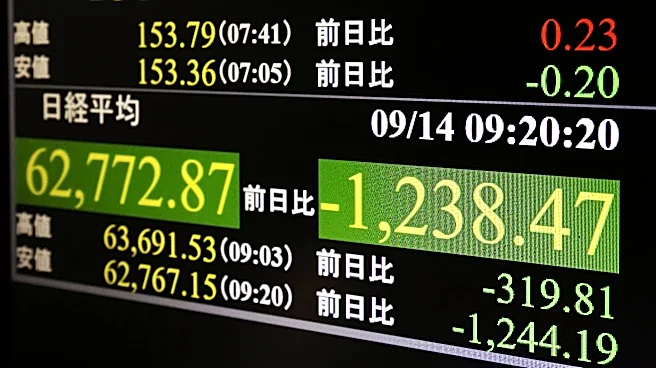
Sept 14 (Reuters) - Wall Street dipped on Monday, weighed down by losses in Nvidia and other chipmakers after top executives in U.S. artificial intelligence companies raised safety concerns and called for a slowdown in the development of AI.
Investors were also jittery after the benchmark 10-year Treasury yield briefly surpassed 5% for the first time since 2023 ahead of this week's Federal Reserve meeting. The U.S. central bank is widely expected to raise interest rates.
AI-linked
stocks plunged worldwide after the leaders of Anthropic, OpenAI and xAI warned of risks from rapid development, the starkest threat yet to the billions of dollars being poured into the industry that have driven markets to record highs.
Shares of Nvidia declined 2.6%, while Broadcom, Micron Technology and Advanced Micro Devices each fell around 4%.
The PHLX chip index tumbled 5.4%, reducing its 2026 gain to 58%.
Brent crude futures advanced 1% to $106 as worries about energy supplies mounted following new strikes on Saudi Arabian energy infrastructure and attacks on ships in the Middle East.
High inflation, heavy corporate and government borrowing and concerns about the long-term U.S. fiscal trajectory have sent U.S. Treasury yields higher in the past month. The 5% mark that the 10-year yield hit on Monday is a threshold that analysts warned could ripple through the U.S. economy and threaten the bull market in stocks by denting the relative appeal of U.S. equities.
Traders are pricing in a 90% chance that the Fed will raise interest rates by 25 basis points at its policy meeting on Wednesday to fight inflation related to high oil prices, according to CME's FedWatch.
"The 10-year going above 5% is huge and speaks volumes, and it may pressure the Fed to do more than just one rate hike," said Jake Dollarhide, CEO of Longbow Asset Management.
The S&P 500 was down 0.27% at 7,636.02 points.
The Nasdaq declined 0.10% to 26,306.65 points, while the Dow Jones Industrial Average was down 0.27% at 52,433.44 points.
ServiceNow, Adobe and Workday rallied between 4% and 8%. Those and other software stocks have sold off in recent sessions over worries that competition from AI companies could hurt their margins.
The S&P 500's recent decline, coupled with a strong earnings outlook, has the benchmark trading at 19 times expected earnings. That is its cheapest since April 2025, when U.S. President Donald Trump's "Liberation Day" tariff announcements threw global markets into a tailspin.
Eight of the 11 S&P 500 sector indexes declined, led lower by industrials, down 1.59%, followed by a 1.22% loss in utilities.
Advancing issues outnumbered falling ones within the S&P 500 by a 1.1-to-one ratio.
The S&P 500 posted nine new highs and eight new lows; the Nasdaq recorded 41 new highs and 174 new lows.
(Reporting by Niket Nishant and Tharuniyaa Lakshmi in Bengaluru; Editing by Sherry Jacob-Phillips, Pooja Desai and David Gregorio)