


By Rahul Trivedi
BENGALURU, April 21 (Reuters) - South Korea's economy likely returned to growth last quarter due to strong semiconductor exports and steady domestic demand, a Reuters poll of economists showed, although some warned the Middle East war could begin weighing on activity.
Asia's fourth-largest economy was projected to have expanded 1.0% on a seasonally adjusted basis in January-March, rebounding from a contraction in the final quarter of 2025, according to the median forecast of 18 economists.
Forecasts ranged from 0.2% to 1.3%.
On a year-on-year basis, gross domestic product (GDP) was forecast to have grown 2.7%, accelerating from 1.6% in the previous quarter, based on the median estimate from 22 economists polled April 15-20.
"If you look at the exports data, semiconductors have been the growth engine and are expected to remain so for the rest of the year. At the same time private consumption, investment data and some of the monthly indicators point to a strong performance in Q1," said Jeeho Yoon, senior economist at BNP Paribas.
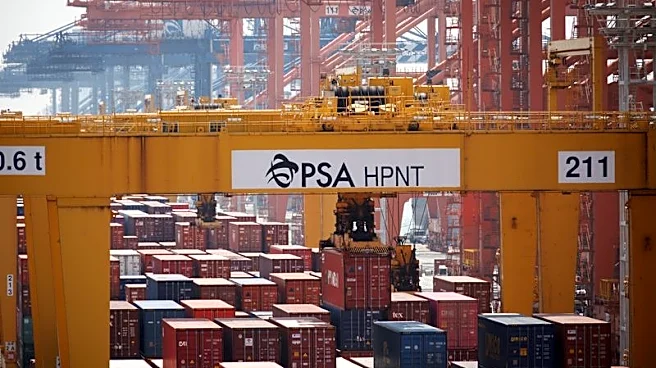
Official data showed exports rose slightly in January and February before surging in March. Semiconductor exports jumped 151.4% to a record $32.83 billion - nearly 40% of total monthly exports - driven by memory chip prices and strong server demand linked to AI investment.
However, several economists said the U.S.-Israeli war with Iran, which has disrupted oil and gas supplies from the Middle East, could hurt growth. South Korea imports around 70% of its oil from the Gulf.
"The conflict will probably have more of an impact on Q2 rather than Q1. We're in for a higher energy-price environment for the rest of the year," BNP's Yoon said, adding while this could weigh on growth and push up inflation in the near term, fiscal policy is helping cushion the immediate shock.
Economists in a separate Reuters poll this month forecast GDP growth to average 2.0% this year, unchanged from pre-war expectations and slightly above the International Monetary Fund's (IMF) 1.9% projection. Inflation is predicted to average 2.4% in 2026, up from 1.9% in a January survey.
(Reporting by Rahul Trivedi; Polling by Renusri K in BANGALORE and Jihoon Lee in SEOUL; Editing by Vivek Mishra and Muralikumar Anantharaman)