
By Dan Rosenzweig-Ziff and Richard Cowan
WASHINGTON, July 29 (Reuters) - Todd Blanche's bid for Senate confirmation as U.S. attorney general faced a setback on Wednesday, as Senate Judiciary Committee Chairman
Chuck Grassley postponed a scheduled confirmation vote because of key Republican holdouts.
Senators John Cornyn and Thom Tillis were seeking written assurances from the Department of Justice over a settlement agreement between President Donald Trump and his administration that created a fund for his allies and broad tax immunity for Trump.
Blanche, the acting attorney general, told lawmakers in early June that the administration was dropping the $1.776 billion "weaponization" fund meant to pay people who said they had been the subject of government abuse, which could include Trump supporters who assaulted police officers during the January 6, 2021, Capitol riot.
But some Republicans have sought firmer assurances that the fund would not proceed.
NOMINATION NEEDS EVERY REPUBLICAN VOTE IN COMMITTEE
"Tomorrow’s markup is postponed as work continues to secure sufficient support in committee to favorably report Attorney General-nominee Todd Blanche, who is highly qualified for the job," a spokesperson for Grassley said in a statement announcing the delay. It was not immediately clear when a rescheduled vote could take place.
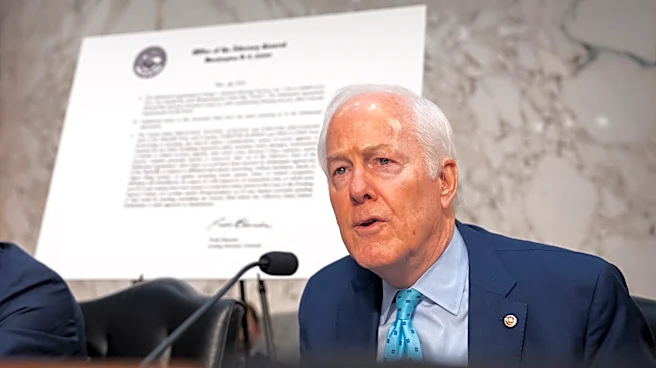
Cornyn, a Texas Republican, had said throughout the day on Wednesday that he was not yet a "yes" vote because the DOJ had not sufficiently responded to his request to formally end the fund in writing.
The dispute had prompted Cornyn to cancel a meeting with Blanche on Wednesday morning.
Blanche, who was Trump's personal defense lawyer before his second term, needs the backing of every Republican on the Judiciary Committee to advance his nomination as attorney general. Cornyn's opposition could prove decisive.
"I'm not prepared to vote yes" on Blanche's nomination, Cornyn told reporters earlier on Wednesday.
For his part, the Republican Trump told reporters that he had thought Blanche's confirmation would be a routine process.
"Maybe John Cornyn's upset with me because I didn't endorse him," Trump said, referring to the senator having lost his primary runoff for another term to a Republican candidate endorsed by Trump. Cornyn later called that a "convenient excuse."
Blanche submitted a proposal in writing on Wednesday to Cornyn and key Republicans that would "put the fund to bed," according to a person familiar with the matter.
But Cornyn canceled the meeting after he did not receive a document responsive to his concerns. He is open to meeting once he receives that, his spokesperson said.
Before saying the fund was being dropped, Blanche had told lawmakers in May that he could not commit to barring money from going to people who assaulted police officers, including during the riot that sought to overturn Trump's 2020 election loss.
'THEY JUST NEED TO MAKE A DECISION'
The proposal would also clarify a related agreement signed by Blanche that gives Trump and his associates broad immunity from audits over his previous tax returns, the person said, speaking on condition of anonymity because they were not authorized to speak publicly.
"I haven't seen a single piece of writing that is responsive to what I've requested," Cornyn told reporters.
Both the tax immunity agreement and the weaponization fund emerged from a settlement agreement between Trump and his administration over the president's $10 billion lawsuit against the tax-collecting Internal Revenue Service.
"I can see why he (Trump) wants it because it provides immunity from audits that no other taxpayer could possibly get," Cornyn said.
Senate Majority Leader John Thune told reporters on Wednesday that he thought Cornyn and the White House were talking to each other.
Cornyn and Thom Tillis of North Carolina have expressed concern about Blanche's role in creating the fund. Cornyn told reporters on Wednesday that his office had sent the Trump administration his specific requests.
"They just need to make a decision," he said. "And if they do, then we'll proceed.”
(Reporting by Dan Rosenzweig-Ziff and Richard Cowan; Editing by Michael Learmonth, Howard Goller and William Mallard)