

By Cynthia Kim and Jihoon Lee
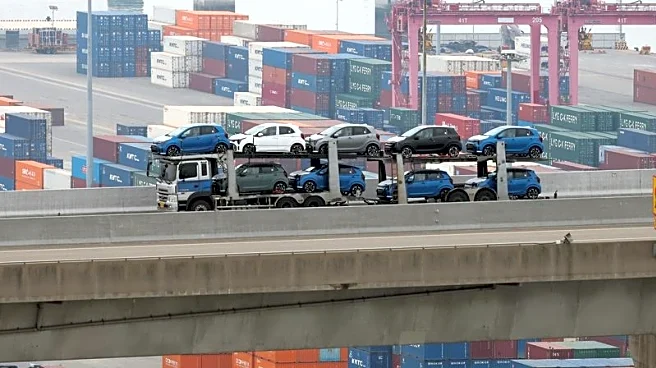
SEOUL, Jan 27 (Reuters) - U.S. President Donald Trump said he was hiking tariffs on autos and other goods imported from South Korea to 25%, citing Seoul's failure to legislate a trade deal agreed last year that capped U.S. levies on the items at 15%.
It was not immediately clear what prompted Trump's outburst on social media platform Truth Social on Monday, but South Korea has faced delays implementing the deal and there has also been tension over perceived mistreatment
of U.S. technology firms.
WHAT IS HOLDING UP SOUTH KOREA FROM IMPLEMENTING THE TRADE DEAL?
Under the deal that Trump and President Lee Jae Myung agreed when the U.S. leader visited South Korea in October 2025, Seoul pledged $350 billion of investments into strategic U.S. industries in return for tariffs being capped at 15%.
South Korean Finance Minister Koo Yun-cheol this month told Reuters, however, "it is unlikely" that the investment could begin in the first half of this year, citing administrative reasons and currency market volatility.
Any investment decisions will need to follow a multi-layered governance structure involving the project management committee, orchestrated by South Korea's trade and finance ministers, who will then evaluate commercial viability and legal alignment.
WHY IS FOREIGN EXCHANGE SUCH A CONCERN FOR SOUTH KOREA?
The won's near 7% decline against the dollar in the past six months has been a major source of concern for the country's financial authorities, prompting them to verbally support the South Korean currency several times as it approaches levels unseen since the global financial crisis.
Authorities are worried that the planned $350 billion outflow of funds to the U.S. could further weaken the won. In his interview with Reuters on January 16, Finance Minister Koo said "not a lot (of investment) can be made under the current forex situation, at least for this year."
Bank of Korea Governor Rhee Chang-yong also said this month he would not agree to any investment outflows to the U.S. if currency markets became unstable.
WHAT HAS BEEN THE SOUTH KOREAN PARLIAMENT'S ROLE?
For the U.S. trade deal, the South Korean government plans to establish a fund to raise foreign currency without destabilising the onshore dollar-won market, a step that needs a special law to be enacted through the National Assembly.
Debate had initially swirled over the need for parliamentary approval, with some officials arguing it was unnecessary since the memorandum of understanding with the United States was non-binding.
Some South Korean lawmakers demanded the bill be pushed through a fast-track process, a mechanism that allows bills to be voted on quickly, but given the scale of the investment involved the idea was opposed by many.
On November 26, the ruling Democratic Party submitted a bill to establish a policy investment vehicle and to define the fund's governance and operating rules, but the bill has been sitting at the parliament's standing committee for two months due to disagreements among lawmakers.
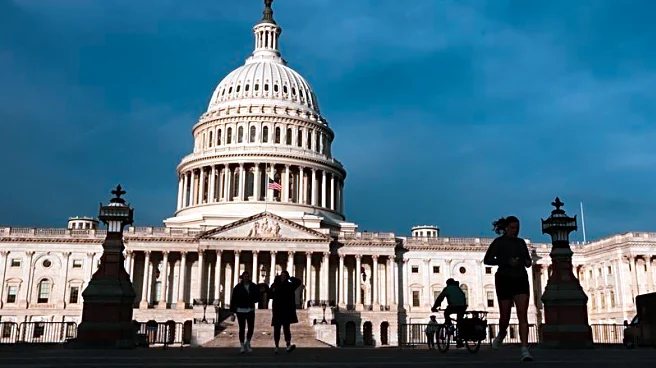
Although President Lee's Democratic Party holds the majority in the 300-member parliament, the bill must pass through the finance committee, which is currently chaired by the opposition People's Power Party.
On Tuesday, the finance ministry said it planned to ask parliament for cooperation and the ruling party said it was ready to work with the opposition to speed up the bill's passage.
Japan and South Korea had both agreed separate but somewhat similar trade framework deals with Washington last July, but Tokyo has implemented the agreement more quickly.
Japan's parliament approved its U.S. trade pact on December 3 and held the first panel consultation to discuss the first project on December 23 to kick-start Tokyo's planned $550 billion U.S. investment. WHAT OTHER TRADE FRICTIONS ARE THERE BETWEEN THE U.S. AND SOUTH KOREA?
A source familiar with the internal U.S.-South Korea discussions cited the perceived mistreatment of U.S. tech companies as a trigger point.
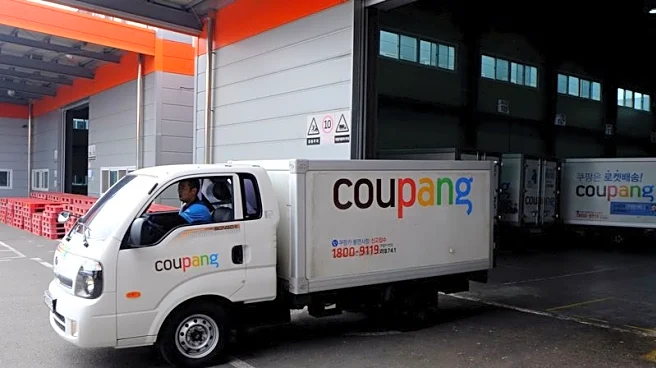
A major data breach late last year at Coupang, a U.S.-listed e-commerce company operating in South Korea, has escalated into a dispute that now threatens to hurt broader trade relations between the countries.
Coupang, South Korea's largest online retailer, alleges that the country's regulators singled out the company with public criticism and raids, wiping out market value in a loss for U.S. investors.
South Korean Prime Minister Kim Min-Seok used his meeting with U.S. Vice President JD Vance in Washington last week to deny allegations of discriminatory treatment of the company.
Vance requested that the issue be managed well by the two governments to avoid misunderstanding and escalation, Kim said after the meeting.
(Reporting by Cynthia Kim and Jihoon Lee in Seoul and Steve Holland in Washington; Editing by Ed Davies and Jamie Freed)