
By Simon Lewis and Humeyra Pamuk
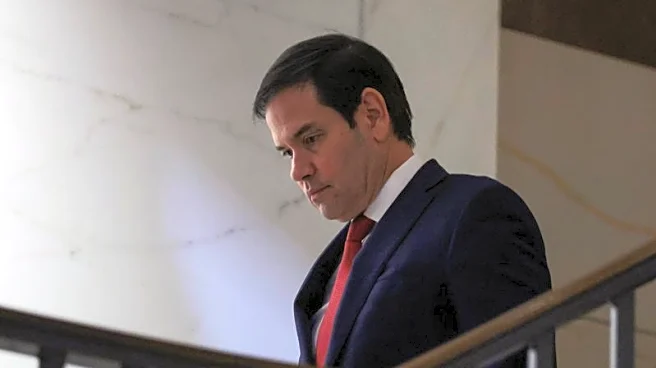
WASHINGTON, Jan 13 (Reuters) - Marco Rubio's sweeping influence in Trump's second administration — juggling posts from secretary of state to national security advisor — has
sparked a wave of AI-generated memes, including a recent one portraying him in military garb as Venezuela's ruler.
The online joke is particularly resonant for Rubio, a son of Cuban immigrants who long has trained his ire on the Communist-run nation's most important regional ally, Venezuela, and its longtime leader, Nicolas Maduro, who was seized by U.S. forces on January 3 on allegations of drug trafficking.
The military success was a personal triumph for Rubio. But it could be a mixed political blessing for a man who ran for president in 2016 and is widely regarded as a leading contender in 2028.
He is now charged with steering Venezuela from potential chaos in the vacuum created by Maduro's capture toward the democratic future he once envisioned as a junior senator, tightly binding his political fortunes to those of the country itself.
Rubio mounted an unsuccessful presidential bid in 2016, losing a bruising primary to Donald Trump, and in 2028 could find himself competing with Vice President JD Vance for the Republican nomination. Vance favors restraint in foreign policy, a contrast to Rubio's hawkish record, which has drawn criticism from some in Trump's MAGA movement who view him as a neoconservative who advocates for more U.S. intervention abroad.
"The administration is going to be dealing with Venezuela for months and probably years to come, and this could well be a millstone around Marco Rubio's neck, politically and otherwise," said Justin Logan, director of defense and foreign policy studies at the Cato Institute.
Vance's office did not have a comment for this story.
Tommy Pigott, Principal Deputy Spokesperson at the State Department, disputed there was any difference in approach within the administration and said Washington's phased plan for Venezuela included political reconciliation and ultimately normalization.
"The entire administration is unified in fulfilling President Trump's goal - moving Venezuela from a country oppressed by a narcoterrorist illegitimate regime that threatens our security, to a stable country that is a partner in the region," Pigott said.
EXILE POLITICS
The Venezuela operation has already burnished Rubio's image among some online supporters who see him as the competent face of an often chaotic administration.
It has also given him a boost in his home state of Florida, where he spent part of his childhood among Miami's staunchly anti-communist Cuban community, an experience that former aides say fundamentally shaped his worldview.
The fight against communism and socialism is "part of his DNA" and "central to his political identity," said Cesar Conda, a Republican strategist who was Rubio's chief of staff from 2011 to 2014.
"This is OUR hemisphere, and President Trump will not allow our security to be threatened," a social media post from Rubio's State Department read this week.
Rubio's political base in Florida would be energized by a return to democracy in Venezuela, and even more so if the administration can use its removal of Maduro to bring about change in Cuba, which relies on Venezuela for subsidized oil imports. Trump has said no more Venezuelan oil or money will go to Cuba and suggested Havana should strike a deal with Washington.
The Venezuela operation was immensely popular among Venezuelan and Cuban Americans in South Florida, a potential help to Republicans in the 2026 mid-terms, Ford O'Connell, a Florida-based Republican political strategist, argued.
Still, he added, Latin American policy was unlikely to affect the make-up of the Republican 2028 presidential ticket. Trump is the kingmaker, and as of now is leaning toward Vance, O'Connell said.
Trump himself has repeatedly nodded to both Rubio and Vance as potential successors, making clear both are frontrunners in his eyes, as well as possible running mates for each other.
"I think if they ever formed a group, it'd be unstoppable," Trump said in October.
A DEMOCRATIC TRANSITION?
Rubio, 54, made his mark in the Senate railing against the socialist government in Caracas and in particular its close ties with Havana, and worked with the first Trump administration from 2017-2021 on ramping up sanctions on Venezuela.
His first foreign trip as secretary of state underscored his focus. In February, during a swing through Central America and the Caribbean, he oversaw the formal seizure of a plane used by Delcy Rodriguez, then Maduro's vice president, that had been held by Dominican authorities.
Rubio has backed Trump's decision to allow Rodriguez to remain in power, and has led the administration's contacts with the new leader. But he has longstanding ties to Venezuelan opposition leaders, including Nobel Peace Prize winner Maria Corina Machado, and has spoken of his hopes of democracy for Venezuelans.
On Wednesday, he outlined a three-phase plan where the U.S. would ensure stability in Venezuela, oversee a recovery in which U.S. companies would help rebuild the country's energy sector and members of the opposition would be released from jail or allowed to return from exile, before finally moving to a transition.
On Friday, Venezuela began releasing prisoners, and Trump has met with oil executives to push them to invest.
But the road to a democratic Venezuela remains long.
Will Freeman, a fellow at the Council on Foreign Relations, said it remained unclear whether other top administration officials were invested in overseeing the full transition.
"How is he going to convince Trump, most importantly, and a critical mass of other administration officials, that it's in their interests for things to advance beyond that phase two?" Freeman asked.
(Reporting by Simon Lewis and Humeyra PamukAdditional reporting by Gram SlatteryEditing by Don Durfee and Rosalba O'Brien)