






By Ann Saphir
April 7 (Reuters) - An extended disruption of the world's oil trade from the Iran War could lift headline U.S. inflation to well over 4% by year-end, with even bigger increases possible in the short-term, fresh research from the Dallas Federal Reserve Bank suggests.
The effect on inflation expectations looks likely to be modest in the short-term and negligible in the longer-term, according to a Dallas Fed working paper published Tuesday. U.S. central bankers track inflation expectations closely
and have taken some comfort from their stability so far.
"There is little evidence of higher gasoline prices being passed through to core inflation or long-run inflation expectations becoming unanchored," Dallas Fed researchers wrote.
The findings may inform Fed policymakers' understanding of the range of possible effects on the U.S. economy from the ongoing Middle East conflict that on Tuesday appeared on the brink of a massive escalation after U.S. President Donald Trump called on Iran to open the Strait of Hormuz or suffer destruction of its power plants and bridges.
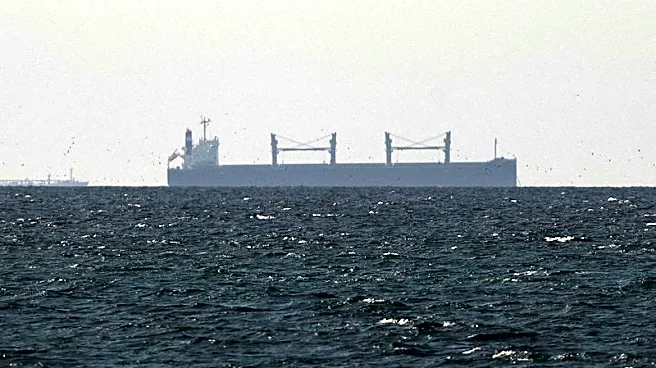
The working paper laid out the likely impact on inflation under a range of scenarios for the Hormuz, the passageway for 20% of the world's oil that has been effectively closed for five weeks.
A closure of the strait for one quarter could lift inflation in March by 5.2 percentage points on an annualized basis, though the effect would quickly dissipate, likely leaving fourth-quarter inflation elevated by 0.35 percentage points.
But a closure lasting three quarters, or nine months, would drive the price of oil from the current $115 a barrel to $167 and push up fourth-quarter inflation by as much as 1.8 percentage points, they found.
Year-over-year inflation as measured by the personal consumption expenditure price index was 2.8% in January. The Fed targets 2%.
The effect on core inflation, which excludes food and energy prices, would be 0.18 percentage points if Hormuz was closed for one quarter, and about 0.49 percentage points if the closure lasts three quarters, the researchers said. Core inflation measured 3.1% in January.
The increase in household inflation expectations would be more limited, they found.
One-year expectations could rise as much as 0.8 percentage points, according to the paper. But five- to 10-year expectations, which Fed policymakers are most concerned about, would increase by 0.09 percentage points at most.
(Reporting by Ann Saphir)