






By Mariam Sunny, Siddhi Mahatole and Steve Gorman
July 24 (Reuters) - The United States has confirmed 2,318 measles infections this year, the Centers for Disease Control and Prevention said on Friday, surpassing the 2025 tally to reach the highest annual total in 35 years amid declining vaccination rates.
The overall 2026 figures represent the highest number of U.S. cases in a single year since a major resurgence of the highly contagious disease in the period from 1989 to 1991, with more than 55,000
infections and 123 deaths.
"Reaching this milestone is particularly striking because we are only in July, and measles cases are still being reported throughout the country," said William Moss, epidemiology professor at Johns Hopkins Bloomberg School of Public Health.
Young people, ranging from infants to age 19, made up 69% of cases tracked through July 23, with children younger than five comprising a fifth of those infected this year, the CDC said.
A tenth of those younger than five who were infected ended up hospitalized, along with 3% of those aged five to 19, the CDC added. Measles-related hospitalizations this year stand at 151 so far.
Measles can be fatal in severe cases but no deaths have been reported from the disease since January 2026.
By comparison, the U.S. tally for all of 2025 was 2,289 infections, or 29 fewer than in the first seven months this year. Last year's total included 243 hospitalizations and three deaths.
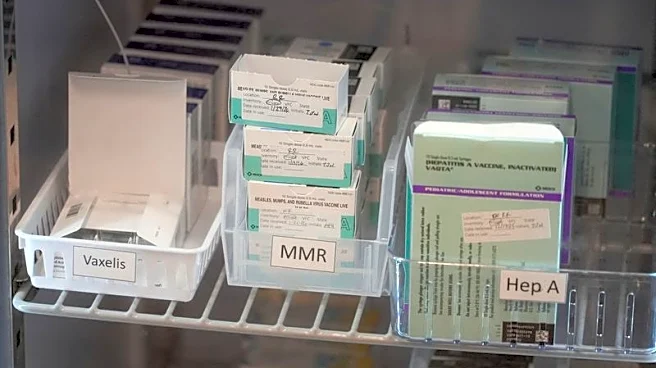
The virus infection, which typically causes symptoms such as fever, rash and respiratory issues, can be averted with a vaccine commonly given in the United States for three childhood diseases - measles, mumps and rubella. It is considered 97% effective after two doses.
MEASLES SURGE COINCIDES WITH VACCINATION SLUMP
A surge in measles cases during the past two years has coincided with a steady slump in MMR immunization rates for children since the start of the COVID-19 pandemic.
Average U.S. vaccination coverage among kindergarten children dropped last year to 92.5%, well below the level of 95% considered necessary to achieve effective "herd" immunity needed to prevent the spread of the virus, the CDC says.
Many health officials have cited a public backlash to the government's pandemic response and blame U.S. Health Secretary Robert F. Kennedy Jr.'s anti-vaccine policies for further undermining trust in disease-preventing immunizations by embracing unproven theories about vaccine dangers.
Kennedy has repeatedly promoted the claim that measles vaccines are linked to autism despite overwhelming scientific evidence to the contrary.
"Since early last year, federal leaders have dismissed measles as benign and unavoidable and have spread misleading information about the MMR vaccine," said Andrew Racine, president of the American Academy of Pediatrics.
"Halfway into 2026, the U.S. is experiencing the worst year for measles since 1991. We are witnessing an avoidable crisis that disproportionately hurts children."
As much as 93% of this year's cases were in unvaccinated individuals, with a fraction of the rest having received one or two doses of vaccine before being infected, the CDC said.
Infections were documented by the CDC this year in 45 states and the District of Columbia, with 93% associated with one of 35 new outbreaks reported in 2026, versus 48 last year.
States with the most cases included South Carolina, Utah, Arizona, Texas, Florida, Virginia and Pennsylvania, the CDC says. Just 16 of this year's cases were reported among visitors from other countries.
A South Carolina outbreak sickened nearly 1,000 people over six months after it began in October 2025 to become the largest single-location U.S. outbreak since measles was declared eliminated in the United States in 2000.
That elimination status is now under review, with the Pan American Health Organization delaying a decision until November.
(Reporting and writing by Steve Gorman in Los Angeles; Additional reporting by Mariam Sunny, Sneha S K and Siddhi Mahatole in Bengaluru; Editing by Shilpi Majumdar and Clarence Fernandez)