





TRIPOLI/BENGHAZI, Oct 1 (Reuters) - A teachers' strike over pay and working conditions is disrupting schools across Libya and delaying the start of the new academic year.
Teachers began protesting on September 13, the day schools were due to reopen, staging sit-ins outside schools and government buildings in the capital, Tripoli. Two weeks later, the teachers union escalated the campaign into an open-ended, nationwide strike across public schools.
The walkout is the latest upheaval in a country still
grappling with instability years after the 2011 NATO-backed uprising that toppled Muammar Gaddafi. Libya has also faced widespread power cuts this summer and labour unrest that recently disrupted output at its largest oilfield.
Teachers say low salaries and deteriorating school conditions have pushed them to act.
"These are not demands, but rather rights – and rights have to be taken," said Mustafa Al-Bahilil, head of the teachers union in Ain Zara on Tripoli's southern outskirts.
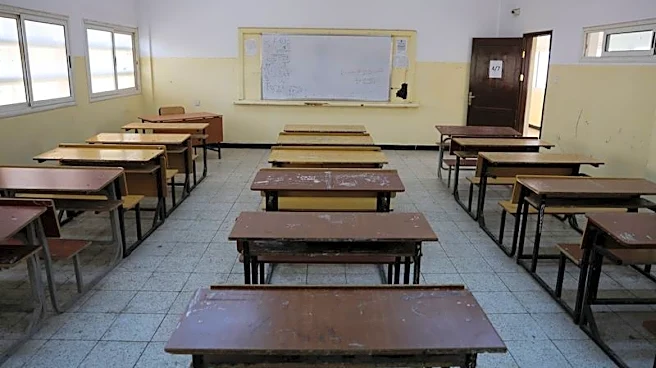
Teachers face difficulties ranging from a lack of computer labs to desks so worn out that they are unusable, often forcing staff and parents to pay for equipment themselves.
Many teachers have to work second jobs because their salaries are so low, said Tripoli teacher Hamza al-Firjani. "They get promises, but all of them are fake promises," he said.
The Ministry of Education did not immediately respond to a Reuters request for an interview.
Teachers have also joined the strike in Benghazi in eastern Libya. The country has been divided between rival administrations in the east and west since a 2014 civil war.
Mohammed Al-Jahawi, head of the teachers union in Benghazi, said the strikes were driven by surging food and other costs which had left many teachers unable to meet their basic needs.
The prospect of a long disruption has left many parents anxious. Salah Awad, a 47-year-old father of three students in Benghazi, said he hoped that the teachers' needs were addressed, but he feared the strike was going to hurt students.
"This is not the right time for a strike," he said.
(Reporting by Ayman al-Sahili in Tripoli and Ayman al-Warfali and Esam Al-Fetori in Benghazi; Writing by Alexander Dziadosz; Editing by Ros Russell)