






By Richard Cowan, Patricia Zengerle and Matt Spetalnick
WASHINGTON, July 29 (Reuters) - For generations, support for Israel united Washington. Now Israel's attacks on Gaza, the Iran war and Prime Minister Benjamin Netanyahu's close ties to U.S. Republicans are eroding Democratic backing, threatening to turn one of America's closest alliances into a partisan divide.
Support for Israel among Democratic voters has plummeted, candidates critical of Israel are winning Democratic primaries and even moderate
lawmakers are increasingly willing to challenge decades of U.S. support for Israel.
The shift is evident in Congress. This month, nearly half of House Democrats voted for a failed amendment to cut off aid to Israel, legislation that once likely would have been defeated by an overwhelming bipartisan majority. Israel receives $3.8 billion annually in U.S. military aid and received billions more in emergency funds in recent years.
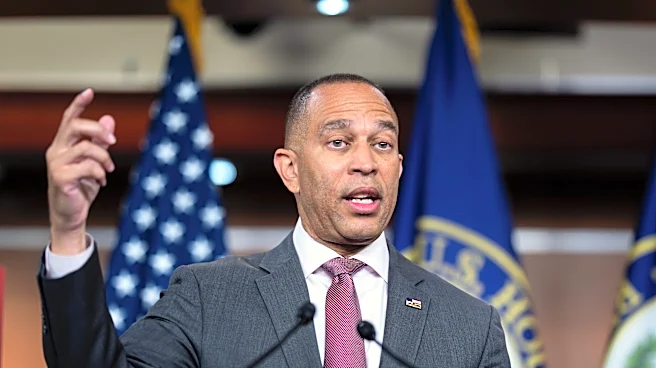
House Democratic Leader Hakeem Jeffries and some of his lieutenants opposed the measure, calling it overly broad. But former Speaker Nancy Pelosi and House Democratic Whip Katherine Clark were among those voting yes.
Democrats are increasingly divided over whether military aid should continue unchanged, be restricted to defensive weapons or be halted altogether.
U.S. Senator Chris Coons of Delaware, the leading Democrat on the Senate Foreign Relations Committee, said he hopes Israeli elections in October help restore bipartisan U.S. support while opening a new chapter beyond Netanyahu's leadership.
"New governments get to change direction," Coons told Reuters, adding, "Netanyahu has kept Israel at war for years now, partly to avoid the political consequences of his choices."
Overall sentiment toward Israel is declining. A June Quinnipiac University poll found 48% of voters and 66% of Democrats believe the United States is too supportive of Israel, up from 16% and 20% when the question was first asked in 2017.
"Yes, there is a vigorous debate, but across broad segments of the parties, support for Israel remains firmly in the mainstream," said Danny Danon, Israel's ambassador to the United Nations, in an interview.
ISRAEL A FLASHPOINT IN MICHIGAN DEMOCRATIC RACE
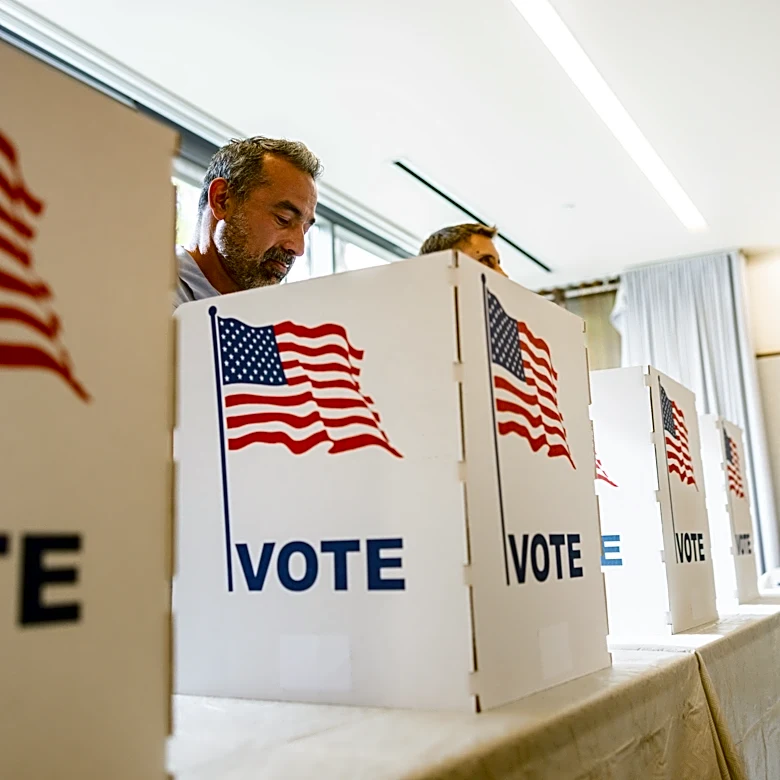
The shift faces a major test in Tuesday's Democratic U.S. Senate primary in Michigan where voters will weigh competing visions of U.S. support with growing numbers of congressional Democrats questioning longstanding U.S. military aid.
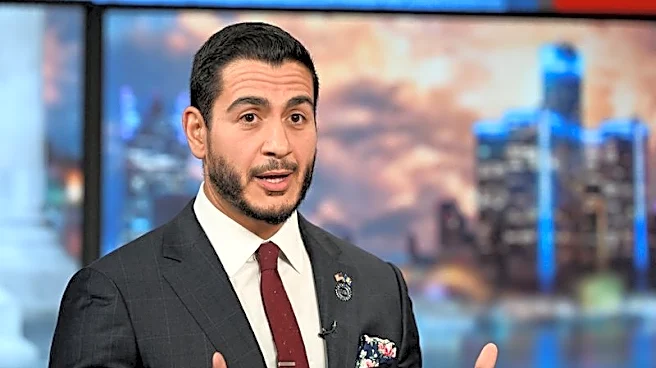
The race between progressive Abdul El-Sayed and U.S. Representative Haley Stevens will determine who faces Republican Mike Rogers in November and reflects the wider Democratic debate over Israel and longstanding U.S. military support.
Stevens made a video with AIPAC, the American Israel Public Affairs Committee, a major donor to her campaign, arguing that a close relationship with Israel "yields trade, that yields economic growth and that keeps our freedoms safe."
By contrast, El-Sayed, a former public health official, told Fox News: "The question is whether we want a politics where our money is sent over to Israel to fund genocide and apartheid instead of investing in our own kids."
A U.N. inquiry and several human rights groups have accused Israel of committing genocide in its military's devastation of Gaza, an allegation Israel rejects, saying it is fighting Hamas and taking steps to reduce civilian harm.
Israeli policy has been a factor in other battleground congressional races, including New York, Florida and Colorado.
DEMOCRATIC SUPPORT FOR ISRAEL ERODES
Strains with Democrats deepened 11 years ago, when in a speech to Congress at the request of the Republican majority Netanyahu attacked a deal crafted by then-President Barack Obama, a Democrat, on controlling Iran's nuclear program.
Sentiment critical of Israel grew after Israel launched its war in Gaza in response to the Hamas-led October 7, 2023, attack, in which nearly 1,200 Israelis and foreign nationals were killed and hundreds were taken hostage. More than 73,000 Palestinians have since been killed, according to Gaza health officials.
Israel's bombardment of Gaza has reshaped Democratic politics, fueling a backlash among younger voters and deepening a generational divide within the party.
Campus protests in 2024 intensified pressure on Democrats to reassess support for Israel. Some analysts say President Joe Biden's refusal to do so contributed to Democratic nominee Kamala Harris' loss to Trump later that year.
Adding to tensions, New York Mayor Zohran Mamdani called for Netanyahu's arrest for alleged war crimes.
This primary election cycle, some establishment candidates have been defeated by more progressive challengers who have questioned support for Israel, mostly in congressional districts dominated by Democrats.
Jeremy Ben-Ami, president of J Street, a progressive pro-Israel rival to AIPAC, said the debate within the Democratic Party reflected a backlash against the right-wing Netanyahu and AIPAC, calling it "a toxic brew that really has helped to make Israel, unfortunately, a real wedge issue in the Democratic Party."
AIPAC did not respond to requests for comment.
Shibley Telhami, a University of Maryland professor of government and politics and senior non-resident fellow at the Brookings Institution, called it a "paradigm shift that sees Israel now as a villain, even a genocidal villain, in a way that was never the case before."
While some conservative influencers have joined the attack, the Republican Party will support Israel as long as evangelical Christians and Trump stand firm, Telhami said in an interview.
ISRAEL RESHAPES POLITICAL BATTLEGROUNDS
The divide over Israel is spilling into congressional campaigns elsewhere.
Republican Representative Mike Lawler, who represents a district outside New York City with a large Jewish population, has used the Democratic shift on Israel to attack challenger Cait Conley in a battleground fight for control of the House.
In southern Florida, moderate Representative Jared Moskowitz, a consistent supporter of Israel aid, is being challenged in the August 18 Democratic primary by democratic socialist Oliver Larkin, who campaigns on his belief that Israel has committed genocide in Gaza and supports an immediate suspension of U.S. military aid to Israel.
Recent opinion polls show Moskowitz leading Larkin by 32 percentage points.
Longtime U.S. Representative Diana DeGette was defeated in the Colorado Democratic primary by Ethiopian-born Melat Kiros. Kiros has called for ending wars, including by stopping military aid to Israel, while DeGette said she supported sending only defensive weapons to Israel.
U.S. Senator Mazie Hirono, who has advocated for a two-state solution and more humanitarian aid for Palestinians, said, "I think the support for Israel's right to exist, all of that is there. It's just the (Israeli) leadership we seriously question."
(Reporting by Matt Spetalnick, Patricia Zengerle and Richard Cowan in Washington and Emily Rose and Maayan Lubell in Jerusalem; editing by Michael Learmonth and Howard Goller)