






By Howard Schneider
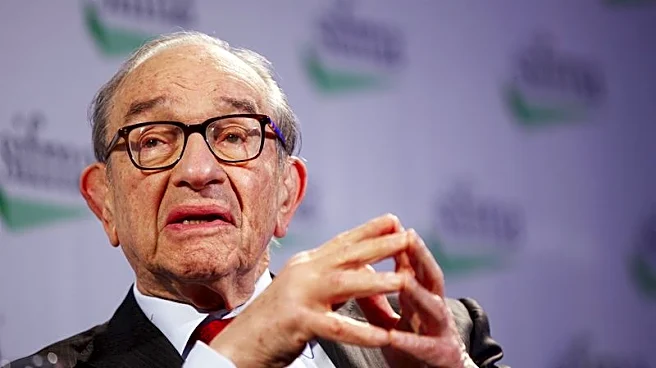
WASHINGTON, June 22 (Reuters) - Some of the late former U.S. Federal Reserve Chairman Alan Greenspan's most noted attributes as a central banker as well as what proved his greatest blind spot are about to get a replay under new Chairman Kevin Warsh.
Like "the maestro" — who died on Monday and whom Warsh cited four times during his White House swearing-in ceremony exactly one month ago — Warsh is reluctant to say too much while trusting financial markets to figure things out on their
own.
It was a recipe that helped sustain tame inflation and steady growth for most of Greenspan's more than 18 years as head of the U.S. central bank, so much so the era was dubbed the "Great Moderation."
But it also led him to downplay signs of a housing bubble on grounds that the smartest people at the richest financial institutions would not systemically misprice assets or overlook systemic risks. A crisis with roots in the U.S. subprime mortgage market overwhelmed the global financial system shortly after Greenspan left office, and led him to acknowledge in congressional hearings "a flaw" in his thinking about rational and efficient markets.
Greenspan, who died at his home from complications of Parkinson's disease at age 100, "could dazzle and puzzle" by "finding insight in often obscure pieces of data, occasionally combining these series in wondrous ways," Brookings Institution Senior Fellow Donald Kohn, a top Fed staffer under Greenspan and eventual Fed vice chair, wrote in an appreciation published on Monday.
But despite noting the fast rise in some local housing prices, Kohn noted, Greenspan "doubted a national bubble across these markets, and he did little with his soapbox or powers over bank regulation to preemptively build resilience."
Preemptive regulation became the order of the day in the wake of the crisis, with the Dodd-Frank slate of reforms forcing banks to build larger capital buffers, create resolution plans, and take other steps under closer Fed and federal government scrutiny so that none would ever be considered so big they could not be allowed to fail — and force future taxpayer bailouts.
Some of that is now being loosened under Fed Vice Chair for Supervision Michelle Bowman, and Warsh has said one of his aims is to pare back the Fed's imprint.
'BLINDERS COME OFF'
Warsh has cited Greenspan as a major influence over his approach to the chairman's job, paying homage to him repeatedly during his May 22 swearing-in, and has related some of his signature views about the economy and the proper role of the Fed to positions Greenspan was noted for.
Those include a more truncated view of how much, how frequently, and how specifically central bankers should talk about an inherently uncertain future. Greenspan prided himself on being noncommittal, even obscure, as a way to be freer to respond to new developments, and Warsh has said he feels the Fed's current inclination to explain itself risks tying the hands of policymakers.
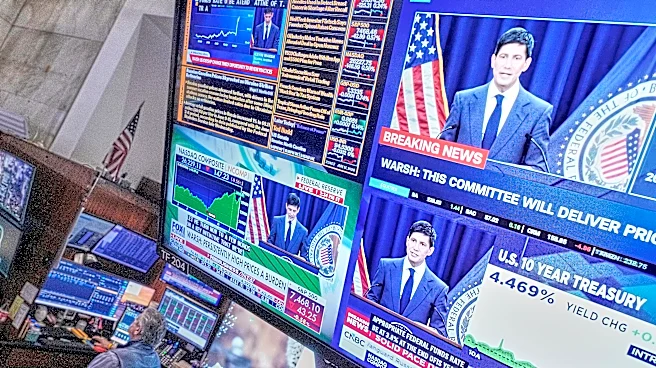
The first policy statement under the Fed's new chairman, issued last week, returned to a shorter format and stripped out explicit guidance about the future path of policy.
Yet he has also been willing to talk about the future when it matters, and in the months prior to his swearing-in noted how Greenspan in the mid-1990s pinpointed that rising productivity would help ease inflation — and argued against rate hikes that were gathering support among his colleagues.
Warsh says a similar dynamic may be developing now due to the spread of artificial intelligence technologies, and has assigned a study of productivity to one of the five task forces he has appointed at the outset of his chairmanship.
Those and other reforms Warsh says he wants to pursue are organized around an idea Greenspan would likely endorse: that the central bank shouldn't posture as the only player in town, but keep its role as narrow as possible and let households, businesses and investors sort out the rest.
In dialing back things that grew out of the 2007-2009 crisis, like the Fed's large balance sheet and its expanded communications policy, Warsh must now decide how far that goes in the one area where Greenspan himself said he got it wrong.
In his opening press conference, Warsh said that at the outset at least, it's best if the Fed is reacting to markets rather than markets reacting to an overly chatty Fed.
"Financial markets perform best when they react to incoming data. I think the financial markets work less efficiently when they ask a question. How will the Federal Reserve react to that incoming information?" Warsh said. "When all the financial markets are doing is reflecting back what we've said, then we're taking the most important source of information and we're being blind to it. I'd like us to create a system where those blinders come off, where markets are following data that they efficiently think is reliable."
(Reporting by Howard Schneider; Editing by Andrea Ricci )