
By Anna Szymanski
Jan 30 -
Everything Mike Dolan and the ROI team are excited to read, watch and listen to over the weekend.
From the Editor
Hello Morning Bid readers!
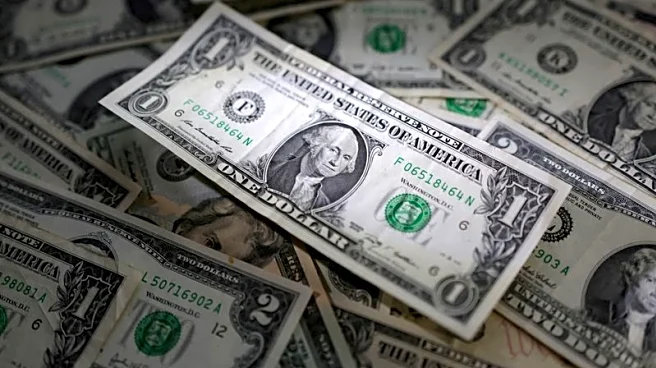
The U.S. has long maintained that it has a strong dollar policy, though few can agree on exactly what that means.
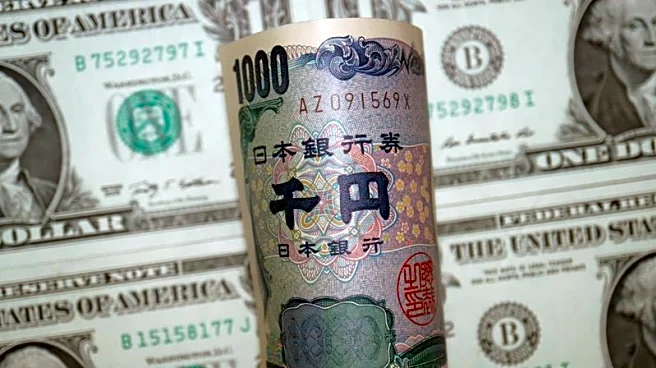
The greenback slid to its weakest level since early 2022 on Tuesday, a move initially sparked on Friday by expectations of joint U.S.-Japan intervention to prop up the yen. The decline accelerated after President Donald Trump
responded to the currency’s slide by saying the dollar was “great” and would “find its level.”
But Treasury Secretary Scott Bessent helped steady the currency on Wednesday by reiterating the U.S. government’s long-standing “strong dollar” policy.
Is this a flip flop? Not necessarily. A currency can be strong even if it happens to be depreciating against others at the moment – especially when the currency in question appreciated almost 50% in the decade preceding 2024. Though, if the administration does eventually intend to put more downward pressure on the supposedly over-valued dollar, they could end up getting more than they bargained for.
Investors, however, are more sanguine about the dollar’s prospects this morning, now that the race to replace Jerome Powell as Federal Reserve Chair has a new frontrunner: former Fed governor Kevin Warsh. While he has become a critic of the current central bank, he is perceived to be less in favor of radical monetary easing than other candidates. President Trump said he’ll announce his choice later today.
One of the biggest movers against the dollar this week was, unsurprisingly, the yen. Japan’s currency strengthened to roughly 152 per dollar on Tuesday, though it has since given some gains back. This big move may suggest that intervention is no longer necessary, but history suggests that’s probably not the case.
The euro was another big mover, with the pivotal transatlantic exchange rate briefly soaring above $1.20 per euro for the first time in four years. Europe may eye this warily, however, as too much strength could make life more difficult for EU industrial exporters as well as the European Central Bank, which meets next Thursday.
Amid the FX ructions, trade deals, diplomatic agreements and energy deals continued to be hashed out globally – just not with the U.S.
The EU and India announced a long-awaited trade deal this week, while Britain and China celebrated a “reset” in relations on Thursday, after Prime Minister Keir Starmer and President Xi Jinping pledged greater economic cooperation.
European countries also announced an agreement to jointly develop a vast offshore wind network, as the region seeks to trim its dependence on U.S. liquefied natural gas (LNG) imports and tackle rising renewable energy costs.
Staying on energy, U.S. natural gas prices soared as an Arctic blast swept across the United States. The spike has also reverberated across overseas markets, highlighting the growing globalization of the U.S.-dominated LNG trade.
The energy world’s attention has now shifted back to the Middle East, where a U.S. “armada” has sailed toward Iran. While prices slipped early on Friday, with expectations of further negotiations between Washington and Tehran, rising tensions have helped push up oil prices by around 15% in January.
Ultimately, though, crude is unlikely to break out of its narrow price band unless we see a major action in Iran that has a sustained impact on the global supply-demand balance.
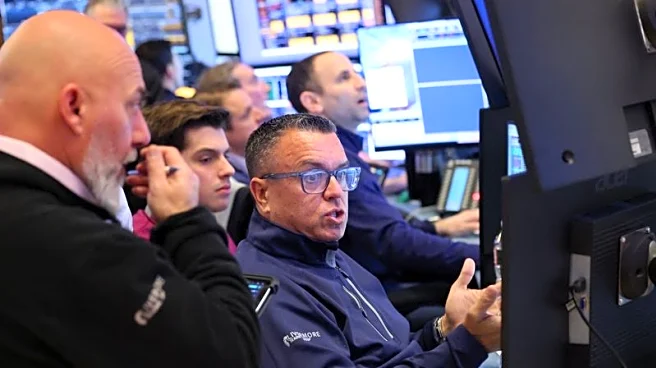
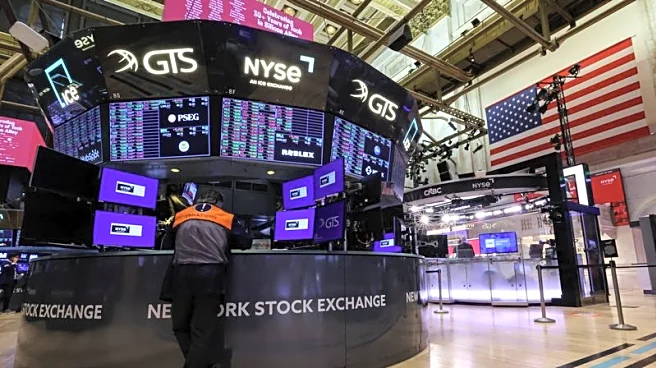
Moving back to Wall Street, this week saw a host of mega-cap tech earnings, including Meta, Microsoft, Apple and Tesla. Results were mixed, but the big takeaway was that investors are fine with massive AI spending, but only if growth remains robust.
You might have expected the other big event of the financial week to be the Fed meeting, but it turned out to be a bit of a snooze-fest. Rates were held steady, as expected, and no major news came out of the press conference. Chair Powell obviously couldn’t say much about the debates surrounding Fed independence, but his silence speaks volumes about the difficult position the central bank has found itself in.
He did offer some advice to his successor, and now Powell, like the rest of the financial community, will be keen to confirm exactly who that is.
For more commodities and markets news, check out Reuters Open Interest. You can learn which high-flying energy stocks are currently catching investor interest, where the supply glut in the oil market actually is, and why the future of AI may be written in nuts and bolts.
As we head into the weekend, check out the ROI team’s recommendations for what you should read, listen to, and watch to stay informed and ready for the week ahead.
I’d love to hear from you, so please reach out to me at .
This weekend, we're reading...
MIKE DOLAN, ROI Finance & Markets Columnist: NYU professors Viral Acharya and Toomas Laarits, writing for CEPR's VoxEU, attribute the rise in U.S. Treasury yields since last April's tariff shock to a decline in the "convenience yield" tied to their "safe asset" status.
RON BOUSSO, ROI Energy Columnist: Energy analyst Nat Bullard's annual 200-slide deck is a true treasure trove of the latest data and charts on energy and decarbonization.
JAMIE MCGEEVER, ROI MARKETS COLUMNIST: "Bubbles as a Feature Not a Bug," a new analysis from Carlyle Group, contextualizes the current AI boom within the history of transformative technology. The bubble will deflate or burst, but that's part of the process, they argue. "The bottom line is that bubbles are endemic to technological revolution."
CLYDE RUSSELL, ROI Asia Commodities and Energy Columnist: This report from Australia's electricity market operator shows renewables have hit a new record, supplying over half the nation's power for a full quarter. Coinciding with weaker wholesale prices, this demonstrates that high renewables penetration can be both reliable and cost-effective.
ANDY HOME, ROI Metals Columnist: A new TradingPedia analysis shows that electric and hybrid cars now comprise over 25% of European auto sales. The data is broken down by country and manufacturer, and illustrated with some nifty graphics.
GAVIN MAGUIRE, ROI Global Energy Transition Columnist: A new opinion piece by Infrastructure Investor argues that the growth of the U.S. power system is poised to be constrained by a global shortage of gas turbines that cannot keep up with demand.
We're listening to...
ANNA SZYMANSKI, ROI Editor-in-Charge: On the recent Morning Bid podcast, Mike Dolan and Amanda Cooper discussed the latest Fed meeting, Iran tensions, and the big takeaways from this week's mega-cap earnings. If you subscribe to Morning Bid today, you can catch Mike's preview of the week ahead this Sunday.
And we're watching...
RON BOUSSO, ROI Energy Columnist: My fellow ROI columnist Clyde Russell joined the Gulf Intelligence daily podcast to discuss how China bolstered its strategic oil reserves with increased crude purchases last year.
Want to receive the Morning Bid in your inbox every weekday morning? Sign up for the newsletter here. You can find ROI on the Reuters website, and you can follow us on LinkedIn and X.
Opinions expressed are those of the authors. They do not reflect the views of Reuters News, which, under the Trust Principles, is committed to integrity, independence, and freedom from bias.
(By Anna Szymanski)