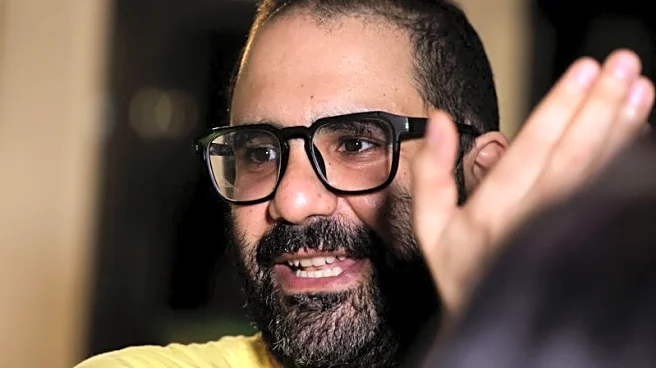

Dec 29 (Reuters) - Activist Alaa Abd el-Fattah, freed from prison in Egypt and now in Britain, apologised on Monday for his "shocking and hurtful" social media posts made more than a decade ago, which
have led to calls for his deportation from opposition British politicians.
Abd el-Fattah, 44, became Egypt's most prominent political prisoner after spending much of his adult life in and out of detention due to his activism and was a rare symbol of opposition during a far-reaching crackdown under President Abdel Fattah al-Sisi.
He arrived in Britain last Friday after obtaining British citizenship in 2021 through his mother, with British Prime Minister Keir Starmer saying he was "delighted" by the news.
In the following days, British newspapers ran stories about posts made by Fattah on the former Twitter platform between 2008 and 2014, seen by Reuters, which endorsed violence against "Zionists" and police.
In a statement, Abd el-Fattah said many of his tweets had been misunderstood but that others were unacceptable.
"Looking at the tweets now - the ones that were not completely twisted out of their meaning - I do understand how shocking and hurtful they are, and for that I unequivocally apologise," Fattah said.
"They were mostly expressions of a young man's anger and frustrations in a time of regional crises - the wars on Iraq, on Lebanon and Gaza - and the rise of police brutality against Egyptian youth."
Nigel Farage, leader of the right-wing Reform UK party which currently tops opinion polls, called for Abd el-Fattah's deportation from Britain. Kemi Badenoch, the leader of the opposition Conservative Party, said the country should consider it.
The Board of Deputies of British Jews said his posts were of "profound concern" and showed a lack of due diligence among British authorities.
Britain's foreign office said it condemned Abd el-Fattah's historic tweets and called them "abhorrent", in a statement published on Sunday.
Abd el-Fattah was most recently serving a five-year sentence in Egypt imposed in December 2021, after he shared a social media post about a prisoner's death.
(Reporting by Andy BruceEditing by Alexandra Hudson)