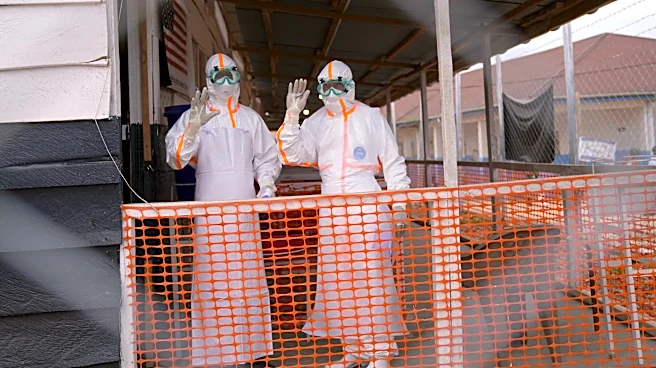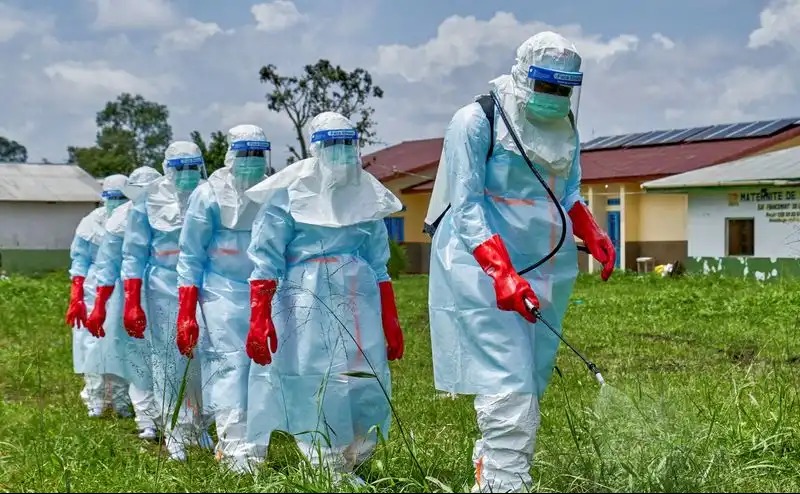







DAKAR, Aug 11 (Reuters) - Democratic Republic of Congo said on Tuesday that confirmed Ebola deaths had reached 2,011, the latest grim milestone in what health officials have described as the fastest-spreading outbreak on record.
The latest data from Congo's public health institute, seen by Reuters, also reported 4,381 confirmed cases across five provinces.
Delayed detection, conflict and strained health services have helped the virus spread more rapidly than in previous outbreaks.
The current outbreak,
Congo's 17th, is caused by the Bundibugyo species of Ebola, for which there are no approved vaccines or treatments.
The World Health Organization has declared the outbreak, which has also led to cases in neighbouring Uganda, a public health emergency of international concern.
A study published last month in the journal Science found that transmission may have begun in January or earlier in Ituri province, identifying more than 500 suspected cases between mid-January and May 15.
Shortages of medical supplies and insecurity in affected areas have complicated efforts to trace contacts, isolate patients and curb transmission.
The Congolese government data shows that the current outbreak is dwarfed only by West Africa's 2014 to 2016 Ebola outbreak in which 28,616 cases and 11,310 deaths were recorded across Guinea, Liberia and Sierra Leone, according to the World Health Organization.
It took nearly five months from the declaration of that outbreak to hit 1,000 deaths, whereas Congo's current outbreak has hit 2,000 deaths in less than three months.
In an Ebola outbreak in Congo from 2018 to 2020, it took a little over 12 months to hit 2,000 deaths. In the current outbreak, deaths have jumped from 1,000 to 2,000 in less than a month, further underscoring how quickly the virus is spreading.
LOCAL GROUPS, MILITIAS DEPLOYED TO SUPPORT CONTAINMENT
As in past outbreaks, community resistance and persistent mistrust have complicated the containment effort, at times putting response workers at risk during disputes over burial practices.
On Monday, local officials in North Kivu province launched a government-backed task force in the city of Butembo that brings together pro-government militia fighters and civil society groups to help protect Ebola responders as they carry out their duties.
The task force will assist authorities in protecting health workers and treatment facilities and enforce quarantine measures for people suspected of having been exposed to the virus.
At a press conference on Monday, one of its leaders, Guy Ngavo, said people found handling the bodies of Ebola victims or refusing quarantine orders could be forcibly taken to Ebola treatment centres and, in cases of repeated non-compliance, subjected to whipping.
(Reporting by Fiston Mahamba; Writing by Ayen Deng Bior; Additional reporting by Clement Bonnerot and Ilham Sougue: Editing by Robbie Corey-Boulet, Sharon Singleton and Toby Chopra)