




By Niket Nishant and Tharuniyaa Lakshmi
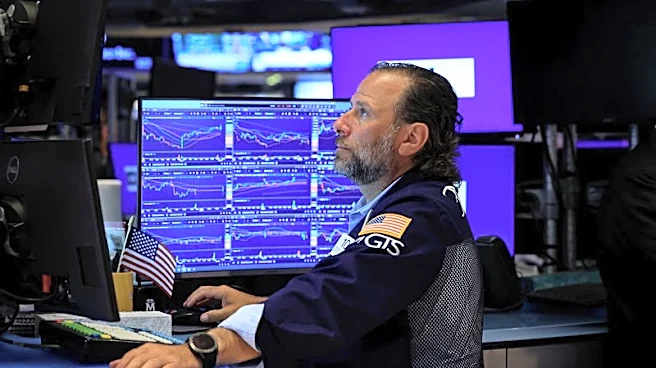
Sept 8 (Reuters) - The major U.S. stock indexes edged lower on Tuesday as fresh hostilities in the Middle East pushed oil prices to their highest since late July, while markets await inflation data due later this week.
The declines follow a roller-coaster stretch that saw investors rushing to readjust rate-hike expectations after commentary from Federal Reserve Governor Christopher Waller and a stronger-than-expected jobs report.
The truncated week after the Labor
Day holiday will be dominated by the Consumer Price Index report due on Friday and the Producer Price Index reading on Thursday.
Some investors have said inflation readings will hold more weight for the Fed's rate trajectory, given Chair Kevin Warsh's focus on bringing prices down.
"It still seems to be a bit of a wild card out there. Warsh is not as easily readable as his predecessor Jerome Powell was," said Michael Matousek, head trader at U.S. Global Investors. With oil potentially climbing further, market volatility could persist, he added.
Traders now see a 58.4% chance of an increase in interest rates this month, according to the CME FedWatch tool.
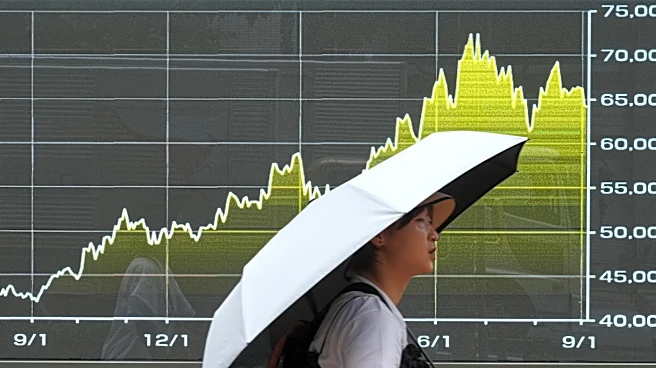
At 9:47 a.m. ET, the Dow Jones Industrial Average fell 451.93 points, or 0.85%, to 52,962.32, the S&P 500 lost 29.15 points, or 0.38%, to 7,689.45 and the Nasdaq Composite lost 111.18 points, or 0.42%, to 26,395.81.
WAR RISKS FRONT AND CENTER
Now in its seventh month, the U.S.-Iran war has remained an overhang on equities. Tensions flared up again in the region, raising the risk of a wider conflict.
Brent crude futures neared $100 a barrel and were at their highest since late July, as Yemen's Tehran-backed Houthis attacked energy facilities and cities in U.S. ally Saudi Arabia on Tuesday.
Shipping traffic through the Strait of Hormuz slowed, with Iran threatening on Monday to retaliate for any new U.S. attacks.
The oil rally is turning the inflation picture "murkier," said Kyle Rodda, senior financial market analyst at Capital.com. "The military activity is maintaining a significant risk premium in energy markets amidst the heightened possibility of deeper and more protracted disruptions to global supply."
Energy was the best-performing sector on the S&P 500, rising 1.49%, with Marathon Petroleum and Occidental Petroleum up 1.85% and 2.07%, respectively.
Utilities and basic materials also gained 0.7% and 0.1%, respectively.
Elevated yields on risk-free U.S. Treasuries have in recent weeks made it less attractive for investors to take on the added risk of buying stocks.
The yield on the benchmark 10-year Treasury note rose 0.42 basis points to 4.7882% on Tuesday.
Crypto stocks fell as bitcoin retreated from the $80,000 level. Coinbase fell 2.84% while Strategy was down 3.96%.
Chipmakers rose, helped by optimism around AI. Intel gained 5.99%, while Qualcomm added 5.14% after the company struck a $4 billion deal with Amazon to develop custom AI chips.
Declining issues outnumbered advancers by a 1.41-to-1 ratio on the NYSE and by a 1.62-to-1 ratio on the Nasdaq.
The S&P 500 posted three new 52-week highs and four new lows while the Nasdaq Composite recorded 27 new highs and 57 new lows.
(Reporting by Niket Nishant and Tharuniyaa Lakshmi in Bengaluru; Editing by Joyjeet Das)