







By Ruma Paul
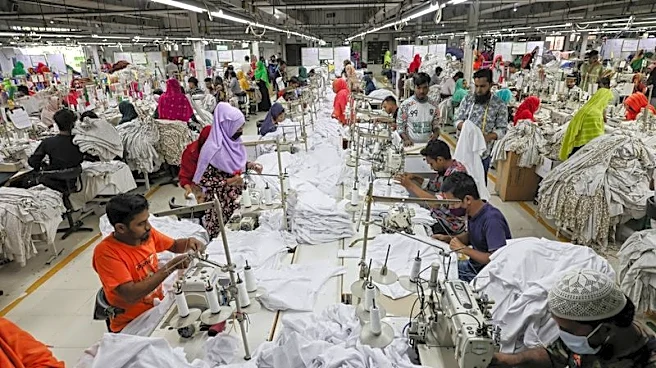
DHAKA, Nov 1 (Reuters) - Bangladesh said on Sunday it had set up a wage board to review garment workers' pay and urged employees to return to work as violent protests forced the closure of more than 500 factories, with police firing tear gas and water cannon at demonstrators.
The dispute has raised concerns about widespread disruption to an industry that employs about 4 million workers, generates more than 80% of Bangladesh's export earnings and supplies clothing to many leading Western
brands.
The workers in the South Asian nation are demanding a minimum monthly wage of 30,000 taka ($245), more than double the current 12,500 taka, saying rising costs of food, housing, transport and healthcare have sharply eroded their purchasing power.
"The cost of living has increased far beyond our incomes," worker Mahin Hossain said. "After paying rent, there is very little left for food, our children's education and other essential expenses. Many are finding it almost impossible to support their families."
POLICE USE TEAR GAS AND WATER CANNON
Despite the announcement of the wage board, thousands of garment workers staged demonstrations on Sunday, blocking roads in Dhaka and Gazipur, outside the capital, and disrupting transport across key industrial areas.
Police used tear gas and water cannon to disperse protesters after demonstrators threw bricks at officers, and a police vehicle and a police box were set on fire in separate incidents. Authorities deployed Border Guard Bangladesh personnel to maintain order.
The latest unrest follows demonstrations in Ashulia, a major garment manufacturing hub on the outskirts of Dhaka, where dozens of factories suspended operations on Saturday after workers staged protests demanding higher pay.
In all, the unrest has forced 529 garment factories to shut down and left 987,190 workers out of work across the country's main industrial hubs, according to the Bangladesh Garment Manufacturers and Exporters Association.
Labour and Employment Minister Ariful Haque Choudhury said the wage board was formed after discussions with workers' representatives and industry leaders, and urged workers to resume work.
The six-member wage board comprises two representatives each from workers and employers, along with a government representative and a neutral member. The body has been tasked with reviewing wages in the garment sector and recommending revised pay rates.
MINISTER WARNS OF DELAYED SHIPMENTS
Choudhury warned that prolonged disruptions could delay export shipments and payments from international buyers, creating further difficulties for manufacturers and workers alike.
Bangladesh's ready-made garment industry, the world's largest after China, contributes about 10% of gross domestic product and is the backbone of the economy.
Manufacturers, however, say the sector is facing mounting challenges, including rising production costs, periodic gas and electricity shortages, and uncertainty in energy markets linked to tensions in the Middle East.
"It's not feasible. There is no logical or mathematical basis for such a demand," said Salim Rahman, first vice president of the manufacturers' association, referring to workers' demand for a 30,000-taka minimum wage.
He said such a sharp wage increase would put additional strain on manufacturers already operating under tight margins and facing intense competition from rival apparel-producing countries.
(Reporting by Ruma Paul; Editing by William Mallard and Alison Williams)