




By Chris Prentice and Amanda Cooper
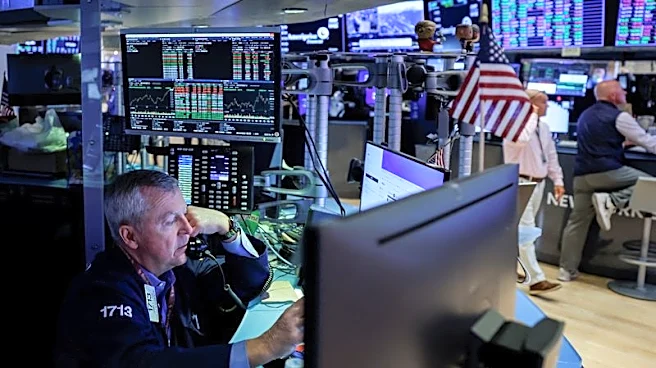
NEW YORK/LONDON, Aug 14 (Reuters) - U.S. and European shares fell on Friday and oil prices gained as markets monitored tense U.S.-Iran talks and digested new data that dented expectations for a Federal Reserve rate hike next month.
Faltering talks to end the Iran war left oil and gas prices poised for sizeable weekly gains. The U.S. threatened to ramp up economic pressure on Iran, including extending a naval blockade.
U.S. consumer sentiment deteriorated in early
August amid the rising cost of living because of the Middle East conflict, a survey showed on Friday.
The U.S. dollar and yields on U.S. Treasuries fell on a surprise drop in U.S. retail sales. The data further reduced expectations of a Federal Reserve rate hike at next month's meeting.
The weaker dollar supported gold prices.
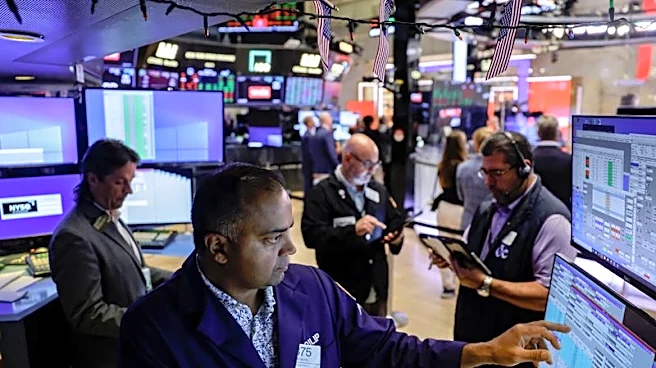
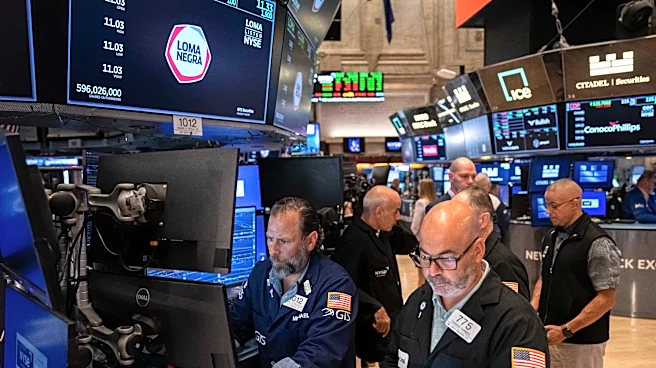
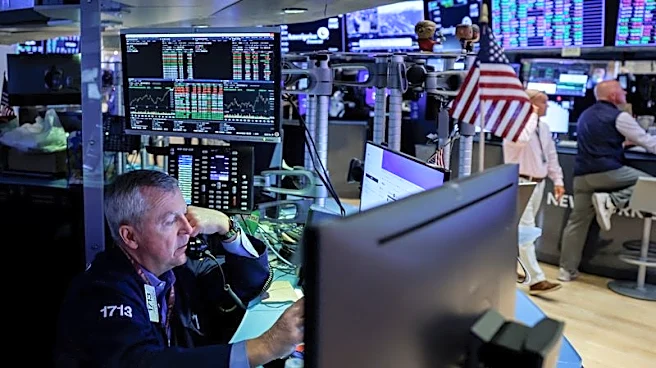
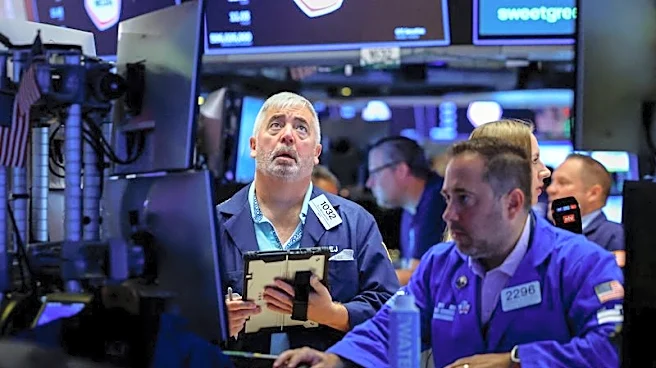
Tech stocks, which had propelled the S&P 500 to a record high on Thursday, weighed on Wall Street.
The Dow Jones Industrial Average fell 73.41 points, or 0.14%, to 53,766.58, the S&P 500 fell 14.93 points, or 0.19%, to 7,784.06, and the Nasdaq Composite fell 105.11 points, or 0.39%, to 26,697.93.
"There is some profit taking, but I expect that most institutional investors remain fairly optimistic," said Peter Andersen, founder of Andersen Capital Management.
Both the S&P 500 and the Nasdaq were still on track for their third consecutive weekly gain.
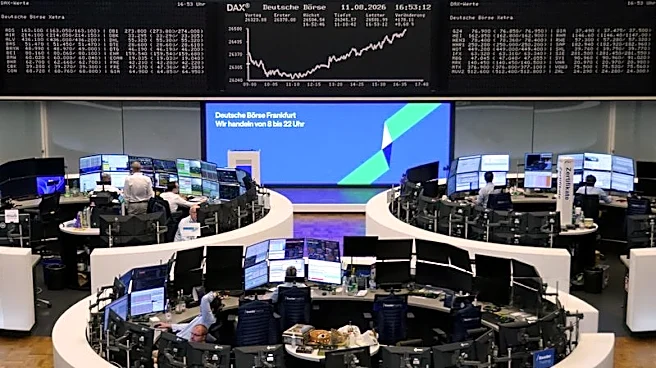
European shares finished lower on Friday and snapped a four-week winning streak, as rising crude prices and renewed geopolitical tensions offset support from a resilient earnings season.
MSCI's gauge of stocks across the globe fell 1.08 points, or 0.09%, to 1,159.72.
MSCI's broadest index of Asia-Pacific shares outside Japan closed 0.29% higher at 1,640.08.
GEOPOLITICAL RISK
"The markets round out the week on a positive note, with relatively thin event risk on the economic and corporate calendar. But of course, it’s a Friday, and the typical pattern has been for geopolitical risks, or at least bombastic rhetoric, to pick up between the U.S. and Iran going into the weekend," Capital.com strategist Kyle Rodda said.
"Currently, the geopolitical uncertainty remains the only major macro roadblock to a market experiencing strong tailwinds from earnings and the monetary policy outlook."
Brent crude futures rose to $88.33 per barrel, up 1.45% on the day, and U.S. oil prices rose 1.26% to $82.27.
John Sidawi, senior portfolio manager for fixed income at Federated Hermes, said a puzzling feature of markets in recent months has been the growing disconnect between geopolitical uncertainty and asset price volatility.
"For now, markets appear willing to tolerate a significant amount of uncertainty without demanding higher risk premiums. However, this equilibrium is unlikely to be permanent," Sidawi said.
"A meaningful escalation in conflict or a clear path toward resolution could finally force investors off the sidelines, potentially triggering a much larger volatility response than current market pricing implies."
YEN STUCK IN INTERVENTION LOOP
In currencies, the yen strengthened 0.08% against the greenback to 159.37 per dollar, after a Reuters report that the Bank of Japan could raise rates as soon as September, according to three sources familiar with policymakers' thinking.
However, it is still within sight of the 160 level that traders think could trigger another bout of yen buying from Tokyo, after joint intervention with the U.S. last month failed to support the Japanese currency.
The dollar index, which measures the greenback against a basket of currencies including the yen and the euro,fell 0.25% to 99.67, with the euro up 0.32% at $1.1564.
In commodities, spot gold rose 0.69% to $4,380.03 an ounce. U.S. gold futures GCcv1 settled 0.4% higher at $4,437.30.
(Additional reporting by Ankur Banerjee in Singapore; Editing by Sonali Paul, Alex Richardson, Emelia Sithole-Matarise, Nia Williams and Edmund Klamann)