



By Olena Harmash and Sergiy Karazy
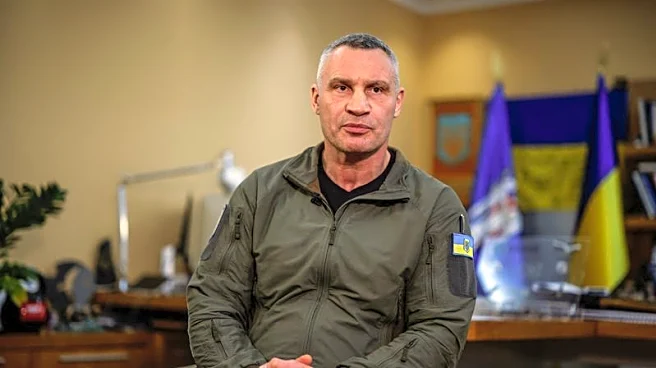
KYIV, Jan 16 (Reuters) - Ukraine's capital Kyiv has only about half the electricity that it needs as it faces its most severe wartime energy crisis following waves of Russian attacks on its infrastructure, mayor Vitali Klitschko told Reuters on Friday.
Kyiv, one of Eastern Europe's largest cities, requires 1,700 megawatts of electricity to power the services for its 3.6 million people, Klitschko said.
Klitschko said the current energy crisis was the most difficult
challenge facing the capital in the nearly four years since Russia's invasion in February 2022.
"It's the first time in the history of our city that, in such severe frosts, most of the city was left without heating and with a huge shortage of electricity," Klitschko, a former world heavyweight boxing champion, said in an interview in his office at the heart of Kyiv.
Some Kyiv residents face up to 18 to 20 hours a day without mains electricity. Ukraine declared an energy emergency this week as its grid crumbles due to accumulated wartime damage and a new targeted wave of Russian bombardments.
Bitter cold weather with icy rain and snow exacerbated the challenges. Nighttime minimum temperatures have dipped to around -17 Celsius (1 Fahrenheit) in Kyiv this week.
FAST REPAIRS, GENERATORS AND INTERNATIONAL AID
Klitschko said Ukraine's international partners had rushed in additional generators, and repair teams had worked round the clock to restore heating following a Russian strike last week that knocked out supplies to 6,000 apartment buildings.
About 100 buildings still have no heating, he said.
"We're not just working during the day now, we're working at night too," he said. "There is no such thing as the start and end of the working day for us."
In addition to repairs and generators, the city opened about 1,300 sites with heaters to help residents keep warm, and was working to install mini thermal power stations in some districts to decentralize electricity and heating.
With generators, the priority was to provide electricity to ensure water supplies and power hospitals, kindergartens, and other key critical infrastructure, Klitschko said. About 300 tonnes of fuel a day were needed to do that.
Klitschko reiterated his call for Kyiv residents to leave the city if they have the opportunity to do so to ease the pressure on its infrastructure.
Schools in Kyiv extended their winter holidays, and many commercial companies have switched to remote work arrangements.
Klitschko said that despite all the challenges, city officials were determined to restore heating supplies in full, and they were also planning for backup scenarios in case new Russian air strikes damage the energy infrastructure.
"This winter will be difficult, but we are doing everything that's possible and impossible," Klitschko said.
(Reporting by Olena Harmash; editing by Daniel Flynn and Alex Richardson)