


By Ben Blanchard, Michael Martina and Trevor Hunnicutt
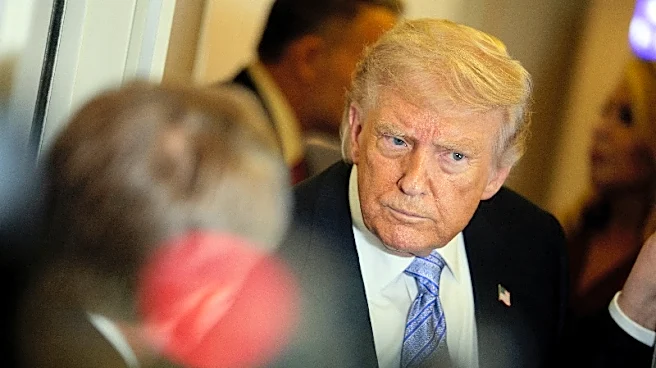
TAIPEI/ABOARD AIRFORCE ONE May 15 (Reuters) - President Donald Trump said on Friday he hasn't decided whether to proceed with a major weapons sale to Taiwan, adding to uncertainty about U.S. support for the democratically governed island following his trip to China this week.
In comments to journalists after his summit with Chinese President Xi Jinping, Trump also seemed to imply that he would speak with Taiwan's president about the proposed sale,
an interaction that could shake U.S.-China relations.
A direct conversation between a sitting U.S. president and Taiwan's leader would be unprecedented in the period since Washington shifted diplomatic recognition to Beijing from Taipei in 1979. It would likely anger China, which sees the democratically governed island as its own territory.
Trump told reporters aboard Air Force One on his return from China that he would soon make a determination on pending weapons sales.
"I have to speak to the person that right now is, you know, you know who he is, that's running Taiwan," Trump said, without naming Taiwan's President Lai Ching-te, who Beijing views as a separatist.
A senior administration official did not address whether Trump was referring to possible direct discussions with Taiwan's president in answering Reuters questions on his remarks, but reiterated that a determination on a new arms sale would be made "in a fairly short" time.
The official noted that Trump had approved more weapons to Taiwan than any other U.S. president.
Under U.S. law, Washington is required to provide Taiwan with the means to defend itself and both Republican and Democratic U.S. lawmakers have stridently urged the Trump administration to continue with weapons sales.
A major U.S. arms package for Taiwan worth up to $14 billion that includes advanced interceptor missiles is awaiting Trump's approval. Trump's efforts to secure a favorable trade deal with China had raised concerns in the U.S. and Taiwan that he could curb Washington's military support for Taipei.
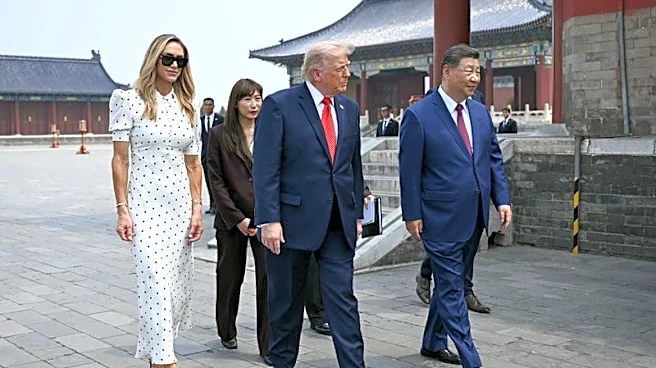
Trump's comment came at the end of his three-day trip to China, the first by a U.S. president since 2017, where Xi had been expected to press him on U.S. support for Taiwan.
During their talks, Xi told Trump that mishandling Taiwan could lead to conflict between the two powers, a stark though not unprecedented warning.
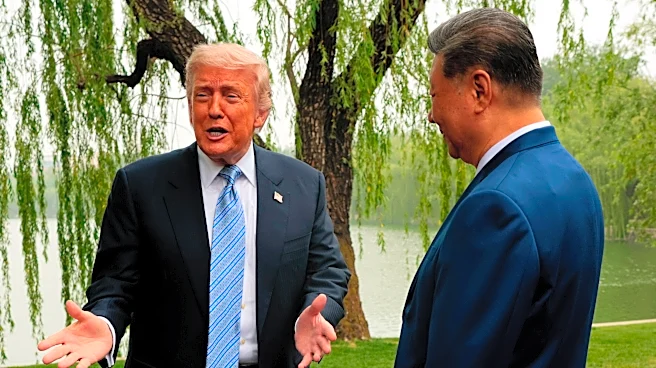
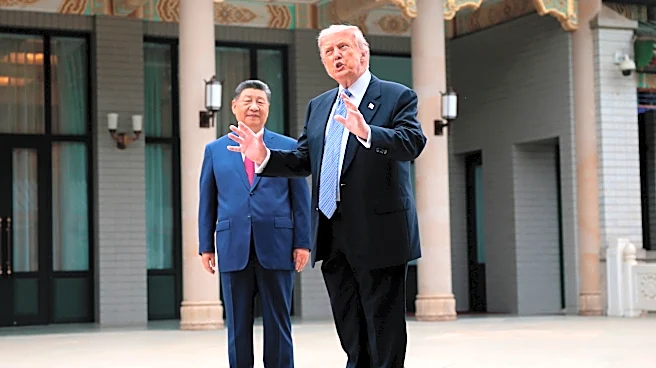
Trump said he and Xi "talked a lot about Taiwan" but added that he did not believe there was conflict over the issue. He said he made no commitments to Xi regarding Taiwan.
"I didn't make a comment on it. I heard him out," Trump said of Xi.
Trump also said Xi asked directly whether the United States would defend Taiwan if China attacked the island, but that he declined to answer.
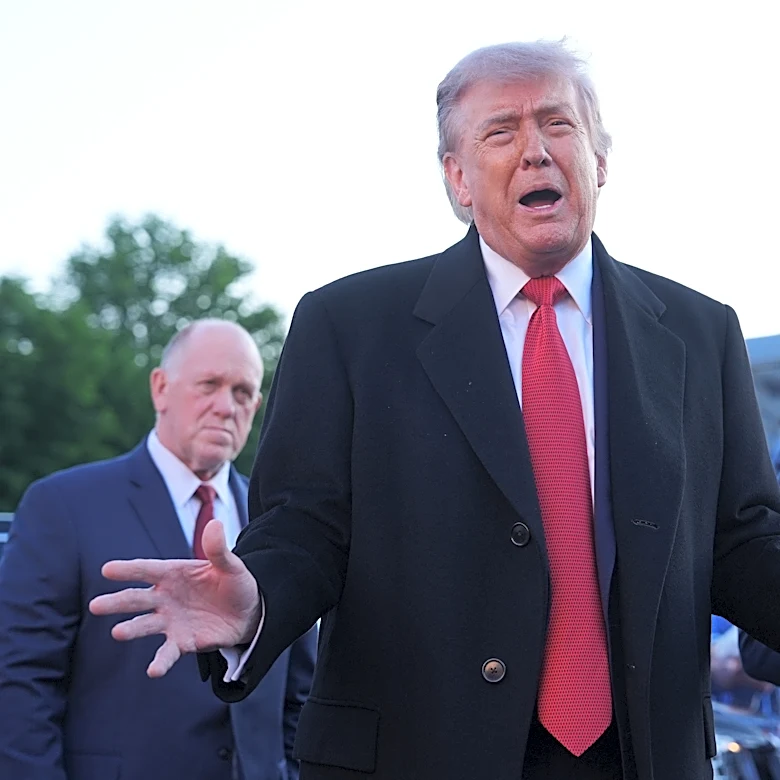
"There's only one person that knows that, and it is me. I'm the only person," Trump said. "That question was asked to me today by President Xi. I said, I don't talk about that."
China has long opposed U.S. weapons sales to Taiwan, which it sees as interference in its internal affairs, and has never renounced the use of force to bring the island under its control.
'JOINT DETERRENCE'
Taiwan's Foreign Ministry said it had taken note of Trump's various comments, and thanked him for approving earlier arms sales, emphasizing that such sales were set out under U.S. law.
"Regarding Taiwan-U.S. arms sales, they are not only a security commitment to Taiwan explicitly set out by the United States in the Taiwan Relations Act, but also a form of joint deterrence against regional threats," Taiwan's Foreign Ministry said in a statement.
"Our country thanks President Trump for his continued support for Taiwan Strait security since his first term; the most recently announced arms sale package reached a historic high in value," it said.
The Trump administration, which approved a record $11 billion sale in December, has repeatedly said pending arms sales are working their way through the U.S. process and that there has been no change to U.S. policy toward Taiwan.
Bonnie Glaser, a Taiwan expert at the German Marshall Fund of the United States, said Trump's remark did imply he would speak to Lai, an outcome she viewed as unlikely due to its potential to upset U.S.-China ties.
"I doubt that he will be talking to Lai. The Chinese will be highly alert to Trump's comment and will seek clarification. They will want confirmation that President Trump misspoke and has no such intention," Glaser said.
In 2016, before entering the White House for his first time, Trump spoke to Taiwan's then-President Tsai Ing-wen, which prompted diplomatic outrage from Beijing. That call did not spark a crisis, as Trump was not then a sitting president, nor had he yet embarked on two bruising trade wars against China that have shaken relations with Beijing.
Underscoring Taiwan's strategic importance to the U.S., the island of 23 million people is the fourth-largest U.S. trading partner, behind China, which has 1.4 billion people. Much of that trade is based on exports to the U.S. of advanced semiconductors, which fuel the global economy.
Michael Cunningham, a Taiwan expert at the Stimson Center, said Trump approving the pending weapons package in coming weeks would be a huge morale boost for the island, which would face a major setback if the sale is denied or altered.
"It would indicate that the actual nature of the sale was negotiated (with Xi)," Cunningham said.
(Reporting by Ben Blanchard and Yimou Lee, Trevor Hunnicutt, David Brunnstrom and Michael Martina; Editing by Jacqueline Wong, Stephen Coates, Kate Mayberry, Gareth Jones and Deepa Babington)