

By Jacob Gronholt-Pedersen, Stine Jacobsen and Soren Jeppesen
COPENHAGEN, Dec 23 (Reuters) - President Donald Trump reasserted on Monday that the United States needs Greenland for national security and said a newly appointed special envoy would "lead the charge", drawing sharp criticism from Denmark and Greenland.
WHY DOES TRUMP WANT GREENLAND?
Greenland's strategic location and resources could benefit the U.S. It lies along the shortest route from Europe to North America, vital for the U.S. ballistic
missile warning system.
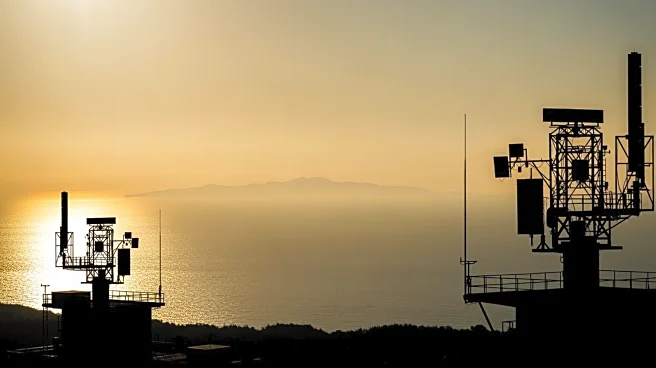
The U.S. has expressed interest in expanding its existing military presence on the Arctic island, including placing radars there to watch waters between the island, Iceland and Britain used by Russian navy vessels and nuclear submarines.
Trump told reporters on Monday: "We need Greenland for national security, not for minerals ... If you take a look at Greenland, you look up and down the coast, you have Russian and Chinese ships all over the place."
Shipping data shows most Chinese shipping in Arctic waters is in the Pacific Arctic and Northern Sea Route near Russia. Most Russian shipping in the Arctic is around Russia's own coast, though analysts say Russian submarines do often travel the waters between Greenland, Iceland and the UK.
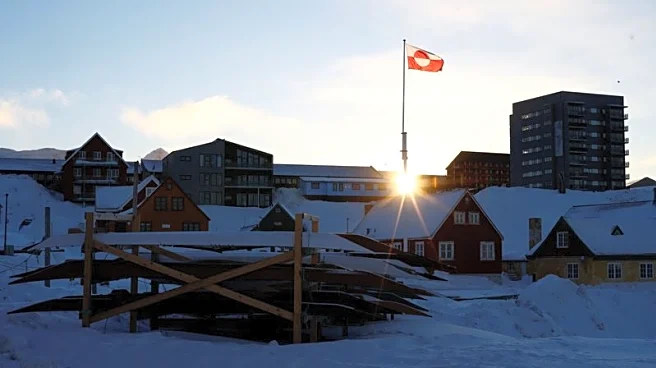
More broadly the Arctic is becoming increasingly militarised with NATO states, China and Russia all expanding activity there. The island, whose capital Nuuk is closer to New York than the Danish capital Copenhagen, boasts mineral, oil and natural gas wealth, but development has been slow and mining has seen very limited U.S. investment.
WHAT IS THE CURRENT U.S. PRESENCE?
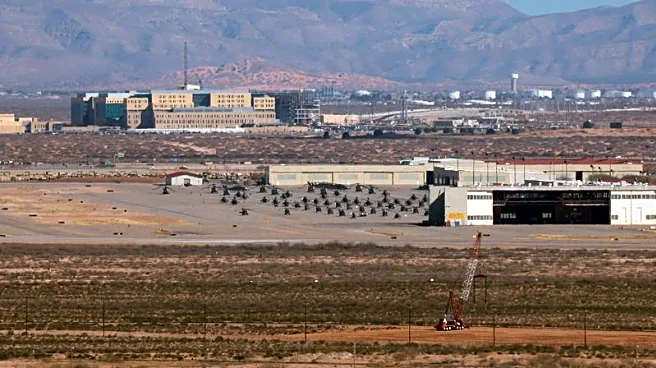
The U.S. military maintains a permanent presence at the Pituffik air base in Greenland's northwest.
A 1951 agreement between the U.S. and Denmark gave the U.S. the right to move around freely and construct military bases in Greenland as long as Denmark and Greenland are notified.
Historically, Denmark has accommodated the U.S. because Copenhagen does not have the capability to defend Greenland, and because of U.S. security guarantees to Denmark through NATO, according to Kristian Soeby Kristensen, senior researcher at Copenhagen University's Centre for Military Studies.
WHAT IS GREENLAND'S STATUS NOW?
The island, a former colony of Denmark, became a formal territory of the Nordic kingdom in 1953 and is subject to the Danish constitution.
In 2009, the island was granted broad self-governing autonomy, including the right to declare independence from Denmark through a referendum.
Under the 2009 law, Greenland's parliament, Inatsisartut, can invoke a provision that would have Denmark and Greenland begin negotiations about achieving full independence.
Greenland's people would need to endorse independence in a referendum, and an independence agreement between Denmark and Greenland would also require the Danish parliament's consent.
WHAT DOES GREENLAND WANT?
Relations between Greenland and Denmark have been strained after revelations of historical mistreatment of Greenlanders under colonial rule. However, Trump's interest in the island has prompted Denmark to do more to improve ties with Greenland.
Polls show a majority of Greenland's 57,000 inhabitants back independence, but many Greenlanders warn against acting rashly - fearing Greenland could become worse off and expose itself to the U.S. if it too quickly seeks independence from Denmark.
Greenland's economy has been reliant on fishing, which accounts for over 95% of exports, and annual subsidies from Denmark, which cover roughly half of the public budget.
WHAT IF GREENLAND BECOMES INDEPENDENT?
If Greenland became independent, it could choose to become associated with the U.S. without becoming U.S. territory.
The island could form a so-called "free association" with the U.S. that would replace Danish subsidies with U.S. support and protection in return for military rights, a set-up similar to the Marshall Islands, Micronesia and Palau.
According to Ulrik Pram Gad, an expert on Greenland, Trump's idea of buying Greenland is based on a misunderstanding of international law and the principle of self-determination, which gives people the right to choose their own political status.
WHAT IS TRUMP DOING TO PRESSURE DENMARK?
Trump named Louisiana Governor Jeff Landry as his special envoy to Greenland, drawing renewed criticism from Denmark and Greenland over Washington's interest.
Landry publicly supports the idea of Greenland becoming part of the U.S.
WHAT DO DENMARK AND GREENLAND SAY?
When Trump offered to buy the island during his first presidential term, Danish Prime Minister Mette Frederiksen called it "absurd".
Frederiksen and Greenland's Prime Minister Jens-Frederik Nielsen said in a joint statement on Monday that Greenland belongs to Greenlanders. "You cannot annex another country. Not even with an argument about international security," they said.
Danish Foreign Minister Lars Lokke Rasmussen summoned the U.S. ambassador over the envoy's appointment. Afterwards, Rasmussen said Denmark and Greenland's representative had "drawn a red line" with the ambassador.
(Additional reporting by Soren Sirich Jeppesen, Johan Ahlander and Alessandro ParodiEditing by Gareth Jones, Peter Graff, William Maclean and Frances Kerry)