


By Michael S. Derby
July 29 (Reuters) - The return of money supply measurements to Federal Reserve thinking may help officials better identify longer-term inflation trends but will likely remain a peripheral factor for monetary policy deliberations, Fed watchers say.
Money supply measures once stood at the heart of monetary policymaking on the premise that how much money was moving around the economy — and how fast — was critical to the inflation equation: If there’s too much money chasing too few
goods, inflation follows.
But decades of financial sector innovation eroded the relationship and U.S. central bankers basically stopped watching — until the recent arrival of Kevin Warsh as the Fed's new leader.
Warsh tucked a short section on money supply into the Fed's latest Monetary Policy Report earlier this month, the first formal nod to it in a decade. The measure in question is M2, which tracks currency, bank deposits as well as small-sized time deposits and money market fund shares.
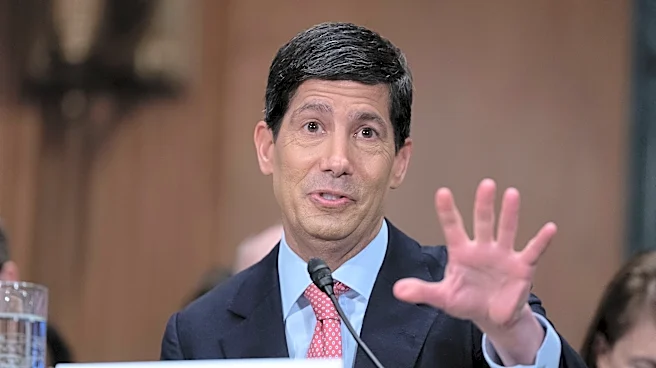
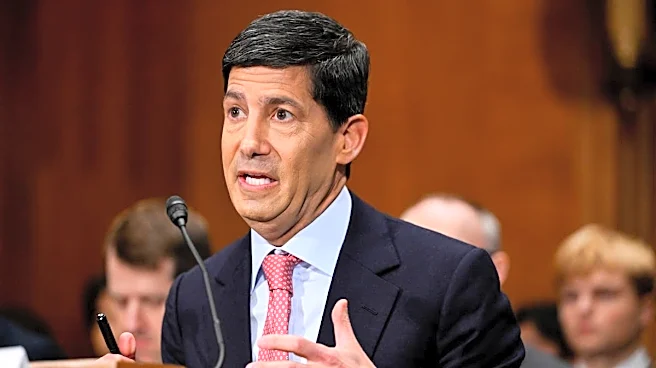
It “was an Easter egg that we hid in there to see if anyone reads these monetary policy reports,” Warsh said in a Senate hearing on July 15.
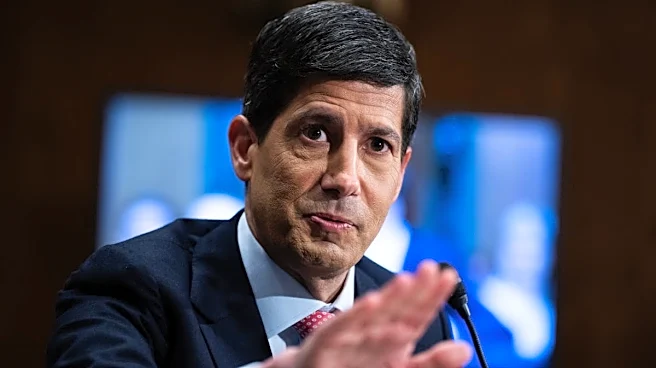
“I do not show up here as a monetarist. I do not show up and say the secret to inflation is, if we only knew M2, everything would be swell,” Warsh said. Instead, “my view is that a modern central banker should have a mosaic of information” and “money matters.”
Had more attention been paid to money supply during the massive policy response to the COVID-19 pandemic, Warsh said, officials might have done better in spotting the high inflation that emerged.
Year-over-year M2 growth hit a record 27% in early 2021, more than a year before the Fed started raising interest rates to battle back inflation that reached 7.2% by the measure the central bank uses for its target. After briefly contracting in the face of Fed rate hikes, M2's annual growth is back to a four-year high, though at 5.6% in May it remains about 1.2 percentage points below its average since 1960.
Meanwhile, the Fed's inflation measure was 4.1% in its most recent reading for May, more than twice its target.
IT'S ALL ABOUT MONEY
Economists and some former central bankers agree turning an eye toward M2 might help with longer-run inflation trend spotting at a time when the Fed has been wrestling with five years of inflation above its 2% target.
That price pressure surge, subsequently exacerbated by President Donald Trump’s economic and foreign policy agenda, was rooted in aggressive stimulus efforts during the pandemic. Rising M2 did in fact hint at enduring inflation pressures that at the time had been dismissed as temporary.
“I do think it's good to remind everybody that monetary policy is ultimately about money," said James Bullard, dean of the Mitch Daniels School of Business at Purdue University and former leader of the St. Louis Fed, which has a long association with monetarism.
“We understand that money growth might move around” and should be viewed with some caution, “but if (money supply measures) got really serious in one direction or another, maybe that's something you should pay attention to,” Bullard said.
Wall Street has also taken note.
“Although the velocity of money can be highly unstable, we find that excess money supply has been positively correlated with inflation over recent decades, particularly during periods of fast excess money growth,” Deutsche Bank economists said in a new report. At the same time, they cautioned against too great a reliance on it for policymaking, which jibes with Warsh’s view that it should simply be part of policymakers' mix of data to watch.
The focus Warsh has brought to money supply may even have opened the mind of former Fed Governor Stephen Miran — an uber-dove who had to vacate the Fed board to open a seat for Warsh — to a hawkish policy outlook.
Right now, "most monetary aggregates do not suggest recent high inflation will prove persistent, and it may be inappropriate to attribute recent quarters' high inflation to excessive money growth,” a recent paper Miran co-authored for Hudson Bay Capital said. But, “If money growth begins to accelerate from current levels, it would suggest tighter monetary policy is appropriate.”
That's an eye-opening shift for the former Trump economic adviser, who in his short tenure at the Fed argued for aggressive interest rate cuts despite above-target inflation, dissenting in favor of easier policy at each of the six policy meetings he attended.
NOT SO FAST
That said, money supply's return on the scene has its skeptics.
“We groaned a little” when M2 appeared in the Fed report, said analysts at Wrightson ICAP. It had been removed “for good reason” because “traditional monetary aggregates have not been a reliable predictor of inflation trends, or much else, for decades.”
Meanwhile, William English, a former top Federal Reserve staffer now at Yale School of Management, said recent analyses attempting to tie the post-pandemic inflation to surging money supply underweights the role of fiscal policy and things like sending households checks during the health crisis, meaning that the price pressure surge was more about that and less about the Fed's monetary policy and money creation.
Bill Nelson, chief economist with lobbying group the Bank Policy Institute and also a former Fed staffer, also warned against connecting money supply to the Fed’s still large holdings of bonds.
“Not only is there no reliable relationship between money and economic activity, there is no reliable relationship between money and the Federal Reserve’s balance sheet,” Nelson wrote earlier this month. Much of the money the central bank created during the pandemic simply existed as reserves that never entered the money supply.
(Reporting by Michael S. Derby; Editing by Dan Burns and Andrea Ricci )