


By Sinéad Carew and Marc Jones
NEW YORK/ LONDON, Jan 22 (Reuters) - MSCI's global equities gauge eyed a second straight advance on Thursday and the dollar dipped as investors showed signs of relief a day after U.S. President Donald Trump dropped tariff threats against eight European countries and ruled out seizing Greenland by force.
Trump said on Thursday that the details of a U.S. agreement over Greenland are still being worked out after he stepped back from threats to seize the Danish territory.
In an interview on Fox Business Network from the World Economic Forum in Davos, Trump said any deal would allow the U.S. "total access" to Greenland, including for the military, "at no cost".
Meanwhile, data from the Commerce Department's Bureau of Economic Analysis showed the U.S. economy grew a bit faster than initially thought in the third quarter and corporate profits were also revised higher.
The upwardly revised 4.4% annualized growth rate in U.S. GDP was the fastest pace since the third quarter of 2023, while U.S. consumer spending increased solidly in November and October.
The number of Americans filing new applications for unemployment benefits increased marginally last week, suggesting the labor market likely maintained a steady pace of job growth in January.
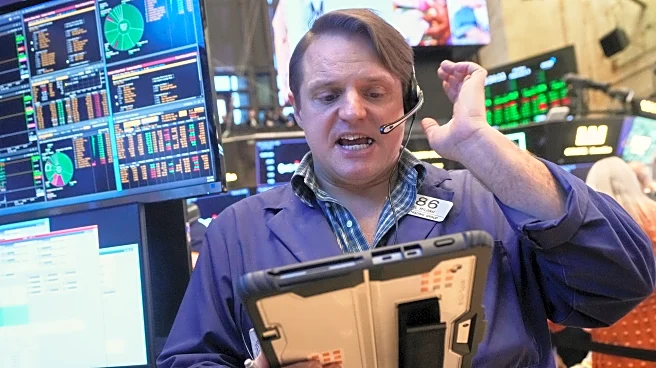
But after the sharp sell-off in U.S. stocks earlier in the week on Greenland concerns, investors were taking U.S. economic data in their stride on Thursday as they digested the President's turnaround from earlier threats, said Rick Meckler, partner at Cherry Lane Investments in New Vernon, New Jersey.
"Overwhelming all other news is the Greenland story, and the suggestions that are now withdrawn of military action or tariffs," said Meckler. "The market tends to react to emergencies and it seems the emergency aspect of this is over for now."
He noted however that Thursday's trading was "more a relief rally... than an understanding whether there's a material change in the world economic order and how the U.S. is going to interact with its traditional trading partners".
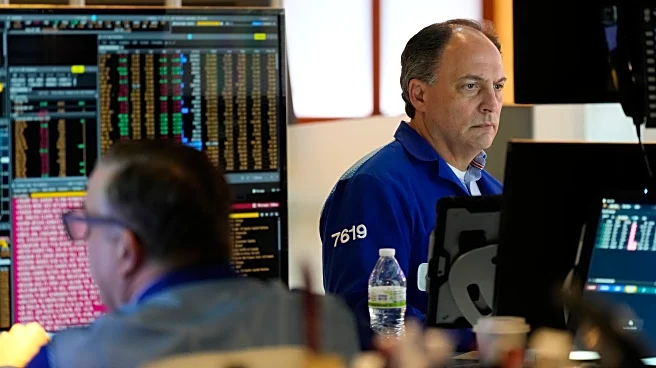
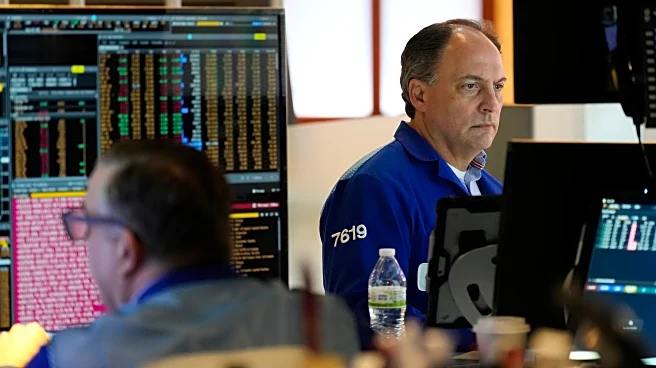
On Wall Street at 12:33 p.m. (1733 GMT) the Dow Jones Industrial Average was up 518.63 points, or 1.05%, at 49,594.73, the S&P 500 was 56.17 points, or 0.81%, higher at 6,931.62 and the Nasdaq Composite was up 257.29 points, or 1.11%, at 23,481.77.
MSCI's gauge of stocks across the globe rose 9.41 points, or 0.91%, to 1,038.03.
The pan-European STOXX 600 index climbed 1.03%.
In currencies, the safe-haven U.S. dollar was lower after Trump's turnaround on Greenland, and was little changed by U.S. economic data.
The dollar index, which measures the greenback against a basket of currencies including the yen and the euro, fell 0.51% to 98.38.
The euro was up 0.5% at $1.174, while against the Japanese yen, the dollar strengthened 0.04% to 158.31. Sterling strengthened 0.45% to $1.3486.
In U.S. Treasuries, benchmark yields rose but remained confined to a narrow range, as investors prepared for bouts of volatility and awaited clarity on the Greenland framework deal being negotiated between the U.S. and European leaders.
The yield on benchmark U.S. 10-year notes rose 0.6 basis points to 4.259% from 4.253% late on Wednesday, while the 30-year bond yield fell 1.1 basis points to 4.859%.
The 2-year note yield, which typically moves in step with interest rate expectations for the Federal Reserve, rose 1.7 basis points to 3.614% from 3.597% late on Wednesday.
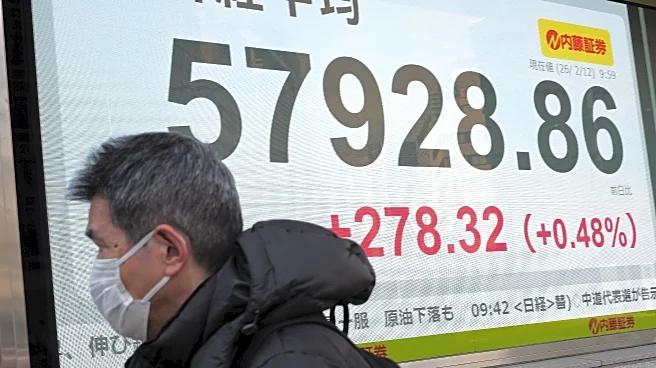
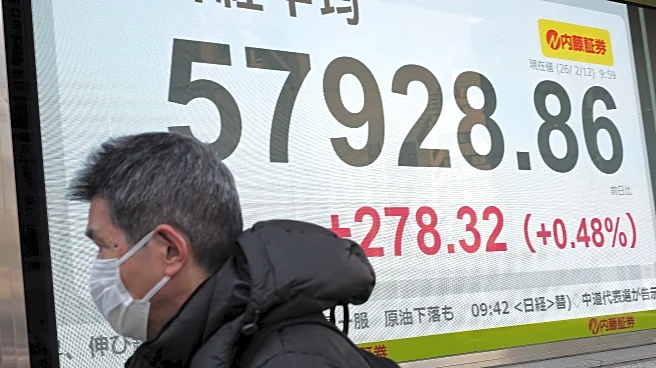
Earlier, an erratic rebound had occurred in Japanese government bonds as the Bank of Japan began a two-day meeting where it was expected to send a hawkish message about possible further rate hikes. [JP/]
In energy markets, oil prices fell on Thursday, reversing the previous sessions' gains, after Trump softened threats against Greenland and Iran, and as investors assessed the supply and demand outlook.
U.S. crude fell 2.14% to $59.32 a barrel and Brent fell to $63.93 per barrel, down 2.01% on the day.
In precious metals, safe-haven gold prices were higher after falling earlier in the day, with risk appetites improving after the easing of Greenland worries.
Spot gold rose 1.12% to $4,890.39 an ounce, while U.S. gold futures were up 0.74% to $4,867.40 an ounce.
In cryptocurrencies, bitcoin fell 1.16% to $89,154.62. Ethereum declined 2.93% to $2,942.11.
(Reporting by Sinéad Carew in New York, Marc Jones in London; Editing by Andrew Cawthorne and Jan Harvey)