





By Francesco Canepa
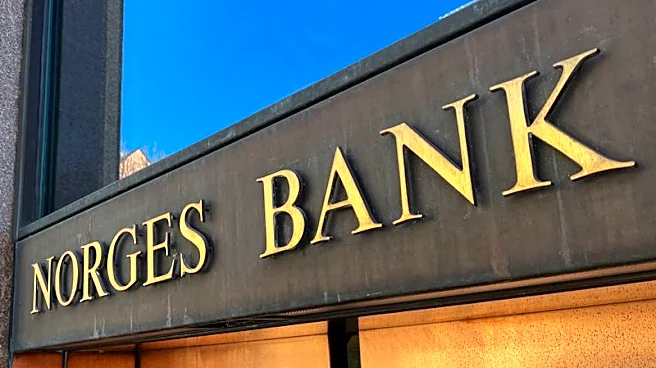
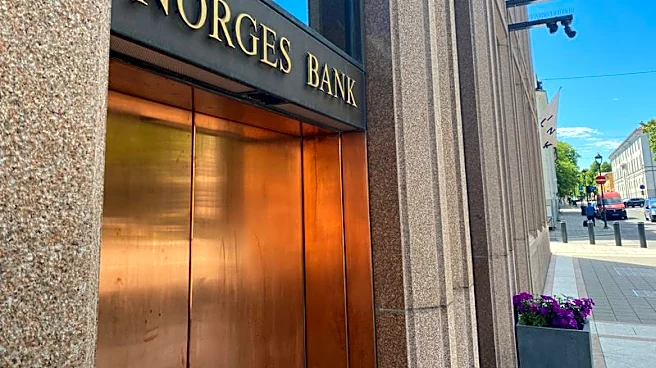
Sept 24 (Reuters) - Norway's central bank raised interest rates on Thursday and Sweden's signalled it was likely to follow suit before the end of the year, as policymakers around the world grapple with rising inflation from a war-driven energy shock.
The two Nordic central banks struck a similar note, warning that higher fuel prices as a result of the Middle East conflict risk slowing the return of inflation to their 2% target.
"By raising the policy rate, we are helping to reduce
inflation," Norges Bank's Governor Ida Wolden Bache said. "It will likely be necessary to keep the policy rate elevated for a time, and the Committee is prepared to raise (it) further if needed."
Sweden's Riksbank left rates unchanged, but said it would likely tighten policy before year-end. Denmark's central bank, which keeps its currency pegged to the euro, has already moved.
"If the outlook for inflation and growth remains the same, the policy rate will rise before the end of the year," Sweden's central bank Governor Erik Thedeen told reporters.
Investors expect another rate hike in Norway, and four in Sweden, by the end of spring.
CENTRAL BANKS EYE PREVENTATIVE ACTION
Nordic policymakers were following in the footsteps of the US Federal Reserve, the European Central Bank and the Bank of Japan, all of which raised their own policy rates this month.
Their underlying thinking is that while the current rise in inflation is largely due to hard-to-control fuel costs, those may start to feed through to other prices, wages and people's expectations, requiring preventive action from the central banks.
"We unfortunately had to learn that this is much more persistent than we thought," ECB policymaker Isabel Schnabel said at an event on Thursday. "This has pushed up our inflation outlook...and this is then also why we had to respond."
The Swiss National Bank remained an outlier, keeping rates at zero despite nudging up its inflation forecasts for the coming months.
"Our new conditional inflation forecast indicates that medium-term inflationary pressure has only increased slightly compared with June," SNB Chairman Martin Schlegel said.
Switzerland has long experienced lower inflation than many neighbouring economies, aided by the safe-haven status of the Swiss franc, which tends to strengthen in times of uncertainty.
Still, money markets see the SNB, too, raising rates three or four times over the next year.
BOND MARKETS SIGNAL INFLATION WORRIES
Signs of inflation concerns were already visible in bond markets, where investors were demanding the highest yield in two decades to hold long-dated government debt.
A stronger-than-expected US business survey added to evidence that the world's largest economy was running hot, also due to easy fiscal policy and an investment boom driven by flows into artificial intelligence.
This was seen as possibly leading the Fed to raise short-term rates farther to bring down inflation expectations and long-term bond yields.
"Investors remain concerned over a range of risks, including geopolitical developments, inflation, government debt, and the sustainability of AI capex," UBS wrote in a note to clients.
(Reporting by Francesco Canepa in Frankfurt, Terje Solsvik in Oslo, Simon Johnson in Stockholm and David Graham in Bern; Editing by Jan Harvey, Alexandra Hudson)