





By Makiko Yamazaki and Takaya Yamaguchi
TOKYO, Sept 4 (Reuters) - Japan's budget requests for the next fiscal year have ballooned to a size similar to during the pandemic era, as Prime Minister Sanae Takaichi's expansionary fiscal agenda pushes government borrowing costs to three-decade highs.
Budget requests from government agencies totalled 143.1 trillion yen ($917.78 billion), the Ministry of Finance said on Friday, after the government adopted a budgeting framework that integrates initial and supplementary
budget spending.
The increase underscores tension at the heart of Takaichi's economic agenda as her push to invest in strategic sectors has contributed to a rise in borrowing costs, and intensifies market attention on the size of government bond issuance next year.
The total exceeds the 140.61 trillion yen combined spending package finalised during Takaichi's first year in office, comprising an 18.3 trillion yen supplementary budget for fiscal 2025 and 122.3 trillion yen initial budget for fiscal 2026.
It also compares to the amounts the government spent supporting households and businesses during the COVID-19 pandemic.
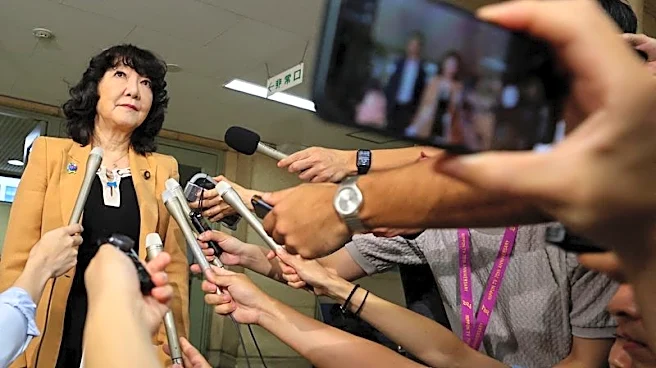
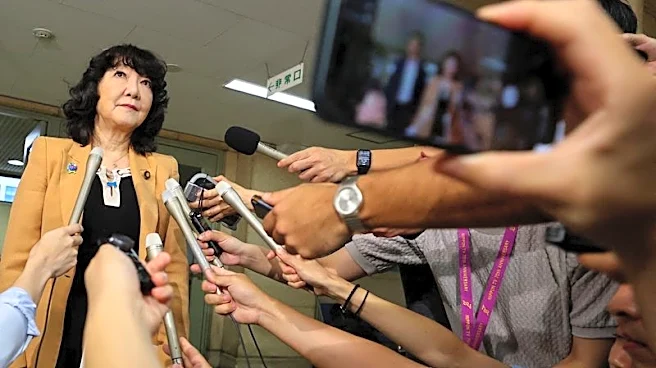
At a news conference, Minister of Finance Satsuki Katayama disputed the notion that the budget has risen sharply, saying the increase from Takaichi's first year was only about 2.5 trillion yen.
"We will carefully examine the details of the requests during the budget drafting process," she said.
The requested figure could rise because many items have been requested without specified amounts, including defence spending as the government reviews its defence strategy in a process that could lead to additional military procurement and investment.
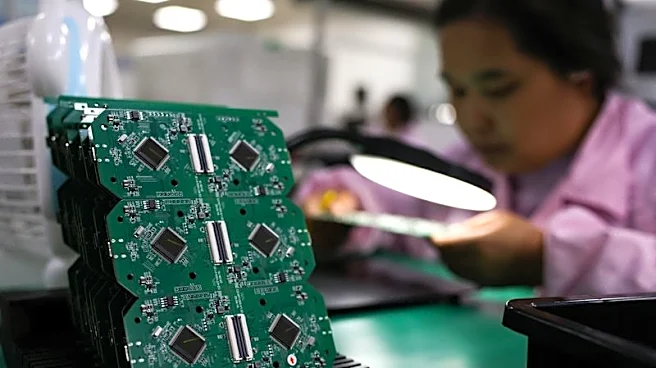
The increase versus a year earlier was driven in part by 12.2 trillion yen in requests made under a new investment programme for strategic sectors such as artificial intelligence, semiconductors and economic security.
It also reflected higher borrowing costs, prompting the ministry to raise its assumed interest rate to 3.8%, from 3.0% used in the fiscal 2026 budget, after the 10-year government bond yield hit 3% for the first time since 1996.
That pushed requests for debt-servicing costs, including interest payments and debt redemption, to a record 36.64 trillion yen, 5.36 trillion yen more than in the current fiscal year.
Katayama said the government is closely watching the bond market, and that higher interest rates raise debt-servicing costs for the government, households and businesses alike, while boosting interest income.
"Fiscal spending and bond issuance will be scrutinised in line with the goal of steadily lowering the debt-to-GDP ratio," she said.
Market attention is likely to shift to the scale of new government bond issuance in the fiscal 2027 budget.
The government aims to keep new bond issuance around 40 trillion yen, roughly in line with the fiscal 2025 budget, Takaichi told the Yomiuri newspaper in an interview last week.
Asked about Takaichi's comments, Katayama said they carry great significance.
"While Takaichi's growth strategy seeks to boost Japan's long-term growth potential through investment, markets remain focused on near-term signals such as budget size and bond issuance," said senior economist Saisuke Sakai at Mizuho Research Institute.
"Markets are looking for proof that higher spending will translate into stronger growth, backed by reforms that address structural constraints such as labour, land and energy shortages," Sakai said.
($1 = 155.9200 yen)
(Reporting by Makiko Yamazaki and Takaya Yamaguchi; Editing by Christopher Cushing)