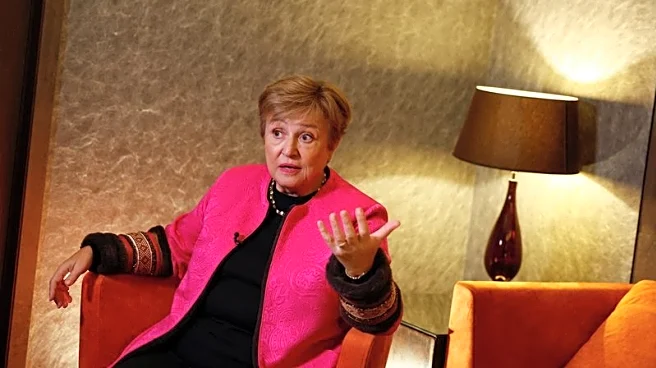

KYIV, Jan 15 (Reuters) - International Monetary Fund chief Kristalina Georgieva on Thursday said she expected to ask the Fund's executive board to approve a new $8.1 billion lending program for Ukraine
in a matter of weeks, underscoring the importance of shoring up funding for the war-torn country. Speaking to Reuters after meetings with Ukrainian President Volodymyr Zelenskiy and other top Ukrainian officials, Georgieva said much had changed in Ukraine since November, when a preliminary agreement was reached on the program, but the thrust of the program's requirements would remain the same. "I'm here to see how the country is doing in these unusually harsh times, because I want to make sure that what was agreed in November is implementable as it was agreed," she said. "We recognize that the direction to travel remains the same (but) the way we take these steps, we have to calibrate carefully."
Georgieva said she told the Ukrainian authorities that they had to press forward with removing a VAT exemption for consumer goods that has run into domestic resistance. But she said the IMF would require only that the measure was introduced in parliament, not that it was already passed, before the new program could be approved.
"On the VAT exemptions, we made it very clear that this has to happen. That we cannot possibly have the Ukrainian economy lingering between market economy and non-market economy," she said. "We have to move it forward and the question is not whether. The question is how we do it, how we get the level of support from the parliament."
Georgieva said she explained to Ukrainian officials that this was a must-have requirement. "I was very clear. You know, this, you cannot touch it. You need it for you. You need it for EU accession. You need it to attract the private sector to make the business environment more conducive," she said.
Georgieva said the IMF would assess which measures were easily implemented and which needed to be "calibrated" more carefully. On the VAT exemption, she said the Fund was discussing giving Ukraine a year to drum up support in parliament for passage of the measure, which has proven controversial.
(Reporting by Andrea Shalal; Editing by Andrea Ricci)