
BEIJING, Dec 15 (Reuters) - China's factory output and retail sales growth slowed further in November, weighed by weak domestic demand and adding pressure on policymakers to take action to rebalance the $19
trillion economy, as trading partners take issue with its huge surplus.
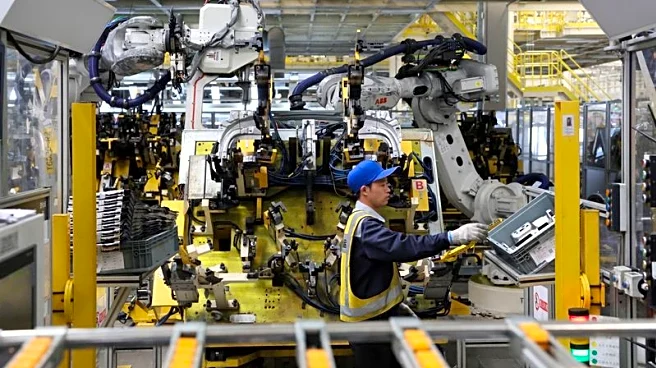
Industrial output rose 4.8% year-on-year, National Bureau of Statistics (NBS) data showed on Monday, slowing from 4.9% growth in October. It missed a 5.0% increase forecast in a Reuters poll.
Retail sales, a gauge of consumption, grew 1.3%, after rising 2.9% in October, lagging forecasts for a 2.8% gain.
Signs of fragile consumer demand have been mounting. Annual car sales slumped 8.5% in November, the steepest decline in 10 months, dimming hopes for a year-end rebound in an industry that normally sees strong sales in the final two months of a year.
Even the Singles' Day shopping festival - which stretched to five weeks this year by major e-commerce platforms to drum up sales - failed to excite consumers.
Fixed asset investment shrank 1.3% in January-November compared with the same period last year, after a 1.7% decline in January-October. Economists expected a 2.3% drop.
Government advisers and analysts say China is likely to pursue its current annual growth target of around 5% next year, as it seeks to kick-start a new five-year plan on a strong footing.
But that could prove challenging, with both the World Bank and the International Monetary Fund offering more conservative outlooks for China's growth trajectory.
Part of the concern stems from the country's prolonged property crisis, which has squeezed household wealth and sapped consumers' appetite to spend.
A resolution appears some way off, however. China's home prices are forecast to continue falling through 2026 before stabilising in 2027, a Reuters survey showed.
At a key economic meeting last week outlining the policy agenda for next year, Chinese leaders promised to maintain a "proactive" fiscal policy to spur consumption and investment, while acknowledging a "prominent" contradiction between strong domestic supply and weak demand.
Yet the dual focus on consumption and investment cements concerns that Beijing is not yet ready to ditch a production-driven economic model in favour of one that leans more on household spending.
Top officials remain confident in hitting this year's growth target, buoyed by resilient exports that have defied expectations despite higher U.S. tariffs.
That strength, however, faces a tougher test ahead as China's trillion-dollar trade surplus fuels tensions with Europe and other trading partners.
French President Emmanuel Macron threatened Beijing with tariffs during his visit to China and called on the country to correct "unsustainable" global trade imbalances.
Mexico last week approved tariff hikes of up to 50% next year on imports from China and several other Asian countries, aiming to bolster local industry.
"China's economic development still faces numerous longstanding and emerging challenges," the official summary of the Central Economic Work Conference said.
"We must strengthen internal capabilities to cope with external challenges."
(Reporting by Beijing Newsroom; Editing by Sam Holmes)