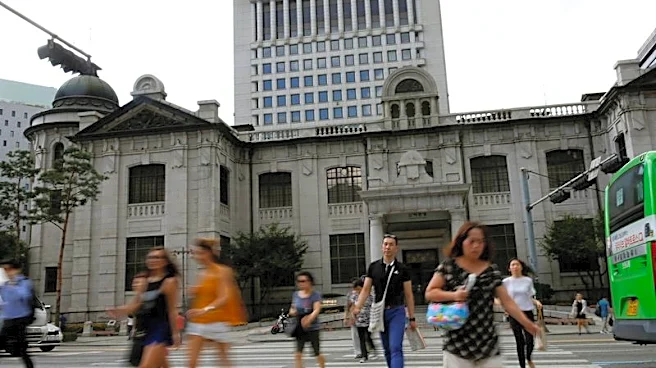








BENGALURU, April 8 (Reuters) - The Bank of Korea will keep its key interest rate unchanged at 2.50% on Thursday and for the rest of the year, a Reuters poll forecast, as policymakers assess the impact of the Iran war on domestic cost pressures.
Since the start of the U.S.-Israeli strikes on Iran, oil prices have increased over 50%, raising risks to both growth and inflation. South Korea is the world's fourth-largest importer of oil with around 70% coming from the Gulf region.
At its February meeting,
days before the war began, the central bank's forward guidance suggested rates would remain at 2.50% until at least August. It also upgraded the 2026 growth forecast to 2.0% from 1.8% and projected inflation at 2.1%, based on an assumption that oil would cost $64 per barrel.
Inflation rose to 2.2% in March, slightly above the central bank's 2% target but lower than the median 2.4% estimate in a separate Reuters poll.
All 31 economists polled by Reuters between April 2 and April 7 forecast the BOK would keep its base rate at 2.50% on April 10.
"The central bank will adopt a cautious monetary policy stance rather than lock onto a specific direction," said Jeeho Yoon, senior economist at BNP Paribas.
"At this meeting they won't provide their new updated growth and inflation forecast but they can provide a signal of where we are headed to and we think the BOK will highlight the risks of lower growth while highlighting upside risk to inflation."
The Korean won has weakened 4% against the dollar since the war began. On March 31 it touched its lowest since the 2009 global financial crisis, amplifying inflation concerns.
In the poll, economists forecast inflation to rise to 2.6% this quarter and average 2.4% in 2026, up from 1.9% predicted for this year in a January poll, and above the central bank's target.
Among the 30 economists who offered a longer-term view, 26 forecast no rate changes through 2026, while three expected 2.75% at year-end and one 3.00%.
Stephen Lee, chief economist at Meritz Securities, said that while not targeting the exchange rate directly, the central bank would be watching the won because its weakness could feed into consumer inflation through higher import prices.
"Assuming the war's impact on headline inflation turns out to be transitory, I believe the case for monetary policy will be rate freeze until end-of-year. That said, there are many upside risks for inflation," Lee said.
(Other stories from the April Reuters global economic poll)
(Reporting by Veronica Dudei Maia Khongwir; Polling by Renusri K. and Rahul TrivediEditing by Tomasz Janowski)