







By Kenrick Cai, Diana Novak Jones and Jonathan Stempel
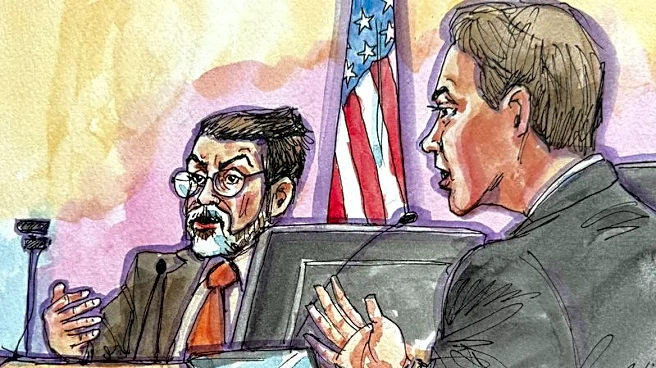
OAKLAND, Aug 19 (Reuters) - A former engineering director at Meta Platforms testified on Wednesday that CEO Mark Zuckerberg was responsible for a culture that may have led the company to shirk its responsibility to protect children who use its Facebook and Instagram platforms from harm.
Arturo Bejar, a vocal Meta critic who worked at the company from 2009 to 2015 and as an independent contractor from 2019 to 2021, said Zuckerberg was closely involved
in much decision-making, and the company's top-down culture ensured that product design changes would occur only if he ordered them.
"If Mark makes something a priority, mountains move in months," Bejar said.
Bejar is the first witness in a landmark trial over claims brought by a coalition of states accusing the company of designing its platforms to addict young users and illegally collecting data from children under 13.
California, Colorado, Kentucky and New Jersey accuse Meta of designing Facebook and Instagram to hook young users, fueling anxiety, depression and even suicide, and misleading consumers about the platforms' safety.
Those states and 25 others also accuse Meta of violating federal law by improperly collecting and using personal data of children while they used its platforms.
Meta has denied the allegations, and argued that Bejar's opinions were beyond the scope of his work.
Bejar began testifying in the Oakland, California, federal court on Tuesday, when the trial began.
The trial is expected to last six weeks, and Zuckerberg is expected to testify.
SAFETY AN 'AFTERTHOUGHT,' WITNESS SAYS
Bejar helped run surveys of teenagers' experiences as part of a team examining well-being on Instagram between 2019 and 2021.
He has been outspoken in criticizing Meta’s safety record for children, and testified before a U.S. Senate committee in 2023 that Meta was aware of harassment and other harms facing teenagers on its platforms but failed to address them.
In Wednesday's testimony, Bejar said Meta used metrics such as meaningful social interactions and daily active users to reward employees, prioritizing user engagement — and profit — over safety.
He also said a tool Meta uses that encourages users to take a break, a key feature Meta has cited in its defense, was "designed to fail" because it is not the default setting and reminders are easy to ignore.
"All roads lead to time in the product," he said. "In that context, safety was always an afterthought."
Bejar also said Meta had technology to flag and require verification from users, potentially in the millions, suspected to be under age 13, but turned a blind eye to the problem through a "don't ask, don't tell" policy because it was financially profitable over the longer term.
"Where the youngest kids are is where the users are going to be in the future," he said.
Experts have said the trial is the biggest legal test yet of social media's effects on young users.
Meta faces thousands of similar lawsuits over alleged harm to children. Bejar has been a key witness against the company in three of the cases that have gone to trial so far. One of those cases, brought by New Mexico, resulted in $942 million in damages and penalties and an order requiring Meta to change its platforms in the state.
(Reporting by Diana Novak Jones in Chicago, Kenrick Cai in Oakland, California, and Jonathan Stempel in New York; Editing by Alexia Garamfalvi and Nia Williams)