



By Jamie McGeever
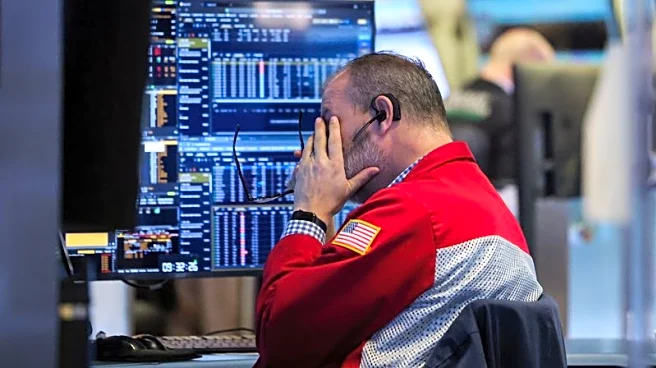
ORLANDO, Florida, Jan 13 (Reuters) - U.S. stocks fell on Tuesday, dragged lower by financials after JPMorgan warned that President Donald Trump's proposed cap on credit rates would harm the economy, while geopolitical tensions triggered a sharp rise in oil and lifted gold to new highs.
More of that below. In my column today I look at gold, and why solid central bank demand, coupled with safe-haven buying from investors worried about rising geopolitical tensions, means the only way
for the yellow metal right now looks to be up.
If you have more time to read, here are a few articles I recommend to help you make sense of what happened in markets today.
1. U.S. consumer inflation increases steadily, buthouseholds paying more for food and rents 2. Global central bank chiefs defend Fed's Powell afterTrump threat 3. Fighting the Fed, Trump tries credit easing by decree:Mike Dolan 4. Trump's exercise of raw power upends world order,sending friends and foes reeling 5. JPMorgan profit beats estimates on trading boom, takeshit on Apple cardToday's Key Market Moves
* STOCKS: Wall Street in the red. Japan's Nikkei +3% torecord high, China falls, Europe mixed. * SECTORS/SHARES: U.S. financials down nearly 2%, energy+1.5%. Visa -4.5%, JPMorgan -4%. * FX: Dollar rebounds broadly, most notably vs Asia. THB,KRW and JPY biggest decliners, with USD/JPY nudging key 160level. MXN among the few climbers. * BONDS: Long-dated JGB yields surge to new highs, mostnotably the 20-year yield. U.S. Treasury yields slip, as combined $119 billion sales of 3-, 10- and 30-year debt atauction are well received. * COMMODITIES/METALS: New highs for gold and silver, oilleaps 2.5% to highest since late October.Today's Talking Points
* Japan FX, bonds crumbling again
Japanese government bonds and the yen are back under heavy selling pressure after it emerged that Prime Minister Sanae Takaichi could call a snap election next month to capitalize on her strong public approval ratings since taking office in October.
Long-dated JGB yields hit all-time highs, and the yen fell to its lowest against the dollar since July 2024, bringing the 160.00 mark into view. Markets are on high intervention alert. Stocks rose strongly on Tuesday, but a simultaneous bond and FX market selloff is a dangerous mix.
* Iran's global ripple
Protest and political turmoil in Iran are beginning to ripple strongly across world markets, reflected most notably in the price of oil, energy, and safe-haven gold and precious metals. But with the U.S. mulling strikes on Iran and threatening 25% tariffs on countries doing business with Tehran, all markets are feeling nervy.
Oil jumped 3% on Tuesday, lifting Brent and WTI futures to their highest in nearly three months. Brent crude is up nearly 8% so far this month, on track for its best month since September 2023. Gold is up 7% to new highs, and $5,000 doesn't seem that far away now.
* U.S. bank report amid Trump controversies
The U.S. fourth-quarter earnings season kicked off on Tuesday with Wall Street heavyweights JPMorgan and BNY reporting above-forecast income, but their shares going in opposite directions: JPM -4%, BNY +2%.
Banks' earnings calls are likely to be dominated by Trump's controversial proposal to cap credit card rates at 10% for a year, and his administration's threat to indict Fed Chair Jerome Powell.
Ready, steady gold! Safety bid adds fuel to cenbank fire
Gold and other precious metals recorded eye-watering price spikes in 2025, so it's difficult to imagine them delivering similar returns in 2026. But solid central bank appetite and safe-haven demand could keep their relentless rise on track.
With the first month of the year barely at the halfway point, gold and silver have already jumped to new records, up 7% and 20%, respectively, so far in 2026. Platinum is up 15% year to date, and is also close to hitting a fresh high.
These moves are all the more remarkable given that gold, platinum, and silver clocked annual gains of 65%, 125% and 145%, respectively, last year.
Any notion of investors taking profits - and a breather – evaporated with a blizzard of political, economic, and geopolitical news out of Washington. It brings to mind Vladimir Lenin's apocryphal quote "There are decades where nothing happens; and there are weeks where decades happen."
Just last week alone, U.S. President Donald Trump ordered the purchase of $200 billion of mortgage-backed securities, directed U.S. oil giants' activities in Venezuela, attempted to ban defense firms' share buybacks and dividend payments, and put a one-year cap on credit card interest rates, while his Department of Justice threatened to indict Fed Chair Jerome Powell.
This is all fuel for gold. The "dollar debasement trade" may be overstated - the greenback has been remarkably stable for months - but the strength of gold and other precious metals suggests there may be some substance to it.
This "flight to quality" and inflation-hedging among private investors is complementing central banks' highly inelastic demand for bullion. Reserve managers continue to buy for strategic reasons and diversification, regardless of price.
PEDAL TO THE YELLOW METAL
To track the phenomenon, look at China. People's Bank of China data last week showed that the central bank bought gold for a 14th consecutive month in December, increasing its holdings over the year by some 28.5 metric tons.
That's less than the 44 tons purchased the year before, but still substantial, especially coming amid spot gold's biggest annual price rise since 1979. It helped raise the value of China's gold reserves to $319.45 billion from $191.34 billion the year before.
Other central banks are buying too. International Monetary Fund data shows Brazil, Finland, and Turkey were among the biggest buyers late last year, lifting official sector buying above the long-run average.
"Clearly, elevated gold prices are not yet detracting from reserve managers' inclination to accumulate gold," Deutsche Bank analysts wrote on Monday.
Analysts at State Street agree. Official sector buying is providing a "sticky" source of demand, underscoring a "durable shift" in official sector reserve management away from U.S. Treasuries and toward the yellow metal.
This is effectively raising gold's price floor, which State Street suggests is $4,000 an ounce, some way off the record $4,630 per ounce struck on Monday. The ceiling is also climbing, and a test of $5,000 now seems likely.
DIRECTION OF TRAVEL NOT IN DOUBT
Gold is not included in the IMF's Currency Composition of Official Foreign Exchange Reserves, or COFER data, the global benchmark for FX reserves. Instead, it is found in wider measures of central banks' assets.
For that reason, and others such as data reporting transparency, estimating gold's place in official reserves relative to currencies, or other assets like Treasuries, should be done with a fair degree of caution.
According to the World Gold Council, gold's share of global FX reserves in October was 25.9%. That compares with the euro's 20% share of reported IMF COFER reserves data, and some analysts also believe that gold's share of reserves overtook Treasuries' portion last year for the first time since 1996.
Whatever the accuracy of these claims, there's little doubt about central banks' direction of travel. And in an increasingly volatile world, they won't be reversing course any time soon.
What could move markets tomorrow?
* Japan Tankan index (January) * China trade (December) * U.S. producer price inflation (November) * U.S. retail sales (November) * U.S. current account (Q3) * U.S. Federal Reserve officials scheduled to speak includeGovernor Stephen Miran, Philadelphia Fed President Anna Paulson,Atlanta Fed President Raphael Bostic, Minneapolis Fed PresidentNeel Kashkari, and New York Fed President John WilliamsWant to receive Trading Day in your inbox every weekday morning? Sign up for my newsletter here.
Opinions expressed are those of the author. They do not reflect the views of Reuters News, which, under the Trust Principles, is committed to integrity, independence, and freedom from bias.
(By Jamie McGeever; Editing by Nia Williams)