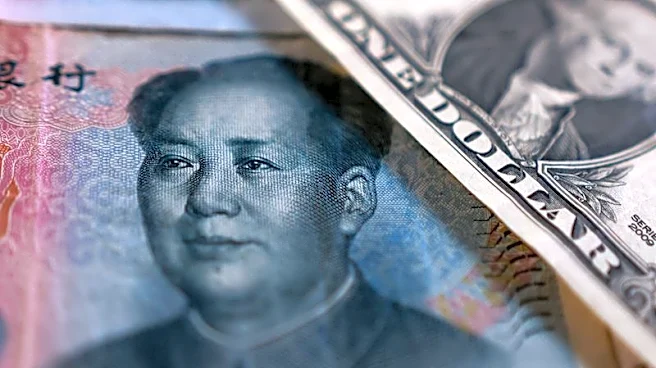






June 5 (Reuters) - Several Chinese banks have raised dollar deposit rates in recent weeks, sources said, in a move some traders say is likely aimed at slowing the pace of yuan appreciation.
At least five commercial banks, ranging from state-owned lenders to smaller joint-stock banks, have lifted the dollar deposit rates they offered to their clients, according to the sources with knowledge of the matter.
One source said her bank was "making a push to effectively woo dollar deposits from new clients."
Two sources said they are now offering dollar deposit rates at around or above the U.S. Secured Overnight Financing Rate, which currently stands at 3.61%.
It is not clear if the dollar deposit rate hike was informally guided by the People's Bank of China (PBOC). The PBOC didn’t immediately respond to Reuters' request for comment after business hours.
The rate adjustments varied by banks and applied to either corporate or retail clients, but the overall trend was all upward, according to the sources, all of whom requested anonymity because they were not authorised to speak publicly.
The higher rates could soak up dollars and prevent the yuan from rising too fast, said a separate trader at a foreign bank, who also requested anonymity.
The latest rate adjustment "reflects the broad increase in global U.S. dollar funding costs, and there is no need to compress the U.S. dollar demand given the yuan's strength," said Gary Ng, senior economist for Asia Pacific at Natixis.
"If the U.S. dollar deposit rate is too different from the world, money may flow out of the banking sector into other wealth management products."
China's yuan has gained more than 3% against the dollar so far this year, and some market participants and businesses argued that a too strong currency could hurt export competitiveness.
Bloomberg first reported that China was allowing some banks to offer higher interest rates on corporate U.S. dollar deposits.
The adjustment marks a relaxation of a dollar deposit rate ceiling imposed in 2023, when the yuan faced depreciation pressure.
Foreign exchange deposits stood at $1.15 trillion at the end of April, and were up about 20% from a year earlier.
(Reporting by Reuters Staff; Editing by Susan Fenton)