








By Andrew Hay
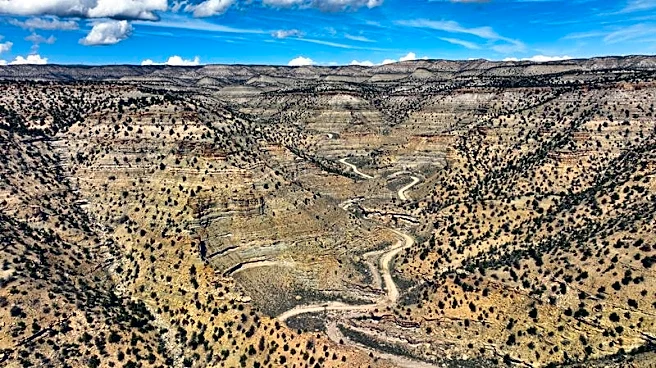
Oct 8 (Reuters) - Conservation groups sued the US government this week over plans to blast the cliff walls of an eastern Utah canyon and build an oil truck highway through an area covered in historic inscriptions and near world-renowned Native rock art.
The project to replace a winding dirt track with a paved road through Gate Canyon would destroy 100-foot (30-meter) cliffs with at least 47 historic sites, including 19th century inscriptions by Black American "Buffalo Soldiers" in the
US Army and European pioneers, according to the lawsuit against the US Bureau of Land Management. The cliffs are also a habitat for threatened species such as the Mexican spotted owl, the suit claims.
A spokesperson for the US Department of the Interior, the bureau's parent agency, said it had no comment due to pending litigation.
Gate Canyon runs north off Nine Mile Canyon, described as the world's longest art gallery, according to the Bureau of Land Management. Nine Mile Canyon, which is about 46 miles (74 km) long, is home to the United States' largest concentration of Native rock art with more than 1,000 art sites containing over 10,000 images, some dating to prehistoric times.
The plan to pave Gate Canyon as an alternative truck route to the Uinta Basin oil fields would turn Nine Mile Canyon into a busy oil highway, potentially damaging one of Utah's most important cultural and scenic areas, the lawsuit claims.
"BLM rushed its April 2026 decision to approve the blasting and paving of Gate Canyon and hid that process from the public," says the 50-page lawsuit filed in US District Court District of Utah, Central Division.
Plaintiffs in the Utah lawsuit - including the Center for Biological Diversity - said the Bureau's approval of the road project proposed by Utah's Duchesne County violated a string of federal laws, including the National Environmental Policy Act, National Historic Preservation Act and the Endangered Species Act.
Black US Army soldiers carved their names in the rock walls of Gate Canyon, located around 100 miles (160 km) southeast of Salt Lake City, when they built its current road. Freighters and pioneers also inscribed their names on the canyon walls using axle grease, according to the plaintiffs.
The legal action comes weeks after a US judge blocked the administration of President Donald Trump from building a border barrier through Big Bend National Park in Texas while courts consider an environmental lawsuit challenging that project.
Trump has pursued a "Drill, baby, drill” policy to expand domestic oil and gas production, speeding permits and loosening environmental restrictions in pursuit of US energy dominance.
(Reporting by Andrew Hay in New Mexico; Editing by Donna Bryson and Lincoln Feast.)