





By Hari Kishan
BENGALURU, April 28 (Reuters) - Inflation in most countries will be markedly higher this year than predicted three months ago amid a stalemate in the energy crisis brought about by the U.S.-Israeli war with Iran, according to a Reuters poll of around 500 economists, who barely altered their positive global growth view.
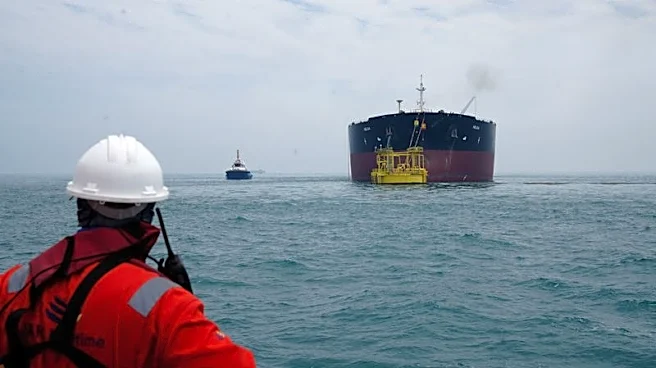
With Iran's chokehold on one-fifth of global oil supply through its closure of the Strait of Hormuz, the prospects of lower prices are fading, forcing economists and global central
banks to contemplate an extended period of higher inflation.
But with a few notable exceptions like Turkey and Argentina which already have double-digit inflation rates, the forecast upgrades were modest given crude oil was back trading above $110 a barrel on Tuesday.
The latest poll, taken March 27 to April 27 and covering the top 50 global economies, saw higher 2026 inflation forecasts for 44 of them with few substantial changes to economic growth expectations apart from the Gulf region.
"The outright closure of the Strait of Hormuz is essentially ahistorical, and so we don't have a great model for this in the past," said Seth Carpenter, global chief economist at Morgan Stanley.
"People need to entertain the idea we just have higher oil prices for the foreseeable future because of the extra risk premium built in."
Central banks are still haunted by their previous collective misjudgment that the inflation surge in the waning days of the COVID-19 pandemic was transitory and by the policy tightening they were forced into when it was clear they had made the wrong call.
But so far they have opted to wait and watch how the conflict in the Middle East plays out rather than get in front of a possible price surge.
The Bank of Japan held rates steady on Tuesday, as predicted in a Reuters poll, and most of its major peers were expected to follow suit.
The focus will be on how central bankers view the latest pick-up in price pressures and if there will be second-round effects requiring a prompt rate response.
While economists expected the U.S. Federal Reserve to cut rates just once - in the final quarter of this year - the Bank of England and Bank of Canada were seen as likely to make no change through 2026. The European Central Bank is forecast to hike only once, probably in June.
However, financial markets are still pricing in hikes from most central banks while they expect the Fed to hold for the rest of the year.
"There is a tendency in financial markets, which we think will be super rational, to ignore bad news until it's right on their doorstep," said Douglas Porter, chief economist at BMO Capital Markets.
"While I do take some comfort in how strong financial markets have been, I don't think that gives us an all-clear signal by any means."
GROWTH OPTIMISM ENDURES
The global economy is forecast to grow 2.9% this year, largely unchanged in polls taken over the past year - remarkable for a period marred by unprecedented disruption to global trade through U.S. tariffs and an energy crisis dubbed the worst ever by the International Energy Agency.
Earlier this month the International Monetary Fund forecast global growth slightly stronger, at 3.1% this year.
BMO's Porter said his forecasts were "probably a little bit more cautious."
"A lot of that is just due to a much weaker outlook for activity in the Gulf region. But we've also shaved our view on Europe and North America as well as parts of Asia," he said.
There were significant downward revisions to Gulf economies, due to their proximity to the conflict, with three of six expected to contract this year before a 2027 recovery.
But that is based on expectations the war ends soon, as well as disruption to energy markets.
Elsewhere, the outlook was broadly stable. Demand for artificial intelligence technology boosted estimates for growth in Taiwan, despite expectations for the rest of Asia to take a mild hit from the energy shock.
(Other stories from the Reuters global economic poll)
(Polling, analysis and reporting by the Reuters Polls team in Bengaluru and bureaus in Buenos Aires, Cairo, Istanbul, Shanghai and Tokyo; Additional reporting by Indradip Ghosh and Sarupya Ganguly; Editing by Ross Finley and Hugh Lawson)