






By Steve Holland and Nidal al-Mughrabi
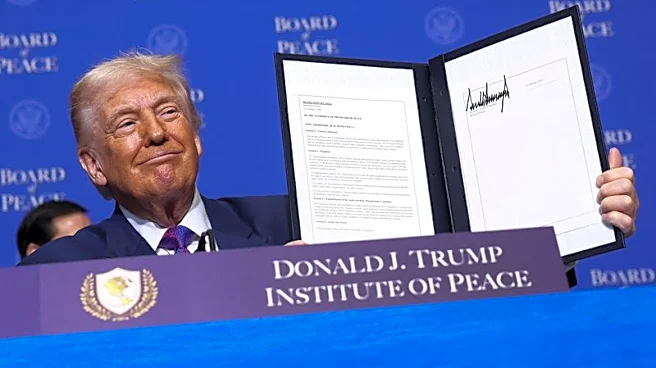
CAMP DAVID, MARYLAND/CAIRO, July 31 (Reuters) - U.S. President Donald Trump said on Friday a deal he announced to bring peace to Gaza was "a great breakthrough" despite signs from both Hamas and Israel that significant hurdles remained before a deal can be implemented.
The comment came a day after what Trump called a "major milestone" towards ending the war in Gaza that he said would see the complete disarmament of Hamas and other armed groups.
"It's a big step
for the Middle East, and people are really impressed by it, and they're surprised by it," he said.
Trump's announcement on Thursday of the agreement by his Gaza "Board of Peace" followed months of faltering efforts to keep the ceasefire agreement reached last year in the Egyptian resort of Sharm el-Sheikh on track and it was not immediately clear how strongly either Hamas or Israel stood behind it.
Previous attempts to reach an accord have foundered amid mutual suspicion and each side's insistence that the other must move first.
A senior Hamas official involved in the negotiation told Reuters that implementation of the deal would depend on Israel first meeting its commitments under an agreement reached last year that bound it to a phased end to military operations and withdrawal of its forces from Gaza.
An Israeli official said Israel's position remained that "there will be no withdrawal whatsoever of the IDF from the current Yellow Line unless Hamas undergoes a genuine disarmament", referring to a military demarcation line agreed in the ceasefire.
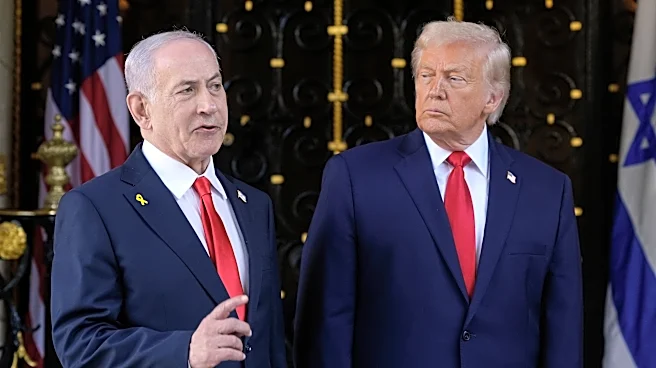
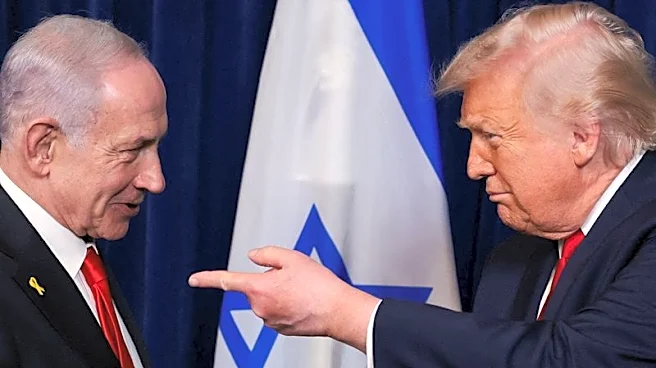
Trump, who met Israeli Prime Minister Benjamin Netanyahu in Washington on Tuesday, said Israel was "very happy" about the deal. "Israel helped us, and they've been very good," he said.
"Will it go through its ups and downs? It's a very complex situation over there."
An Israeli political source said on Thursday the issue of Gaza did not come up during Netanyahu's meeting with Trump.
"STOP THE KILLING"
On Friday, Hamas issued a statement saying the first step towards an agreement would have to be a commitment by Israel "to stopping the killing and ending its attacks".
But within hours of Trump unveiling the deal, Gazan medical authorities said one Palestinian was killed and several others had been wounded in at least two Israeli airstrikes and by gunfire in the enclave.
The Israeli military said it was reviewing one incident in which a strike intended to hit a member of Hamas' armed wing was diverted after uninvolved individuals were identified. It said it was unaware of the shooting.
Netanyahu, who faces an election in October in which he is likely to rely on support from right-wing partners, has so far not commented officially. But Police Minister Itamar Ben-Gvir, head of the far-right Jewish Power party, said on his Telegram channel that the draft agreement was unacceptable, and said Israel's policy of assassinating Hamas leaders must continue.
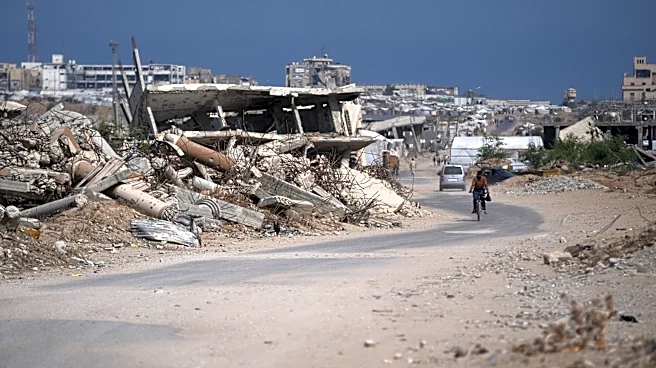
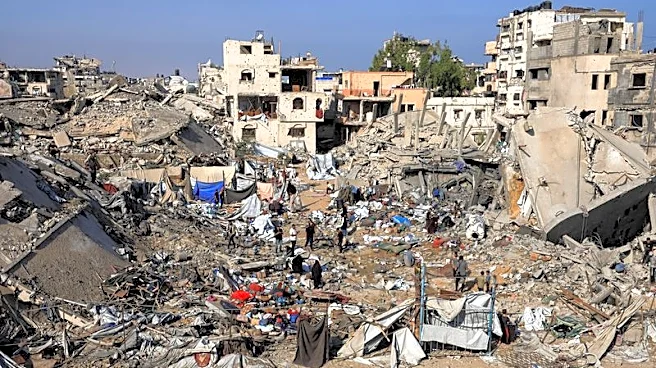
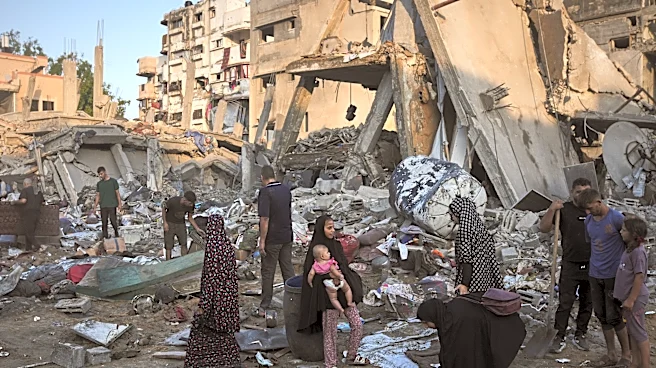
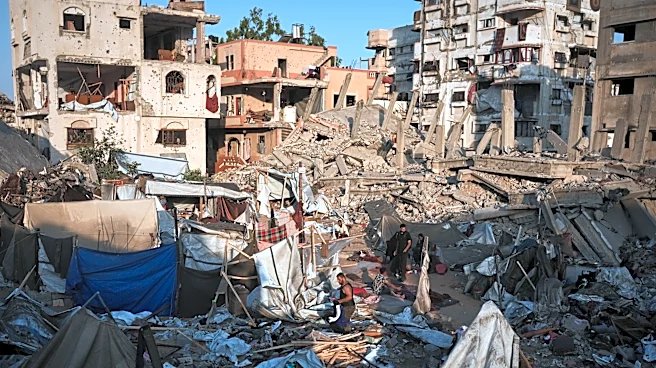
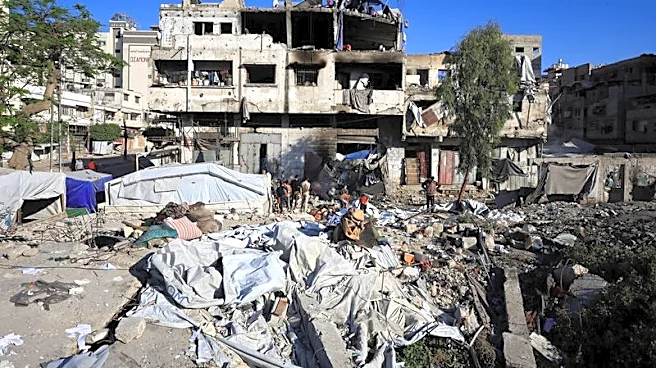
On the ground, Gazans, still struggling with basic survival after the Israeli military campaign in response to the deadly 2023 Hamas attack on Israel devastated the enclave, remained sceptical, saying little had changed.
Inside a tent encampment in Gaza City, where women were busy filling plastic jerrycans with water, displaced Palestinians urged Trump to compel Israel to abide by the agreement.
"You Trump, you should start it from your end. Ceasefire, stop the assassinations and complete the Israeli army's withdrawal from the Gaza Strip," said Samir Ayad, 60.
"We are not seeing any agreement at all, nothing from what he (Trump) is saying," he told Reuters.
'DIFFICULT AND PAINFUL' AGREEMENT, SAYS HAMAS
Ghazi Hamad, a Hamas official involved in the negotiations, told Reuters the group was ready to accept an agreement he said was "difficult and painful".
But he avoided using the term disarmament and said the agreement was a "comprehensive framework" that would depend on Israel implementing the first phase of the Sharm el-Sheikh agreement.
Under that agreement, he said Israel was obliged to end its attacks in Gaza and withdraw its forces to where they stood in October, as well as increase the flow of goods and aid coming into the enclave.
Only then would Hamas agree to hand over its weapons for storage by the new National Committee for the Administration of Gaza, the Palestinian technocratic body set up to run the enclave.
On Friday, Trump's Board of Peace published the 15-point roadmap, which called on both Israel and Hamas, together with other Palestinian factions, to implement fully the Sharm el-Sheikh agreement, in particular the end to military operations in Gaza.
The document outlined steps to allow NCAG to assume responsibility for civil governance in Gaza, and said it would oversee a process to "decommission and store heavy weapons, military production sites, depots of weapons, and tunnels".
It said no weapons would be handed over to Israel or non-Palestinian parties.
U.N. Secretary-General Antonio Guterres called on all sides to follow the roadmap "without any questions, scepticism, or determination to undermine it".
"Now is the time for both sides to implement what was agreed," he told reporters.
(Additional reporting by Nandita Bose and Don Durfee in Washington and Pesha Magid in Jerusalem; writing by Nafisa Eltahir and James Mackenzie; Editing by Alex Richardson, Jon Boyle, Philippa Fletcher and Sharon Singleton)