

TAIPEI, Feb 5 (Reuters) - Naval missions by foreign countries in the Taiwan Strait are about asserting international law, rather than offering provocation, France's de facto ambassador in Taipei said on Thursday, speaking of voyages that routinely infuriate China.
In addition to claiming sovereignty over democratically governed Taiwan, Beijing views the narrow, highly strategic strait as Chinese territorial waters and has responded aggressively on occasion to foreign navies sailing there.
"We are careful
to send these naval assets into international waters without any provocation," Franck Paris, director of the French Office in Taipei, told reporters.
They aimed to send a clear message that international law prevails in the waters and should remain so, added Paris, whose country is chairing the Group of Seven nations for the coming year.
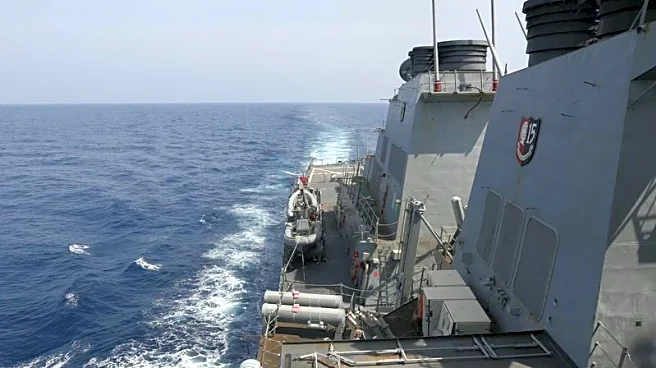
U.S. warships traverse the strait every few months, enraging Beijing, and some U.S. allies, such as France, Australia, Britain and Canada, have also made occasional transits.
Paris said it had now become routine for G7 statements to include language on maintaining the status quo across the strait and opposing use of force or coercion.
"This is a clear message that we repeat all the time, and I think there is a good choreography between a number of G7 partners to send this message," he added, pointing to past naval trips by Canada and the Netherlands, among others.
The last publicly confirmed sailing by a French navy ship in the strait, a conduit for trade running into billions of dollars a year, was in 2024.
The government of Taiwan, which rejects Beijing's sovereignty claims, welcomes such transits as support for freedom of navigation. China's military routinely operates in the waterway in what Taipei views as a pressure campaign.
France, like most countries, has no formal diplomatic ties with Taiwan, but is viewed by Taipei as an important partner and fellow democracy.
Three decades ago it sold Mirage fighter jets and frigates to Taiwan, although the United States is the island's most important international source of arms.
"These assets are still used by the Taiwanese defence," Paris said, adding that French companies helped maintain them by providing necessary equipment.
"This is the framework that we are committed to and this framework has not been questioned for years."
(Reporting by Ben Blanchard; Editing by Clarence Fernandez)