



By Gertrude Chavez-Dreyfuss
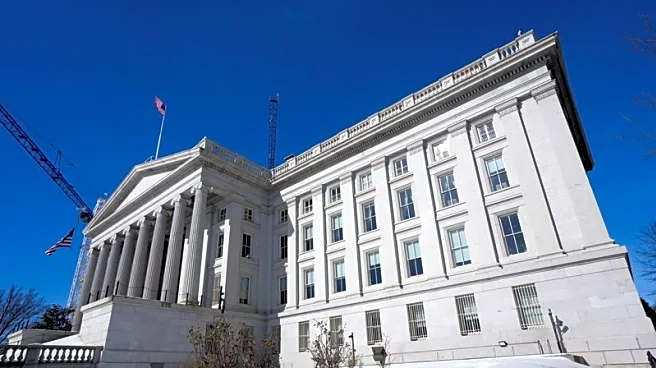
NEW YORK, Feb 2 (Reuters) - The U.S. Treasury on Monday said it now expects to borrow $574 billion in the first quarter, $3 billion less than its forecast in November, as a larger opening cash balance helped offset a decline in projected net cash flows.
The first-quarter financing estimate assumes a cash balance of $850 billion at the end of March, the Treasury said in a statement.
Excluding the higher-than-assumed beginning-of-quarter cash balance, the current quarter borrowing
estimate is $19 billion higher than announced in November.
The Treasury also said it expects to borrow $109 billion in the second quarter, as it forecasts a cash balance of $900 billion at the end of June.
"The estimates reflect little change from November and, thus, present little risk of any changes to coupon auction sizes in the near term," Thomas Simons, chief U.S. economist at Jefferies, wrote in a research note after the release of the Treasury's latest financing forecasts.
The Treasury also said it borrowed $550 billion in privately-held net marketable debt in the last quarter of 2025, closing the period with a cash balance of $873 billion.
In its November estimate, Treasury projected $569 billion in borrowing and assumed an end‑December cash balance of $850 billion. The reduction of $20 billion in privately-held net marketable borrowing stems mainly from stronger net cash flows, tempered by a higher-than-anticipated cash balance at the end of the quarter.
Excluding the higher-than-assumed end-of-quarter cash balance, actual borrowing was $42 billion lower than what was announced in November.
The bond market now turns its attention to Wednesday's refunding announcement, which spells out financing plans for the first and second quarters.
The Treasury is widely anticipated to leave note and bond auction sizes unchanged for an eighth straight quarter.
Investors will be looking for guidance on the Treasury's next steps - whether the department will provide more details on future coupon increases or whether it might consider cuts in long‑end issuance to help achieve the Trump administration's aim to reduce long‑term borrowing costs.
"There is no reason to expect that the Treasury will cut back on coupon issuance any time soon," Simons said.
"(Treasury) Secretary Scott Bessent has made comments in the past suggesting that the Treasury would take advantage of any opportunity to reduce long-end issuance that presents itself, but there are still too many unknowns in the outlook to justify reducing coupon auction sizes," Simons noted.
(Reporting by Gertrude Chavez-Dreyfuss; Editing by Paul Simao)