



By Bianca Flowers, Disha Raychaudhuri and Travis Hartman
WASHINGTON, Nov 21 (Reuters) - The largest class of new Black Democratic lawmakers in more than 30 years will join the US Congress in January after November's midterm elections despite Republican-led redistricting efforts, according to a Reuters analysis.
The electoral outcome sets up a test of whether increased Black representation can translate into legislative power.
Congress will include 13 new Black Democratic members, the largest cohort
since 1993, House historian data showed. Four are 34 years old or younger, and more than half of Black House members were first seated in 2021 or later.
The influx of Black lawmakers could reshape Congress' legislative priorities on voting rights, healthcare affordability and economic inequality, while giving a new generation of leaders a greater voice in shaping Democratic policy, political observers say. But the lawmakers' influence will depend on whether they can translate their growing numbers into powerful committee assignments and legislative victories at a time when longstanding civil rights protections face mounting challenges.
Black candidates won 58 seats in the 435-member House for the 120th Congress, down from 61 in the current Congress, with two additional Black candidates in Louisiana headed to December 12 runoffs. Four Black Republicans will depart Congress, leaving US Senator Tim Scott of South Carolina as the only Black Republican in either chamber. Black representation in the Senate reached a record seven members following the election of Democrat Juliana Stratton in Illinois and the upset victory by Mississippi Democrat Scott Colom.
The shift in representation echoes the 1990s, when efforts to expand Black political representation helped usher in a new generation of lawmakers — many of whom have since gained seniority and influence, said Dedrick Asante-Muhammad, president of the Joint Center for Political and Economic Studies.
"This points to how important it was for a significant increase in Black representatives and how it pays off 20 to 30 years later," Asante-Muhammad said.
DIVERSE REPRESENTATION
In 1993, 16 first-time Black members joined when Congress convened, and 17 had joined by the end, the most of any Congress. Five of the current six longest-serving Black House members were first seated in 1991 or 1993.
“When you have proportional representation in Congress, it does allow for diverse representation across committees. Part of the reason why the Congressional Black Caucus formed is so that they could convince leadership to put Blacks on key committees,” said Andra Gillespie, a professor at Emory University who studies African American leadership in politics.
All current members of the caucus are Democrats.
"We're all being contacted by our constituents who are impressing upon us the need to be very bold in our approach ... to address what are crises in communities across the country," said caucus chair, US Representative Yvette Clarke, a New York Democrat, citing the affordability crisis as its members' main concern.
REDRAWN MAPS
Four districts held by Black Democrats were among those that Republican-led legislatures redrew to try to gain seats, in a push that intensified after the Supreme Court’s April ruling that weakened the Voting Rights Act of 1965. Republicans have flipped none of the three decided so far.
Democrats Shomari Figures and Don Davis won reelection to the House in Alabama and North Carolina, respectively, while Democrat Leticia Gutierrez, who does not identify as Black, won a redrawn district in Texas previously held by Democrat Al Green.
Two Black women have a chance to secure Louisiana's remaining two congressional seats. In a majority-Black Louisiana district redrawn in May, Democrat Chauna Banks will face Republican Blake Miguez in a December 12 runoff. In a neighboring district, Democrat Patricia Moore, who led a nine-candidate field with nearly 18% of the vote, will take on Republican Gabe Firment, who received 17.2%.
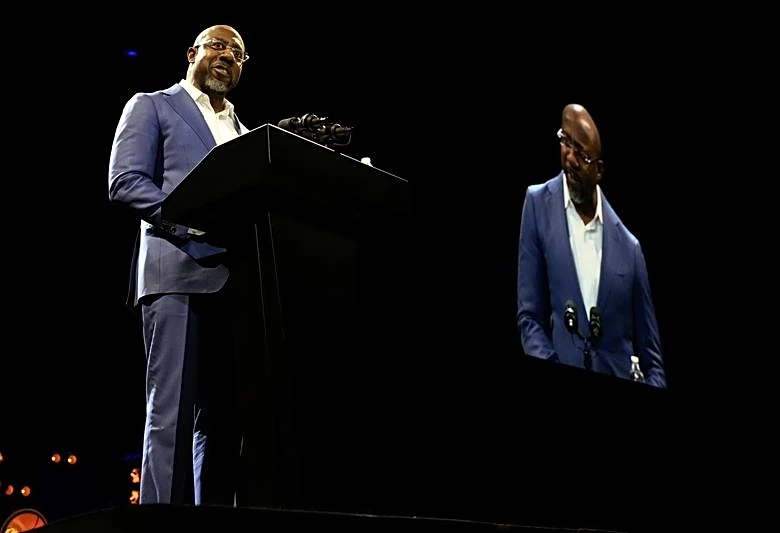
US Senator Raphael Warnock, a Georgia Democrat and the 11th Black senator in US history, told Reuters lawmakers must begin shaping their policy agenda before Congress convenes in January. Warnock donated to and campaigned for Colom, who will be Mississippi's first Black senator in more than 140 years.
“I’m focused on ending this war, ending these tariffs, and restoring tax credits that will bring people's healthcare costs down," Warnock said.
Most major legislation will still require bipartisan support in the Senate, and Republican President Donald Trump can veto bills passed by Congress.
NEW FACES, SENIOR LEADERS AND A TEST FOR DEMOCRATS
Black Democrats' leverage will depend on a delegation that is newer, and in some cases much younger, than in the last Congress. Melat Kiros, 29, is the first woman from Gen Z — the generation born between the late 1990s and the early 2010s — elected to Congress and the first Black woman to represent Colorado. She is one of four first-time Black House members who are 34 or younger, alongside Darializa Avila Chevalier of New York and Adrian Boafo of Maryland, both 32, and Donavan McKinney of Michigan, 34. In contrast, the Democratic caucus’ senior Black leaders include US Representatives Maxine Waters of California, 88, and Bennie Thompson of Mississippi, 78.
“I’m unapologetically progressive. So many people are looking for bold leadership and I think that too often the messages that come out are that boldness is risky," said reelected US Representative Summer Lee, a Black Pennsylvania Democrat.
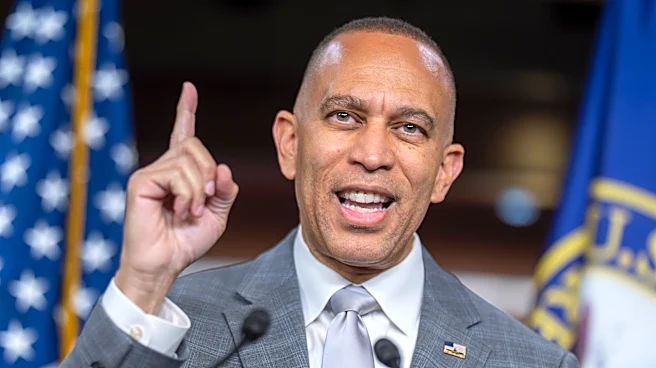
The generational mix will be tested at the top, where US Representative Hakeem Jeffries, a New York Democrat and the favorite to become House speaker, would manage a caucus that includes moderates and progressives seeking to move the party beyond its established leadership.
“Democratic leadership is in for some trouble. (Senate Democratic leader Chuck) Schumer and Jeffries are really going to have to push back against what is going to be and has already proven to be a groundswell against their leadership,” said Periloux Peay, a political science professor at the University of Maryland.
The Congressional Black Caucus will enter the new session with a record 64 members, up from 62. Chair Clarke said she is focused on aligning progressives and moderates and expressed confidence in Jeffries.
"I'm under the impression that he's not tone deaf and that he will lead as the body requires," Clarke said.
(Reporting by Bianca Flowers, Disha Raychaudhuri and Travis Hartman. Editing by Kat Stafford, Julia Wolfe and Rod Nickel)