
By Michael S. Derby
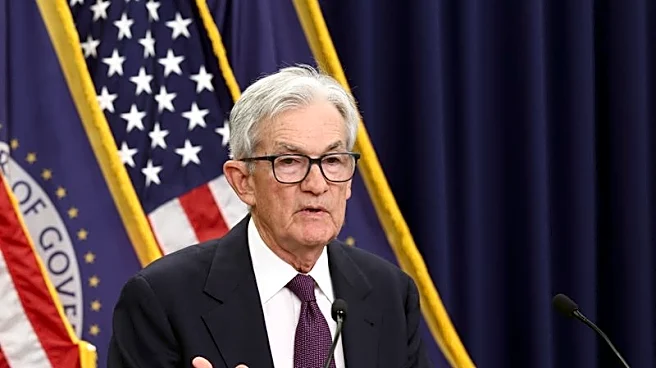
April 29 (Reuters) - Federal Reserve Chair Jerome Powell said on Wednesday he will stay on as a central bank governor for an undetermined period of time when his leadership term ends
next month, amid hopes that ongoing political attacks on the institution will start to settle down.
“After my term as chair ends on May 15, I will continue to serve as a governor for a period of time to be determined,” Powell told a news conference after his last policy meeting as chair.
"I'm not looking to be ... a high-profile dissident or anything like that," the central bank chief said. Instead, Powell said he wants to see that the political climate around the central bank has "calmed down" and that the Fed can instead be more focused on its core mission.
In taking a step that's unprecedented in the modern era of central banking, Powell in effect reiterated a pledge he made after the Fed's March 17-18 policy meeting, when the central bank was still in the thick of a range of legal challenges from the Trump administration.
"I worry that these attacks are battering the institution and putting at risk the thing that really matters to the public, which is the ability to conduct monetary policy without taking into consideration political factors," Powell told reporters.
Since that meeting, some of the legal uncertainty has resolved.
The biggest shift came from U.S. Attorney for the District of Columbia Jeanine Pirro, who on Friday seemingly ended a U.S. Department of Justice criminal probe into cost overruns at the Fed's headquarters in Washington. Powell fought the probe in January and said the inquiry was punishment for not giving in to President Donald Trump's demands for big interest rate cuts.
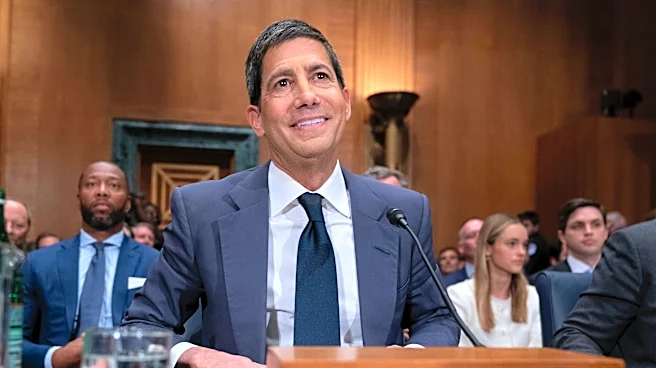
In closing the investigation, Pirro deferred to an ongoing probe by the Fed's Inspector General, the central bank's in-house watchdog. That move cleared the roadblock in the Senate Banking Committee to Fed chief nominee Kevin Warsh's confirmation as Powell's successor on May 15. The committee is expected on Wednesday to advance Warsh's nomination for a full vote in the Senate.
Powell said the Department of Justice had given "assurances" that the probe was essentially over, but he noted Pirro also said she "would not hesitate to restart the investigation." That said, "I'm encouraged by recent developments, and I'm watching the remaining steps in this process carefully."
Powell's separate term as a Fed governor extends through January of 2028. If he remains on the Fed's board, Powell could band together with other policymakers to try to ward off further attempts by Trump and his supporters to pressure the central bank.
Still, Powell said he did not look to serve as some sort of "shadow" Fed chair undermining the work of the new chair.
Warsh, who was nominated by Trump, has been an aggressive critic of the Fed. He also has backtracked on his long-running hawkish monetary policy views in favor of supporting the sort of rate cuts demanded by the president, a stance that has raised questions in some circles about his willingness to protect the central bank's independence in the future.
'LEAVES THE DOOR WIDE OPEN'
Top Democrats on the committee warned on Friday that Pirro's current stance "leaves the door wide open" for a relaunch of the criminal probe, and it doesn't do anything to stop "future baseless investigations" into Powell, other Fed governors or future Fed chiefs if such a move were "politically expedient."
Also unresolved is Trump's attempt to fire Fed Governor Lisa Cook, a case that is now in the hands of the U.S. Supreme Court. A victory by Trump in that case would imperil other Fed officials targeted by the president.
It is also unclear when the Fed's IG will report back on its work, which Powell requested last summer. Republican Senator Tim Scott, who chairs the Senate Banking Committee, has invited the IG to share the findings in three months.
Trump has been a relentless critic of the Fed during both of his terms in the White House, although his actions since returning to office last year have been far more aggressive. The president, who selected Powell to lead the Fed in late 2017, has repeatedly threatened to fire him for failing to give in to the president's demands for rate cuts.
By continuing to play a role as a member of the rate-setting Federal Open Market Committee, Powell would help reinforce the central bank's status quo and complicate any major reforms, including attempts to fire Fed regional bank presidents.
(Reporting by Michael S. Derby; Editing by Chris Reese and Andrea Ricci )