
By Michael S. Derby
NEW YORK, Jan 22 (Reuters) - There's scant evidence so far that U.S. President Donald Trump's bid to make housing more affordable by purchasing mortgage-backed bonds has had its desired
effect, and to the extent it has, broader geopolitical anxieties driven by his administration look set to make borrowing more expensive over time.
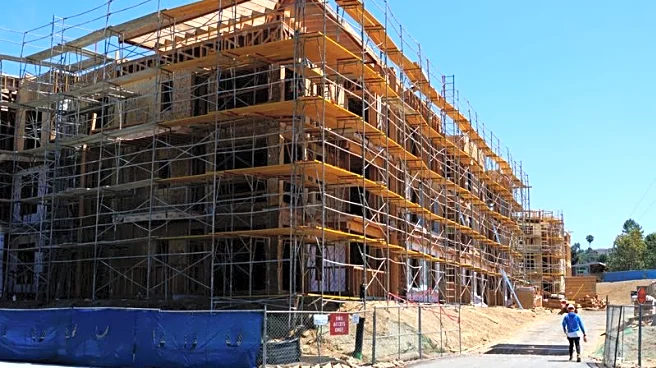
The targeted $200 billion of purchases appears likely to make borrowing costs cheaper only at the margin, while a wide range of experts agree the key to making homes more affordable is to bolster housing supply. And in the near term, broader market tumult could push borrowing costs higher.
The purchases are "mostly an exercise in burning cash," said Joseph Brusuelas, chief economist at RSM US LLP. "The U.S. does not have a demand or financing problem within the housing complex," he said, "it has a supply problem and $200 billion in (mortgage bond) purchases is not going to do anything to bring relief to Americans on the housing front."
Patricia Zobel, former manager of the New York Fed group that implements monetary policy and now head of macroeconomic research and market strategy at Guggenheim Investments, said: "It's not clear to me how much this will materially lower housing prices for consumers, but we'll see."
Zobel, however, noted that mortgage bond yields and 30-year residential mortgage rates have both narrowed somewhat relative to Treasury bonds.
Benchmark 30-year mortgage rates have been retreating for some time largely as the Federal Reserve has cut its short-term interest rate, with U.S. central bankers seeking to balance efforts to aid a weakening job market while keeping downward pressure on inflation.
After peaking at just shy of 8% in the fall of 2023, the average rate on a 30-year fixed-rate mortgage was 6.15% at the end of 2025, data from Freddie Mac shows. After Trump ordered Fannie Mae and Freddie Mac - the government-owned housing finance companies - to start buying back some of their bonds, the rate briefly dropped to its lowest level since 2022 at 6.06%, before edging back up to 6.09% as of Thursday.
Meanwhile, data from the Mortgage Bankers Association showed its measure of 30-year mortgage rates slipped last week to the lowest level since September 2024. The association said cheaper borrowing costs had pushed refinancing activity to its highest level since September 2025.
EFFORT TO 'STERILIZE' FED'S MORTGAGE-BACKED BOND RUNOFF
Trump administration officials have said the mortgage bond purchases have begun, but they have provided few details. The Federal Housing Finance Agency did not respond to a request for information about the buying, including the total amount and pace of the purchases so far.
U.S. Treasury Secretary Scott Bessent said earlier this month that one aim was to offset the Fed's long-running effort to allow mortgage bonds bought in large scale during the COVID-19 pandemic to mature and not be replaced. Bessent said the expected pace of buying would "roughly match" the roughly $15 billion in mortgage bonds that roll off the U.S. central bank's books each month.
This "sterilization" of that Fed runoff rests on an uneasy understanding of the dynamics of the central bank's balance sheet.
Economists and many central bankers generally agree the biggest market impact from Fed balance sheet changes tends to come from so-called announcement effects when the plans are unveiled. Most analysts agree the modest pace of the central bank's mortgage bond runoff, which has taken those holdings from about $2.7 trillion in mid-2022 to $2 trillion, is creating no measurable upward impact on home borrowing costs, which raises the question of why there would be a need to offset it.
Fed officials indirectly have expressed skepticism that the administration's efforts would do much for housing.
"I do think that a lot of the housing affordability challenges are about more than just financing, and there's a supply and demand issue that has persisted in many major markets," Atlanta Fed President Raphael Bostic said in a January 9 interview with Florida radio station WLRN.
Minneapolis Fed President Neel Kashkari later echoed that sentiment, saying: "The biggest barrier for the housing market is supply."
"Anything we can do to help get out of the way of allowing more supply to come online, to build the homes and the units that families need, that will help the housing market probably more than anything else," Kashkari said in a virtual event.
Getting mortgage rates down also confronts a fresh challenge from rising yields in longer-dated government bonds. Those yields have spiked amid a big selloff in Japanese bonds.
And Trump's own actions, including threats of tariffs or other measures to force European officials to agree to the sale of Greenland to the U.S. and his lashing out at allies more broadly, have dented the appeal of U.S. assets, including Treasuries, potentially adding a headwind to further drops in mortgage rates. The 10-year Treasury note yield, which heavily influences mortgage rates, rose earlier this week to its highest level since August, and remains close to it.
(Reporting by Michael S. Derby;Editing by Dan Burns and Paul Simao)